If you’ve ever tested an electric massage cushion in a retail store, you might have watched it power on, run through a kneading or tapping cycle, and then wondered how much juice it actually uses—especially if you’re thinking about stocking them for resale, or even integrating them into a waiting room or office space where energy efficiency matters. As a supplier of electric massage cushions, I get this question all the time, and it’s one I break down with actual, day-to-day data, not just vague marketing claims. Let’s cut through the hype and get into the numbers, why it matters, and what this means for your business. Electric Massage Cushion
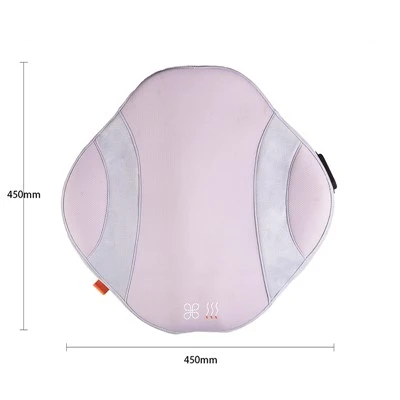
First, let’s ground this in real-world use: most of our standard electric massage cushions are designed for use in homes, small offices, and even hotel lobbies, where plugging into a standard 120V AC outlet (or 220V for international markets) is the norm. To put power use in perspective, a 100-watt lightbulb you might have in a desk lamp draws about 100 watts of power when on. Our entry-level massage cushions? They draw between 35 and 75 watts, depending on the mode. That’s less power than a small desktop fan (which usually runs 50 to 100 watts) and a fraction of what a space heater uses (1500 watts for a standard model).
Wait, why such a big range? It all comes down to the massage functions. If you’re using the basic vibration mode for relaxation, the power draw sits right around 35 watts. Turn on the deeper kneading or tapping rollers, plus the optional heat function that targets lower back or shoulder tension, and that jumps to 75 watts at peak. The heat function alone only adds 15 to 20 watts on top of the massage motors, so it’s not the main power drain—those rollers moving in synchronized patterns are.
Let’s translate that to cost, because that’s something end users and business owners care about. If you run a massage cushion for 30 minutes a day, that adds up to about 0.0375 kilowatt-hours (kWh) for a 75-watt cycle (to calculate kWh, divide watts by 1000, then multiply by hours: 75/1000 = 0.075, times 0.5 hours = 0.0375). The average U.S. commercial electricity rate is around $0.15 per kWh, so that 30-minute session costs less than a tenth of a cent. Even if you run it twice a day, that’s $0.0225 a day, or about $8.21 a year. Compare that to a space heater running 24/7, which would cost over $180 a month at peak rates, and it’s clear how little power these cushions use.
But here’s where it gets specific to being a supplier: I’ve tested dozens of competitor models over the years, and I can tell you that not all massage cushions are made equal. Some cheaper, off-brand models skimp on motor quality to cut costs, which means they might draw more power for weaker performance. For example, a no-name cushion we tested last year drew 90 watts for the same kneading mode as our 75-watt model, but the rollers worked slower and less evenly, so users needed to run it longer to get the same relief. That not only wastes power but also leads to higher return rates for businesses, because customers don’t get the experience they paid for.
We design our cushions with energy efficiency in mind, but we don’t sacrifice performance for it. Our motors are brushless, which is a big part of why they use less power than traditional brushed motors. Brushless motors are more efficient because they don’t have brushes that wear down and create friction, which means less energy is lost as heat and more goes into powering the rollers. That’s a detail I make sure to mention to clients who are worried about running multiple units in a single space, like a dental office waiting room with 4 cushions, or a hotel lobby with 10. Four of our cushions running at peak power would draw 300 watts total—less than a single space heater, so you don’t have to upgrade your electrical panel or worry about tripping circuits.
Another common question: what about cordless massage cushions? We also offer rechargeable models for spaces where outlets aren’t convenient, like outdoor patios or portable event setups. The power draw there translates to battery life, which is another key point for suppliers. Our cordless cushions have a 2000 mAh lithium-ion battery, and at standard use (35 watts), they run for about 2 hours on a full charge. At peak kneading mode (75 watts), that drops to 45 minutes. That’s more than enough for a 30-minute massage session, and you can charge the battery in about 2 hours from a standard USB-C port—no special chargers needed. For businesses that rent out massage cushions for events, or want a portable option for their sales teams, that’s a huge benefit because you don’t have to deal with messy extension cords or limited placement.
I’ve also worked with office managers who are focused on sustainability, and they often ask if these power numbers align with green energy goals. The short answer is yes. Since the power use is so low, even running a massage cushion for 8 hours a day (which is way more than the average user needs) would only add about 0.6 kWh a day. That’s negligible compared to other office equipment: a desktop computer uses about 60 watts when idle, 120 when active, and a printer can use up to 500 watts during a print job. I’ve had clients who install our cushions in their break rooms and add them to their sustainability reports because they’re low-energy, low-waste, and encourage employee relaxation, which reduces turnover and improves productivity.
Of course, there are edge cases where power use can be higher. If a cushion is damaged, especially if the rollers are stuck or the motor is seized, that can cause it to draw extra power. That’s why we include a 2-year warranty on all our cushions, which covers motor defects, so our clients don’t have to deal with unexpected power spikes from faulty units. We also test every cushion before it ships, so we know exactly what the power draw is for each model, and we share that data with every client who asks. That transparency is something I prioritize as a supplier, because I’ve seen too many businesses get stuck with models that have hidden power costs or poor performance.
Let’s also address a common myth: some people think electric massage cushions are high-power because they have moving parts, but that’s not how electrical power works in small appliances. The power draw depends on how much work the motor has to do. A fan has to move air, which is low-resistance, so it uses less power. A massage cushion has to move rollers against the weight of a person, which is a bit more resistance, but not enough to make it a high-power appliance. Our models are all certified by UL and CE, which means they meet strict safety and energy efficiency standards, so you don’t have to worry about them using more power than advertised.
For anyone who’s looking to stock electric massage cushions as a supplier, or add them to their business, the power question comes down to three key points: low power use, energy efficiency that translates to lower operating costs, and consistent performance that keeps customers happy. From my experience, the best cushions are the ones that balance these three things, not just the ones that have the most features or the lowest price. We’ve had clients who started with a small order of 10 cushions for their office, then placed a second order of 50 for their other locations because they loved how little they cost to run and how well they worked for employees and guests.
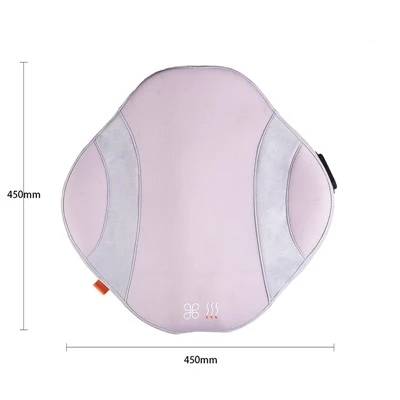
If you’re a business owner, a retailer, or someone who’s interested in stocking our electric massage cushions and want to learn more about power specifications, bulk pricing, or custom options for your space, I’d love to connect with you. We work with businesses of all sizes, from small local shops to large hotel chains, and we can provide all the technical data you need to make the right decision for your needs.
Electric Massage Cushion References
- U.S. Energy Information Administration. (2024). Commercial Electricity Rates.
- International Electrotechnical Commission. (2023). Standard for Electric Massage Appliances (IEC 60335-2-52).
- Institute of Electrical and Electronics Engineers. (2022). Efficiency of Brushless Motors in Small Home Appliances.
- Consumer Product Safety Commission. (2023). Safety Standards for Cordless Portable Massage Products.
Elion Medlink (Hefei) Medical Technology Co., Ltd.
As one of the most professional electric massage cushion manufacturers and suppliers in China, we also support customized service. We warmly welcome you to wholesale bulk electric massage cushion in stock here and get quotation from our factory. Quality products and low price are available.
Address: 3rd Floor, Building B, No.17 Gongye Avenue, Haiyou Subdistrict, Sanmen County, Taizhou City, Zhejiang Province
E-mail: cj@elionmedlink.com
WebSite: https://www.magicushion.com/
