If you’ve ever walked through a precision machine shop, watched a mold maker refine a die cavity, or held a component so smooth it could seal a hydraulic system without a gasket, you’ve seen the work of a vertical surface grinder. These machines don’t just cut metal—they shape it to tolerances so tight, sometimes just a few thousandths of an inch separate a perfect part from a scrap one. As a vertical surface grinder supplier, I get asked this question at least three times a day: How much does one of these machines actually cost? Vertical Surface Grinder
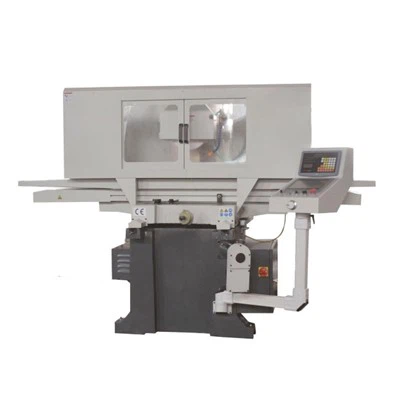
I wish I could give you a straight, single number. If it were that easy, I’d have a one-page price list taped to my desk, and we could all go home. But the truth is, vertical surface grinder costs vary wildly—far more than, say, a car or even a small industrial robot. That’s because these aren’t off-the-shelf appliances. They’re custom-built to do specific jobs, for specific people, in specific environments. Let me break down what goes into that price, so you don’t waste time shopping on price alone—you shop on what your shop actually needs.
First, let’s get the basics out of the way. A vertical surface grinder is different from a horizontal one, if you’re new to the space. The vertical axis of the spindle means the grinding wheel spins parallel to the worktable, rather than perpendicular. That design is perfect for parts that need flat, parallel faces or precise edge profiles—like the base of a valve that has to seal against pressure, or the flat plate that holds a lens in a medical device. The work moves horizontally, the wheel moves vertically, and the combination delivers the kind of flatness and surface finish that most general-purpose grinders can’t touch. That precision isn’t cheap, but it’s worth it when your parts depend on it.
Let’s start with the low end. If you’re a small job shop just getting into precision work, or a tool room that only grinds parts a few times a week, you can get a used or reconditioned vertical surface grinder for between $5,000 and $25,000. I’m not going to sugarcoat it: these are not brand-new, cutting-edge machines. They’re often 10 to 30 years old, pulled from closed shops, refurbished with new bearings and grinding wheels, and tested to make sure they can hold basic tolerances. I’ve seen a reconditioned 1990s Okamoto vertical grinder go for $18,000 last year, after a full rebuild of the spindle and work table. These machines work great for low-volume parts that don’t require 0.0001-inch tolerances, and they’re a smart way to test if vertical grinding is right for your shop.
But here’s the catch: used machines come with trade-offs. Parts for old models can be hard to find. If a spindle breaks on a 1990s grinder, it might take eight weeks to get a replacement, and it’ll cost you more than a new bearing on a modern machine. Also, you don’t get the safety features or automation that new models have. No coolant leak detection, no automatic wheel balancing, no CNC controls that let you program multiple parts at once. For a one-man tool room grinding a few dies a month, that’s fine. But if you’re running a shop with 10 people, turning out parts 10 hours a day, a used machine will slow you down eventually.
Now, move up to mid-range. This is where most of my new customer conversations start. Mid-range vertical surface grinders, brand-new, not entry-level, range from $50,000 to $150,000. This price bracket is for shops that are serious about precision and reliability, but don’t need custom automation for high-volume production. A typical machine here has a CNC control (most are Fanuc or Siemens, the industry standards), a solid cast iron frame to reduce vibration, and a worktable that can hold parts up to 24 inches by 48 inches. It can hold tolerances of 0.0001 inches consistently, which is the sweet spot for most mold making, automotive components, and general precision machining.
Last year, I sold a mid-range machine to a small aerospace job shop. They needed to grind titanium valve bodies for jet engines, parts that had to be flat within 0.0002 inches across a 12-inch diameter. The mid-range machine cost $87,000, and included a semi-automatic work changer that could hold two parts at a time, so their operator didn’t have to stop every 20 minutes to load and unload. They told me it paid for itself in six months, because it cut their grinding time per part by 40% compared to the old horizontal grinder they were using. The key here is that mid-range machines balance capability and cost. They’re reliable, parts are easy to get, and they do almost everything a shop needs without the huge price tag of a high-end, custom machine.
Then there’s the high end—custom, high-volume, ultra-precise vertical surface grinders. These are for big production runs, like grinding brake rotors for a major carmaker, or components for semiconductor manufacturing, where tolerances are measured in millionths of an inch. Prices here start at $200,000 and can go well over $1 million, depending on the specs. A typical high-end machine might have a linear motor drive instead of a ball screw, which eliminates backlash and makes the movement smoother and more accurate. It might have automatic part loading and unloading, in-process gauging to check the part while it’s still on the machine, and a fully enclosed work area to keep coolant and dust from messing with precision.
I sold a custom high-end machine to a medical device manufacturer two years ago. They were making components for insulin pumps, parts so small you could fit 10 of them on a dime, each needing a flat surface that had to be perfect to prevent fluid leaks. The machine cost $320,000, and included a robot arm that loaded and unloaded parts 24 hours a day, with in-process gauging that adjusted the grinding wheel position automatically if there was any wear. The customer’s team had tried three lower-cost machines before, but none could hold the tolerance consistently on 10,000 parts a week. The high-end machine not only hit their tolerance requirements, it reduced their scrap rate from 8% to less than 0.5%. For a high-volume operation, that kind of precision and reliability isn’t a luxury—it’s a necessity that saves more money than the machine’s cost over time.
But here’s what I don’t see enough buyers accounting for: the hidden costs that come with a vertical surface grinder, which can add 10% to 30% to the total price, no matter what the base model is. First, installation. You can’t just roll a grinder into a shop and plug it in. These machines need a level floor—sometimes to within a few thousandths of an inch over 10 feet—because any vibration or unevenness will throw off the precision. Most machine shops don’t have floors that level, so you might need to pour a custom foundation, which can cost $5,000 to $20,000 depending on your shop’s layout. Then there’s electrical: high-end grinders need 3-phase power, and if your shop only has single-phase, you’ll need a converter that can run a few thousand dollars. Coolant systems, wheel dressers, and safety guards add more too. I always tell customers to budget an extra 15% on top of the machine’s price for these hidden costs.
Another big factor that affects cost is the type of grinding wheel and materials you’ll be working with. If you’re grinding soft steel, a standard aluminum oxide wheel works fine. But if you’re grinding carbide, titanium, or ceramic parts, you need a diamond or cubic boron nitride (CBN) wheel, which is way more expensive. A standard aluminum oxide wheel might cost $200 to $500. A diamond wheel for carbide can be $2,000 to $10,000, depending on the size. And those wheels wear out fast—so you have to factor in replacement costs over the machine’s life. Also, wheel dressing (the process that keeps the wheel sharp and shaped) adds time and cost. A good dressing system can be a few thousand dollars, and if you’re running high volumes, you might need to do it every hour.
Automation is another big driver of cost, and it’s one that more and more buyers are asking for lately. A basic vertical grinder is manual, which means an operator has to load the part, adjust the machine, run the process, and unload it. That’s fine for small jobs, but if you’re running parts 10 hours a day, it’s expensive to have an operator tied to one machine. Adding a work changer, a robot loader, or in-process gauging can add $20,000 to $100,000 to the machine’s price, but it also lets you run the machine unattended during off-hours. I had a customer who added a robot loader to their mid-range grinder last year. They used to run the machine only 8 hours a day, 5 days a week. Now they run it 20 hours a day, 6 days a week, and their output tripled. The automation cost paid for itself in four months.
Now, I know a lot of buyers out there start with price, and that’s understandable. But I’ve seen shops make the wrong call by going with the cheapest machine they could find, only to end up spending more in the long run. Last year, a small job shop brought in a used vertical grinder because it was $5,000 cheaper than a reconditioned one I offered them. Within three months, the spindle broke. Replacement parts took six weeks to get, and they lost two weeks of production waiting for it. By the time they fixed it, they’d spent more on repairs and lost revenue than the difference between the two machines. That’s the kind of mistake you don’t want to make.
So, how do you figure out what you actually need? Start with your part requirements. What’s the tolerance you have to hold? If you need 0.0001-inch tolerances, you don’t need a $1 million machine, but you can’t get away with a $5,000 used one. What’s your production volume? If you’re grinding 10 parts a month, a manual used machine is fine. If you’re grinding 10,000 parts a week, you need automation and a reliable mid-range or high-end machine. What materials do you work with? If you’re grinding soft steel, you don’t need a diamond wheel, so you can save there. If you’re grinding carbide, you have to budget for those expensive wheels, and a machine that can handle the higher speeds needed for hard materials.
As a supplier, my job isn’t to sell you the most expensive machine. It’s to sell you the right machine for your shop. I’ve had customers come to me wanting a high-end machine because they thought it was what they should have, only to find out a mid-range machine with a small automation upgrade would do the job for half the price. And I’ve had small shops that thought they needed to wait to buy, only to realize a used reconditioned machine would let them take on new jobs they couldn’t do before.
If you’re in the market for a vertical surface grinder, don’t just look at the base price. Ask about the machine’s accuracy rating, its spindle life, availability of parts, and support. How long will the supplier take to send a replacement part if something breaks? Do they offer training for your operators? Do they have service technicians local to your area? Those things matter as much as the price, because a machine is only as good as the support behind it.
At the end of the day, a vertical surface grinder is an investment in your shop. It’s not just a piece of equipment—it’s what lets you take on new jobs, deliver parts that meet your customers’ requirements, and grow your business. Whether you’re a one-person tool room just starting out, a mid-sized job shop looking to increase capacity, or a big manufacturer needing ultra-precision for high-volume parts, there’s a vertical surface grinder that fits your budget and your needs.
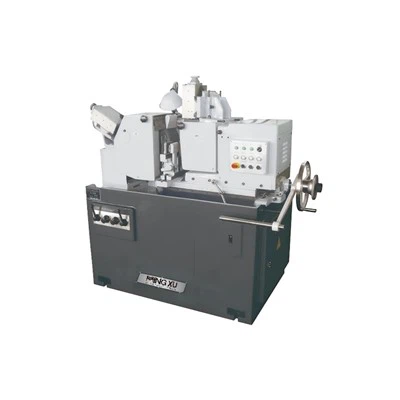
If you want to talk through what kind of vertical surface grinder works for your specific parts and production, I’m here to help. We can discuss your tolerance requirements, production volume, materials, and any other needs you have, so you don’t overspend or end up with a machine that can’t do what you need. Contact our team to schedule a consultation to go over your needs.
Wide-Wheel Centerless Grinder References
- Manufacturing Engineering and Management Association. (2022). Precision Grinding: A Guide to Selection and Application for Job Shops and Production Facilities.
- Okamoto Corporation. (2023). Vertical Surface Grinder Specification and Cost Analysis: Mid-Range vs. High-End Models.
- National Tooling and Machining Association. (2021). Hidden Costs of Industrial Machine Acquisition: Foundations, Installation, and Long-Term Maintenance.
- Grinding Wheel Manufacturers Association. (2022). Cost and Performance of Abrasive Wheels for Common Machining Materials.
Wuxi Mingxu Machinery Equipment Co., Ltd.
As one of the most professional vertical surface grinder manufacturers and suppliers in China, we’re featured by quality products and good price. Please rest assured to buy the best vertical surface grinder for sale here from our factory. Also, custom service is available.
Address: No. 5-5 Jinke Wealth Plaza, Changjiang North Road, Xinwu District, Wuxi City, Jiangsu Province
E-mail: yingyingmxjd@163.com
WebSite: https://www.mingxu-china.com/
