When I first started supporting small and mid-sized extrusion line operators in my role as a PPR pipe machine supplier, I noticed a common pattern: most issues that stall production aren’t caused by broken equipment, but by small, repeated oversights that add up over time. One client in the Midwest lost $12,000 in a single week last year because they skipped a routine check on their screw’s feed rate—PPR resin had clogged the barrel’s feed throat, tripping an emergency stop that took 36 hours to resolve. That’s when I realized stable operation of a PPR pipe machine isn’t just about high-quality equipment; it’s about a consistent, operator-focused routine that works with the machine’s design, not against it. PPR Pipe Machine
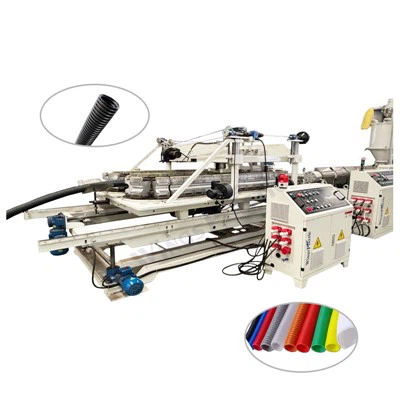
Let’s break this down into the non-negotiable steps we teach every client, based on 15 years of on-site support and hundreds of machine installations. The first pillar is proactive, schedule-driven maintenance, but not the generic “change oil every 500 hours” language you’ll find in old manuals. PPR resin has a unique thermal profile—too little heat and it won’t melt evenly; too much and it degrades, leaving microscopic weak spots in the pipe. That means maintenance can’t be one-size-fits-all. For the extruder screw and barrel, we recommend a daily visual check: wipe down the feed throat with a dry cloth before each run to remove residual powder, and run a 10-minute purge with virgin PPR granules every shift, even if the previous run used the same material. Purge isn’t just for color changes—it flushes out any degraded resin that’s stuck in the screw flights, which is a top cause of inconsistent pipe diameter and surface roughness. We’ve seen operators skip this step because it adds 10 minutes to each shift, but the downtime from a diameter failure at the end of a long run is 10 times costlier.
Next, temperature zone calibration is make-or-break for PPR. Most PPR pipe machines have 5 to 7 temperature zones along the barrel, plus a separate zone for the die head. The mistake here is assuming the digital display is accurate—last year, a client in Mexico had their zone 3 display reading 200°C when the actual temperature was 240°C, which caused the PPR to burn and leave black specks in every pipe they produced for three days. We teach clients to calibrate each zone with a portable thermocouple once a month, and before every new resin batch (even if it’s the same grade from the same supplier). PPR’s melting point is tightly calibrated at 205°C to 225°C; a 5°C deviation can lead to either un-melted resin (which creates voids) or thermal degradation (which reduces impact strength). Another common oversight is the cooling system for the die head—many operators only adjust the water flow if the pipe warps, but we check it at the start of each run: the die head should stay within 2°C of the target melt temperature to prevent shear stress on the molten PPR, which would weaken the pipe’s walls over time.
Operator training is often the most underrated part of stable operation, and it’s not just a single onboarding day. PPR pipe machines have a set of controls that look simple, but small adjustments have big consequences. For example, the haul-off speed is tied to the extruder output, but a lot of new operators will speed up the haul-off to finish a run faster, which thins the pipe’s wall thickness beyond the standard tolerance. We require every client’s lead operator to complete a 40-hour hands-on training that includes mock troubleshooting: simulating a feed blockage, a temperature sensor error, and a die lip clog, so they know how to react within 5 minutes instead of panicking. We also assign a dedicated support rep for the first three months after installation, to walk through the first five runs and adjust settings to match their specific resin and pipe dimensions. One of our clients in India reduced their pipe failure rate by 80% six months after their operator completed the advanced training, just by learning to adjust the screw’s back pressure gradually when changing pipe diameters, instead of making a sudden change that shocks the system.
Material handling and storage might seem unrelated to machine stability, but PPR resin is hygroscopic—it absorbs moisture from the air, even in small amounts. If moisture gets into the extruder barrel, it will turn to steam when heated, creating bubbles in the pipe that weaken its structural integrity. We recommend storing PPR resin in sealed, climate-controlled silos with desiccant beds, and drying it at 80°C for 4 hours before use, even if the supplier says it’s pre-dried. A client in South Africa lost a $50,000 order last year because they stored resin in an open warehouse during the rainy season; the moisture caused 12% of their pipes to fail a hydrostatic pressure test, and they had to scrap the entire batch. Another tip: never mix different grades of PPR resin in the hopper. The Melt Flow Index (MFI) of each grade is different, and mixing them will create inconsistent melt flow, leading to variable wall thickness. If you need to switch grades, run a full purge—usually 50 to 100 pounds of virgin resin—before starting the new run.
Finally, predictive monitoring vs. reactive fixes. Modern PPR pipe machines come with basic data logging, but most operators don’t use it beyond tracking production counts. We teach clients to review the extruder’s torque and pressure data daily. A sudden spike in torque usually means the screw is wearing, or there’s a blockage in the barrel, before it causes an emergency stop. We’ve installed optional sensors for torque and die pressure that send real-time alerts to a phone or tablet; one client in Germany used these alerts to replace a worn screw two weeks before it would have caused a 24-hour shutdown, saving them $8,000 in lost production. It’s also important to keep a log of every maintenance task, temperature adjustment, and material change. This log helps identify patterns—if you notice a temperature zone is consistently running 3°C high after a month, it might mean the heater band is failing, not that the operator is adjusting it wrong.

Stable operation of a PPR pipe machine doesn’t require a big budget or fancy equipment; it’s about consistent, attention-to-detail routines that account for PPR’s unique properties. If you’re struggling with frequent shutdowns, inconsistent pipe quality, or unexpected maintenance costs, our team is here to walk through your current process, adjust maintenance schedules to fit your production, and provide operator training tailored to your needs. Whether you’re installing a new line or troubleshooting an existing machine, we offer on-site support, replacement parts, and ongoing guidance to keep your production running smoothly. Reach out to our team to discuss your specific requirements and find the right solution for your operation.
PPR Pipe Machine References
- Plastics Extrusion Technology, 5th Edition, T.A. Osswald and L. Turng, Carl Hanser Verlag, 2012
- "Stability of Polypropylene Pipe Extrusion Processes", Journal of Applied Polymer Science, Vol. 117, No. 3, 2010, pp. 1560-1568
- Operational Guidelines for Plastic Pipe Manufacturing Equipment, American Society of Mechanical Engineers (ASME), B21.1M-2015
- "Hygroscopic Effects on PPR Pipe Mechanical Properties", International Journal of Polymer Science, Vol. 2018, Article ID 9274538, 2018
Qingdao Wings Plastic Technology Co., Ltd.
As one of the most experienced ppr pipe machine manufacturers and suppliers in China, we also support customized service. Please feel free to buy durable ppr pipe machine made in China here from our factory. For price consultation, contact us.
Address: C02 Of Anshengyi Road, No.2 Fuan Industry Zone,Jiaodong Town, Jiaozhou City, Qingdao City, Shandong Province,China
E-mail: kelly@wingsplastic.com
WebSite: https://www.wingsextruder.com/
