Hey everyone, let’s talk about something that’s been quietly taking over the biopharma space over the last decade: peptide APIs for peptide therapeutics. As a peptide API supplier, I get asked all the time why peptides are suddenly everywhere—especially after years where small molecules and mAbs were the stars. Let’s break this down like we’re grabbing a coffee and geeking out over the good stuff, no stuffy jargon promises here. Peptide API
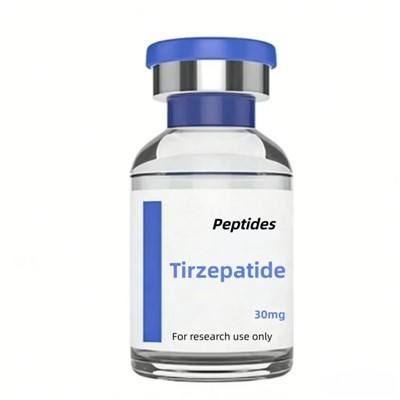
First, let’s cut to the chase: what even is a peptide API, and why should you care? Peptides are short chains of amino acids—think tiny, specific building blocks that act like messengers in the body. APIs (active pharmaceutical ingredients) are the part of a drug that actually does the work, so peptide APIs are just those amino acid chains made to order, pure and potent, to develop treatments. Unlike small molecules, which can be super generic and sometimes interact randomly, peptides are targeted. They latch onto specific receptors, so you get fewer off-target side effects. And compared to monoclonal antibodies (mAbs)—those big, complex protein drugs that need cold chain shipping and cost a fortune—peptides are smaller, easier to make at scale, and way cheaper to get to market. That’s why drug developers are jumping on this train.
I’ve seen the shift firsthand. Back when I started in this space 12 years ago, most peptide therapeutics were just for diabetes or hormone replacement—you know, the old standards like insulin analogs or glucagon-like peptide-1 (GLP-1) agonists. But now? Peptides are being developed for everything from cancer and autoimmune diseases to rare genetic disorders, even neurodegenerative conditions like Alzheimer’s. The demand for high-quality peptide APIs has exploded, and that’s where we come in. As a supplier, we’re not just selling raw chains—we’re partners in getting these life-saving treatments out the door, and I want to walk you through what goes into that, because it’s not just mixing chemicals in a lab.
Let’s get real about the challenges here. Peptide synthesis isn’t like baking a cake—mess up one amino acid link, and the whole thing stops working, or worse, causes a bad reaction. Early on, a lot of smaller labs would try to make their own peptides in-house, but they’d run into issues with purity (impurities mean higher risk of side effects), scalability (you can’t make 10,000 doses at a tiny bench scale), and consistency (one batch different from the next is a regulatory nightmare). That’s why partnering with a reliable peptide API supplier matters. We use solid-phase peptide synthesis (SPPS) mostly, which is the gold standard for most therapeutic peptides, but we also have expertise in liquid-phase synthesis for longer, more complex chains. The key is tight quality control at every step—from amino acid selection to final purification to testing. We run HPLC, mass spec, and endotoxin testing like it’s our job (because it is) to make sure every batch meets FDA, ICH, and EMA guidelines. No cutting corners here—regulators don’t play, and neither do we.
One big trend I’ve been hyping lately is long-acting peptide formulations. Let’s take GLP-1s, the ones we all saw blow up for weight loss and diabetes a few years back. Original GLP-1s broke down super fast in the body, so patients had to inject them daily. Now, developers are using peptide APIs that are modified with things like fatty acid chains or PEGylation (adding polyethylene glycol) to make them stick around longer—so you can inject once a week, or even once a month. That’s a game-changer for patient adherence, right? If you don’t have to remember a shot every morning, you’re way more likely to stick with treatment. Our team works closely with formulators to tweak peptide APIs for these modifications—we can do fatty acid conjugation, cyclization, all the fancy stuff that makes a peptide work longer and better. It’s not just about making a pure peptide; it’s about making it compatible with the final drug product’s needs.
Another area that’s blowing up is therapeutic peptides for cancer. Traditional chemo kills fast-dividing cells, which is great for tumors but also destroys healthy cells, leading to brutal side effects. Peptides, though, can be designed to target specific proteins on cancer cells—like integrins or growth factor receptors. We’ve worked with a few oncology biotechs on peptide APIs for targeted cancer immunotherapies, where the peptide acts as an antigen to trigger the immune system to attack tumors. The cool part? These are super specific, so they don’t damage healthy tissue. The catch? Cancer peptides are often smaller and have fewer side chains, so synthesis needs to be ultra-precise. We’ve invested in automated peptide synthesizers and high-resolution mass spec to catch even tiny errors—like a missing amino acid or a wrong stereochemistry. That level of precision is non-negotiable for oncology APIs, and we don’t skip it.
Now, let’s talk about scalability, because that’s the biggest pain point for drug developers. When a peptide is in pre-clinical trials, you might only need grams of API. But once it moves to Phase 3 and commercialization, you need kilograms, then tons. A lot of small suppliers can’t handle that jump—they’re stuck at bench scale, or their yields drop when they scale up, leading to higher costs and delays. We solved that by building a mid-sized GMP (good manufacturing practices) facility a few years back, specifically for peptide API production. We can go from 100g batches for early trials to 100kg batches for commercial supply without losing purity or consistency. That’s why so many of our clients stick with us—they don’t have to switch suppliers halfway through development, which saves them months of paperwork and re-qualification.
Wait, I should address the elephant in the room: peptide stability. Peptides break down fast in the body, whether it’s from enzymes chewing them up or just being unstable in storage. That’s why formulation is huge, but the peptide API has to be stable too. We test our APIs for shelf life, both as raw material and in simulated biological conditions, to make sure they hold up. We also offer custom formulation support, partnering with clients to choose the right buffers, excipients, and packaging to keep the peptide safe until it’s administered. For example, if a peptide needs to be lyophilized (freeze-dried) for storage, we make sure our API is compatible with that process so it doesn’t degrade. It’s not just a “make it and ship it” deal—we’re here for the whole lifecycle, from R&D to commercial.
Let me also mention regulatory stuff, because let’s be real, no one wants to deal with a regulatory hangup that delays their drug by a year. All of our peptide API production is cGMP-compliant, and we provide full regulatory documentation—batch records, purity reports, stability data, all the stuff the FDA and EMA ask for. We’ve helped dozens of clients get their investigational new drug (IND) applications approved, and our API batches are accepted in over 20 countries. That’s not luck—it’s building processes that are transparent and auditable. We don’t hide anything; we share every test result because we know trust is everything when you’re partnering on a drug that could save lives.
Now, what’s next for peptide APIs? I’m betting on two big areas: oral peptide therapeutics and peptide-based gene editing. Oral peptides would be a game-changer—right now, most peptides are injectable because stomach acid breaks them down. But we’re seeing advances in peptide API modification, like protective coatings or enzyme inhibitors, that let peptides survive digestion. If we can make an oral peptide, that would make treatments way more accessible, especially for patients in remote areas who can’t get regular injections. And peptide-based gene editing—CRISPR gets all the hype, but peptides can be used to deliver gene editing tools directly to cells, with fewer off-target effects than viral vectors. That’s the future, and we’re already working on early-stage peptide APIs for those applications.
Look, I get it—if you’re a drug developer, you have a million suppliers to choose from, and a lot of them are just in it for the profit. But as a peptide API supplier, we care about your success as much as you do. We’ve been there when a batch was late for a trial, worked extra hours to rush a small batch of critical API. We’ve helped a startup troubleshoot a synthesis issue that almost derailed their IND application. We don’t just sell a product; we’re a partner.
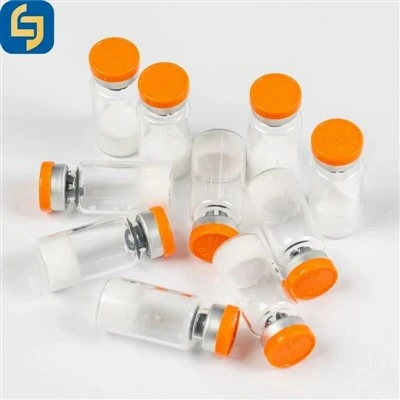
If you’re developing a peptide therapeutic, whether it’s pre-clinical, in Phase 1, or heading to commercial, we can help you. We do custom synthesis of peptides, from linear chains to complex cyclic or modified ones, offer GMP-grade batches at all scales, and have the regulatory expertise to get your drug across the finish line. We’ve got a team of chemists, biologists, and regulatory folks who know the peptide space inside and out, ready to answer your questions or walk through your project.
Anti-aging Peptide Don’t waste time chasing suppliers who can’t keep up with your growth or cut corners on quality. The right peptide API partner can make or break your drug’s success. Hit us up to start a conversation—no hard sell, just someone who gets peptides and wants to help you bring a life-saving treatment to patients.
References
- Fosgerau, K., & Hoffmann, T. (2015). Peptide therapeutics: current status and future directions. Drug Discovery Today, 20(1), 122-128.
- Vlieghe, P., Lisowski, V., Martinez, J., & Khrestchatisky, M. (2010). Synthetic therapeutic peptides: science and market. Drug Discovery Today, 15(1-2), 40-56.
- Lakshmi, S. (2021). Long-acting peptide therapeutics: advances in formulation and modification. Journal of Controlled Release, 336, 212-227.
- Brogden, N. K., & Brogden, K. A. (2015). Antimicrobial peptides: host defense functions and therapeutic applications. Future Microbiology, 10(10), 1653-1670.
- Yang, J., et al. (2023). Peptide-based targeted cancer therapies: recent advances and clinical translation. Cancer Letters, 558, 216028.
Zhengzhou Longjia Electronic Technology Co., Ltd.
As one of the leading peptide api manufacturers and suppliers in China, we have world-leading production equipment and strong manufacturing capabilities. Please feel free to buy bulk peptide api in stock here from our factory. For free sample, contact us now.
Address: Room 2211, 22nd Floor, Unit 3, No.76 Zheng Bian Road, Guancheng Hui District, Zhengzhou City, Henan Province
E-mail: lucy@zzljtech.com
WebSite: https://www.longjiaxintide.com/
