If you’ve ever wondered what sets a steel workshop apart from a steel factory, you’re not alone—especially if you’re in the market for metal components, custom fabrications, or quick turnaround jobs. As someone who runs a steel workshop supply business, I get asked this question all the time, and it’s easy to mix the two up at first glance. Let’s break it down in plain, real-world terms, no fancy jargon or stuffy definitions here. Steel Workshop
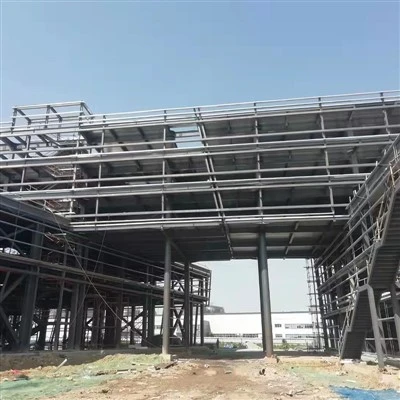
First, let’s talk about scale, because that’s the biggest, most obvious difference. A steel factory is a big operation—think acres of land, huge smelters, miles of conveyor belts, and hundreds of workers spread across shifts. They’re built for mass production: turning raw iron ore or molten steel into standardized products like steel beams, rebar, sheets, or plates that get shipped all over the world. If you need 10,000 identical steel pipes for a construction project, a factory is where you’d go. They invest in huge, automated machinery that cranks out thousands of tons of steel a day, and their whole model is about efficiency for large-volume, repeat orders.
Now, a steel workshop is way smaller. It’s usually a single building or a small cluster, with a team of 5 to 20 people max, not hundreds. We don’t do raw steel production—we work with semi-finished steel or steel products that come from factories. Our whole focus is custom work, not mass-made stuff. If you need a single custom steel bracket to fix a leaky roof on your shed, or a special-shaped railing for a deck, or a replacement steel part for an old machine that no one else makes, that’s our lane. We don’t have giant smelters or rolling mills; what we do have is welders, plasma cutters, bending machines, and laser cutters—tools that let us shape, cut, and modify steel to fit your exact needs.
Wait, let’s dive deeper into the work we actually do, because that’s where the real lines blur for people who don’t work in metal. Factories’ processes are all about consistency and output. They follow strict, rigid specs for every product: a rebar manufacturer doesn’t make one rebar different from the next. They test every batch to make sure it meets global standards, and their goal is to produce as much as possible as cheaply as possible. They might handle the entire supply chain, from mining ore to shipping the final product.
We? We’re the guys who problem-solve. Last month, a local restaurant owner needed a custom steel frame for a new outdoor patio that had to fit around a 10-foot-tall oak tree in the middle of the space. A factory would never adjust their standard beam designs for that—they’d just make a straight beam and send it, which wouldn’t work. We measured the tree, cut the steel to a slight curve, welded in support braces, and had the frame done in 3 days. That’s the kind of thing workshops do. We also handle repairs: if a steel support beam on a old barn rusted through, we can fabricate a matching replacement on-site instead of making you buy a whole new beam from a factory.
Another big difference is flexibility. Factories can’t afford to change their setup for one small order. If you order a custom piece, they’d charge you way more for the time and materials to retool their machinery, and it would take weeks or months to get it done. Workshops, though, are set up for quick adjustments. Our team can shift around their schedule to fit a rush order—say, a homeowner needs a custom steel gate for a dog that keeps running away, and it has to be done in 2 days before a storm hits. We can make that happen because we’re not tied to long production runs.
Don’t get me wrong, factories are essential—they supply the raw material that all of us workshops work with. You can’t have a workshop if no one is making the base steel. But when you need something tailored, small, or fast, a workshop is the way to go. Also, the customer interaction is totally different. When you walk into a factory, you’re usually talking to a sales rep who only knows the standardized products. When you walk into a workshop, you’re talking directly to the guys who’ll actually be doing the welding or cutting. We can walk through your ideas, adjust them on the fly, show you sketches right there, and make sure the final product is exactly what you pictured.
I see a lot of people making the mistake of going to a factory when they need a custom job, because they assume it’s the same place. Last quarter, a construction manager came to us complaining that the factory they’d ordered from sent steel columns that were half an inch too short, and they were way too expensive to return and reorder. We were able to modify the columns by welding extension brackets that matched the exact load they needed, in half the time it would’ve taken to reorder from the factory, and for a quarter of the cost. That’s the value we bring that factories can’t.
Now, let’s talk about costs, because that’s a huge factor for most people. Factories have huge overhead—equipment, land, thousands of workers, shipping costs. Their prices are based on volume, so if you need a small amount, their per-piece cost is way higher than a workshop’s. Workshops have lower overhead, so for a custom order of 10 or 20 pieces, we’re often cheaper. If you need 10,000 pieces, though, a factory will beat us hands down, no question. That’s the split: workshops win for small, custom, or urgent orders; factories win for large, standardized, low-cost bulk orders.
Wait, let’s clear up a common mix-up: some people call small factories “workshops” and some call us “small factories.” But the key is, we don’t produce raw steel. Factories turn iron ore into steel—they’re upstream in the supply chain. We’re downstream: we take steel that’s already been made, and shape it into what you need. That’s a critical distinction. If your project needs a custom steel part, a workshop is your stop; if you need bulk steel sheets for framing, a factory is the right choice.
Another example: when a school needed new steel lockers for their gym, they ordered 50 identical units from a factory—cost-effective, fast for a bulk order. But when the gym manager wanted a few custom lockers to fit around a water fountain and a set of stairs, they came to us. We cut the steel to fit around the obstacles, adjusted the frames, and matched the standard lockers the factory made. That’s exactly the kind of work workshops exist for.
I’ve been in this business for 12 years, and over that time, I’ve seen so many clients come to us frustrated because they tried to go to a factory for a custom job and got stuck with something that didn’t fit, took twice as long, and cost way more. Part of what I do as a workshop supplier is help people figure out which option is right for them. If you’re not sure, just ask: do you need something that’s one-of-a-kind, or something that’s the same as 1000 others? Do you need it in a week, or can you wait a month? That’ll tell you if you need a workshop or a factory.
Let’s also talk about quality control, because that’s a big one for custom work. Factories have strict quality checks, but they’re focused on consistency across thousands of pieces. A workshop’s quality check is more hands-on—our lead welder will look at every piece, talk to the client to make sure it’s right, and fix it right away if there’s a mistake. I’ve had clients tell me that a factory’s steel parts were off by a millimeter, but we can adjust that kind of small error because we’re working on a smaller scale. For custom work, that personal touch makes a huge difference.
Now, if you’re someone who’s planning a project, you might be wondering: when should I reach out to a steel workshop versus a factory? Let’s make a quick list of the times a workshop is your best bet: you need custom dimensions, repairs, small-quantity orders, a quick turnaround, or a part that’s not a standard size or shape. When a factory is better: you need bulk, standardized steel products (rebar, beams, sheets, pipes), you don’t need custom work, and you can wait for a longer production timeline.
At the end of the day, both steel workshops and factories are vital to construction, manufacturing, and small projects across every industry. They’re two sides of the same coin: factories make the building blocks, workshops turn those blocks into something that fits your exact needs. And as a workshop supplier, that’s where we thrive—helping people turn their ideas into real, functional steel parts, without the hassle and cost of a big factory.

If you’re planning a project and need steel work, whether it’s a custom railing, a replacement part, a small batch of fabricated pieces, or something totally one-of-a-kind, don’t waste time going to a factory that can’t adjust to your needs. Reach out to us for a quote, we’re happy to walk through your project, answer any questions, and give you a clear, fair price without the corporate red tape.
Steel Structure Bridge References:
- American Iron and Steel Institute. (2022). Steel Fabrication vs. Manufacturing: An Industry Overview.
- Fabricators & Manufacturers Association, International. (2021). Small Metal Workshops: Core Functions and Market Role.
- U.S. Small Business Administration. (2020). Steel Industry Supply Chain: Raw Production vs. Custom Fabrication.
- Metal Construction Association. (2022). Custom Steel Solutions for Commercial and Residential Projects.
Suzhou Wanyu Steel Structure Construction and Installation Engineering Co., Ltd.
With abundant experience, we are one of the most professional steel workshop manufacturers and suppliers in China. We warmly welcome you to buy customized steel workshop at competitive price from our factory. If you have any enquiry about pricelist, please feel free to email us.
Address: No. 78, Putian Road, Suzhou Industrial Park, Suzhou, Jiangsu Province
E-mail: Zhu@szwanyu.com
WebSite: https://www.wy-metalstructure.com/
