Hey there! As a supplier of spring steel wire, I often get asked how to calculate the spring constant of a spring made from our high – quality spring steel wire. It’s a pretty common question, and I’m here to break it down for you in a way that’s easy to understand. Spring Steel Wire
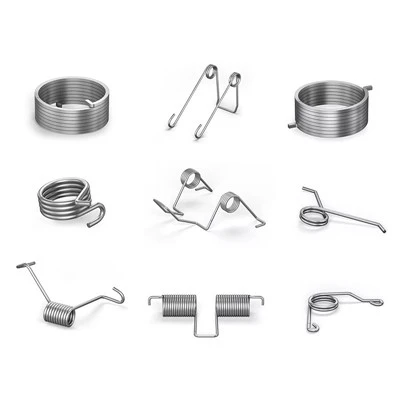
First off, let’s talk about what the spring constant actually is. The spring constant, usually denoted as ‘k’, is a measure of how stiff a spring is. It tells you how much force is needed to stretch or compress a spring by a certain amount. The higher the spring constant, the stiffer the spring, and the more force you’ll need to make it change shape.
There are a few different ways to calculate the spring constant, and I’ll go through the most common methods.
The Theoretical Method
The theoretical formula for calculating the spring constant of a helical spring (the most common type of spring made from our spring steel wire) is based on the material properties and the geometry of the spring.
The formula is (k=\frac{Gd^{4}}{8nD^{3}}), where:
- (G) is the shear modulus of the material. For spring steel wire, the shear modulus (G) is typically around (79\times10^{9}) Pa. This value represents how resistant the material is to shear stress. Different types of spring steel might have slightly different shear moduli, but this is a good average value to work with.
- (d) is the diameter of the spring steel wire. You can measure this using a caliper. It’s pretty straightforward – just place the caliper jaws around the wire and get the measurement.
- (n) is the number of active coils in the spring. Active coils are the coils that actually contribute to the spring’s flexibility. To count them, look for the coils that aren’t at the ends and are free to stretch or compress.
- (D) is the mean diameter of the spring. This is the average diameter of the spring, measured from the center of the wire. You can measure the outer diameter and the inner diameter and then take the average: (D=\frac{D_{outer} + D_{inner}}{2})
Let’s say you’re making a small spring for a household item. You measure the wire diameter (d = 0.002) m, the number of active coils (n=10), and the mean diameter of the spring (D = 0.02) m. Using the shear modulus (G = 79\times10^{9}) Pa, we can calculate the spring constant.
First, we calculate (d^{4}=(0.002)^{4}=1.6\times10^{-11}), (D^{3}=(0.02)^{3}=8\times10^{-6})
Then, (k=\frac{Gd^{4}}{8nD^{3}}=\frac{79\times10^{9}\times1.6\times10^{-11}}{8\times10\times8\times10^{-6}})
[
\begin{align*}
k&=\frac{79\times1.6\times10^{9 – 11}}{8\times10\times8\times10^{-6}}\
&=\frac{126.4\times10^{-2}}{640\times10^{-6}}\
&=\frac{1.264}{640\times10^{-6}}\
& = 1975\space N/m
\end{align*}
]
The Experimental Method
If you don’t want to go through all the calculations or if you’re not sure about the exact material properties, you can use the experimental method.
All you need is a spring made from our spring steel wire, a set of weights, and a ruler. Here’s how you do it:
- First, hang the spring vertically from a fixed point. Measure the initial length of the spring, (L_{0}), using the ruler.
- Then, start adding weights to the bottom of the spring one by one. After adding each weight, wait for the spring to stop oscillating and measure the new length of the spring, (L).
- Calculate the extension of the spring, (\Delta L=L – L_{0}) for each weight.
- According to Hooke’s law, (F = k\Delta L), where (F) is the force applied to the spring (which is equal to the weight of the added mass, (F = mg), where (m) is the mass and (g\approx9.8\space m/s^{2})). You can rewrite the formula as (k=\frac{F}{\Delta L}).
For example, if you add a mass (m = 0.1) kg, the force (F=mg = 0.1\times9.8 = 0.98) N. If the spring extends by (\Delta L=0.01) m, then the spring constant (k=\frac{F}{\Delta L}=\frac{0.98}{0.01}=98\space N/m)
You can repeat this process with different weights and then take the average of the calculated spring constants to get a more accurate value.
Factors That Affect the Spring Constant
There are a few factors that can affect the spring constant of a spring made from our spring steel wire.
- Wire diameter: As the diameter of the wire increases, the spring constant also increases. A thicker wire is stiffer and requires more force to stretch or compress.
- Mean diameter of the spring: The larger the mean diameter of the spring, the lower the spring constant. A larger – diameter spring is more flexible and easier to deform.
- Number of coils: The more active coils a spring has, the lower the spring constant. More coils mean more flexibility, so you need less force to make the spring stretch or compress.
- Material properties: Different types of spring steel have different shear moduli. If you use a higher – strength spring steel, the shear modulus will be higher, and so will the spring constant.
Why It Matters
Knowing how to calculate the spring constant is crucial if you’re using our spring steel wire to make springs for various applications. Whether you’re making springs for automotive parts, industrial machinery, or consumer products, the spring constant determines how well the spring will perform.
If the spring constant is too high, the spring might be too stiff and not provide the necessary range of motion. If it’s too low, the spring might not be able to support the required load.
So, if you’re in the market for high – quality spring steel wire to make springs with specific spring constants, we’ve got you covered. Our spring steel wire is made from the finest materials and undergoes strict quality control to ensure consistent performance.
Whether you’re a small – scale hobbyist or a large – scale manufacturer, we can supply you with the right spring steel wire for your needs. We offer a wide range of wire diameters, strengths, and finishes to meet your specific requirements.
Spring Steel Wire If you’re interested in learning more about our spring steel wire or have any questions about calculating the spring constant for your projects, don’t hesitate to reach out. Contact us to discuss your needs, and we’ll be happy to help you find the perfect solution.
References
- "Mechanics of Materials" by Ferdinand P. Beer, E. Russell Johnston Jr., John T. DeWolf, and David F. Mazurek
- "Shigley’s Mechanical Engineering Design" by Richard G. Budynas and J. Keith Nisbett
Baoding Zhongxin Spring Manufacturing Co., Ltd.
We’re known as one of the most reliable spring steel wire manufacturers and suppliers in China. With abundant experience, we warmly welcome you to buy durable spring steel wire made in China here and get pricelist from our factory. All customized springs are with high quality and competitive price.
Address: West Side, 200 Meters North of Chenzhuang Gas Station, Pangkou Town, Gaoyang County, Baoding City, Hebei Province, P.R. China
E-mail: 13292951555@163.com
WebSite: https://www.zhongxinind.com/
