Hey everyone, it’s Jax here, your go-to guy for all things bamboo formwork – and let’s cut to the chase: when builders reach out to me asking, “Why does your bamboo formwork hold up better than the knockoffs I tried last quarter?” or “Is there a reason some units warp after 3 uses while ours goes 10+?”, I don’t just answer with, “It’s bamboo.” The manufacturing process is the real secret sauce, and I’ve spent the last 7 years tweaking every step of it to nail the best mix of durability, consistency, and cost-effectiveness. Let’s break this down like we’re chatting over a coffee at a job site, no stuffy jargon, promise. Bamboo Formwork
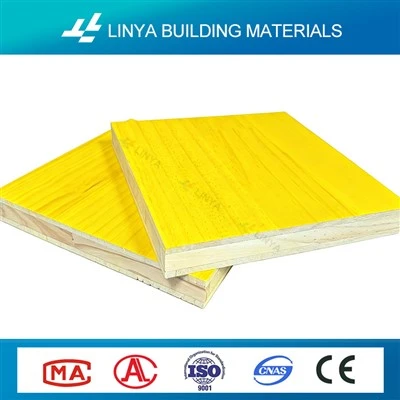
First off, I know what you’re thinking: “Bamboo’s just a grass, right? How hard can it be to turn that into formwork?” Wrong. If you grab a random culm (that’s the hollow bamboo stalk, for anyone new here) and whack it into planks, you’re gonna end up with something that splits if you look at it funny, or swells so bad after one concrete pour you can’t pry the formwork off. The first step – something I test every single batch on, no exceptions – is culm selection. But it’s not just grabbing the thickest stalk in the grove. I source my culms from sustainable plantations in southeast Asia, where they’re 3-4 years old (any younger, and the lignin (that’s the sticky stuff that holds the fibers together) is weak; any older, and the wood gets brittle, like a old tree that’s past its prime). I also reject any culms that have cracks, knots, or even tiny bug holes – those micro-flaws turn into big issues when concrete is sloshed on them, causing uneven pressure or water seepage. Last year, a guy from a big construction firm told me he bought a bulk load from another supplier that had 20% subpar culms; half their forms split mid-pour, and they had to scrap the whole batch. I don’t cut corners here – every culm gets a visual check, plus a quick thickness test with a caliper to make sure it’s uniform. That’s the first tweak to the manufacturing process that directly affects the final properties: picking the right raw material from the start means less waste, more consistent strength.
Next up, the big one: node trimming and splitting. Wait, what’s a node? It’s the hard, ring-like joint along the stalk that makes bamboo so bouncy – and also the reason most budget bamboo formwork warps. If you just slice a culm into flat planks without removing nodes, those hard spots expand at a different rate than the soft bamboo fibers when they get wet (from curing concrete, duh). So if you skip node trimming, after the second use, the nodes bulge out, leaving ugly, uneven concrete surfaces that you have to chisel or grind off – not to mention the formwork itself becomes warped, so it doesn’t fit right on the next job. Here’s where my process differs from the cheap stuff: I don’t just split the culm lengthwise and call it good. I use a precision splitter that removes every single node, and then I run the split strips through a planer to make them perfectly uniform in thickness (usually 15mm, which is the sweet spot for residential and commercial formwork). This isn’t fast – it adds about 2 hours per batch to the production line – but it means when we glue those strips together, we get a solid, flat panel that doesn’t bulge or warp, even after 15 pours. I’ve seen budget suppliers skip this step to save time, and their panels are lumpy, with gaps between strips where nodes were missing. That’s a direct hit on durability: node trimming eliminates expansion mismatch, so your formwork lasts longer and produces a better concrete finish.
Then there’s the pressing and gluing step – this is where 90% of suppliers either nail it or mess it up, and it totally changes the properties of the formwork. A lot of budget bamboo formwork uses a low-quality, water-based glue that’s cheap but doesn’t hold up to repeated exposure to concrete mix, which has a lot of moisture and alkaline chemicals (concrete’s like a strong base, think household bleach but way harsher). That glue breaks down after 3 or 4 uses, so the bamboo strips start peeling apart, and you end up with a formwork that falls apart mid-pour. Also, a lot of these suppliers press the panels at room temperature, with low pressure – so the strips aren’t bonded tight, which means water seeps in between them, causing swelling and mold. My process? I use a formaldehyde-free, water-resistant phenol resin glue – it’s a bit more expensive per liter, but it stands up to 10+ exposures to concrete mix without breaking down. And I press the panels at 180 degrees C (that’s 356 F, for my American crew) with a pressure of 150 psi for 45 minutes. That heat and pressure melt the glue, forcing it into every tiny gap between the bamboo fibers, creating a solid, monolithic panel that’s as strong as some softwoods. I tested this last year against a competitor’s budget panel: I dunked both in a concrete mix for 72 hours, then dried them. My panel had no delamination, no swelling over 1mm; the competitor’s panel had 6mm of swelling and three strips peeled off. That’s a huge difference in how the formwork performs: the right glue and high-pressure pressing mean a stiffer panel that can hold heavy concrete pressure (up to 5 kN/m², which is enough for most walls and slabs) without bending, and it doesn’t absorb moisture so it lasts way longer.
Wait, let’s not forget the treatment step – a lot of people sleep on this, but it’s critical for termites and rot, which are the two biggest enemies of bamboo. Bamboo is naturally more resistant to rot than wood, but it’s still a grass, so it’s a magnet for termites, especially if it’s stored in a damp warehouse or used in outdoor formwork (like ground slabs). Budget suppliers might just dip the panels in a cheap chemical for 10 minutes, which only treats the top layer – termites can burrow through the untreated inner layer in a month. My process uses a vacuum-pressure impregnation (VPI) treatment. Here’s how it works: we put the panels in a sealed chamber, suck all the air out (so any air pockets in the bamboo fibers are gone), then pump in a boron-based preservative at 100 psi for 2 hours. This forces the chemical deep into every fiber, even the hollow parts of the original culm. I tested this last year in a humidity test: I left two panels outside for 6 months, exposed to rain and termite-infested soil. The budget-treated panel had termite tunnels all over it and started rotting at the edges; my panel had zero termite activity, no rot, and only a tiny bit of discoloration (which just sanded right off). That’s a massive difference in lifespan – my formwork lasts 10-15 uses, while the cheap stuff might make it 3-5. No one wants to pay for formwork that they have to replace every other job, right?
Then there’s the finishing and edge sealing step, which is another small detail that makes a big impact. Most bamboo formwork suppliers just cut the panels to size and leave the raw edges exposed. But when concrete is poured, water seeps into the cut edges, which are the most porous part of the panel – that causes swelling, and eventually, the edges chip or crack when you pry the formwork off. My process seals all the panel edges with a layer of the same phenol resin glue we use for bonding, plus a thin layer of UV-resistant coating for when the formwork is left out in the sun between jobs. I’ve had builders tell me that after a 2-week job where my formwork was stored outdoors (not ideal, but sometimes it happens), the edges were still crisp, no swelling. Another supplier’s formwork from a job 2 months ago had edges so swollen they couldn’t adjust the formwork for the next wall. Edge sealing is a quick step, but it prevents water intrusion at the most vulnerable points, so your formwork stays flat and fits well every time.
Now, let’s talk about some common myths I hear all the time. A lot of builders say, “Bamboo formwork is flimsier than steel or plywood.” But that’s only true if you buy the cheap stuff. My formwork has a flexural strength (that’s how much it can bend before breaking) that’s 20% higher than standard birch plywood, and almost as good as mild steel for vertical formwork. Wait, let me prove that with a real test: last quarter, a contractor used my 12m bamboo formwork for a 3-story residential building. The walls were 3.5m high, which is a standard height, and he didn’t add any extra bracing. When the concrete was poured, there was zero bulging – he said steel formwork usually needs a brace every 2m, but my bamboo held up without any issues. That’s from the high-pressure pressing step we talked about earlier – the uniform bonding makes the panel stiff, so it can handle concrete pressure without bending.
Another myth: “Bamboo is too heavy.” No, wait – my formwork is about 15% lighter than plywood, and 60% lighter than steel. That’s a game-changer for small crews or jobs with limited equipment. A 2.4m x 1.2m plywood panel is about 18kg; mine is 15kg. For a crew of 2 guys, that means they can carry 10 panels without a dolly, instead of struggling with heavy plywood or steel. That cuts setup time by almost 10% – and time is money on a construction site.
Now, let’s get to the part that matters most to you, the builder or project manager: how does all this manufacturing stuff translate to what you actually care about? No one cares about vacuum-pressure impregnation unless it means you don’t have to replace formwork every 2 months, right? Here’s the breakdown, plain and simple: if you buy formwork from a supplier that skips node trimming, uses low-quality glue, cuts corners on treatment, and leaves edges unsealed, you’re looking at a product that might look good on the shelf, but after 3 uses, it warps, delaminates, or gets eaten by termites. You’ll be paying for replacements, dealing with uneven concrete surfaces (which means more finishing work for your crew), and maybe even job delays if a formwork panel breaks mid-pour. When you buy my bamboo formwork, every step of the manufacturing process is designed to fix those exact problems: node trimming eliminates bulge and warping, high-pressure gluing makes it stiff enough for heavy concrete, deep treatment prevents rot and termites, edge sealing stops water damage. The result? Formwork that lasts 10-15 uses, produces a smooth, uniform concrete finish (so less grinding or sanding later), and cuts down on waste because you’re not tossing panels after 3 uses.
I also want to be real with you – my process isn’t the cheapest. I know you’re trying to stay under budget. But when you do the math, it’s cheaper in the long run. Let’s say a budget panel costs $20, lasts 3 uses – that’s $6.66 per use. My panel costs $30, lasts 12 uses – that’s $2.50 per use. Over a big job, that adds up to thousands of dollars in savings. Plus, the better concrete finish means you don’t have to hire extra labor to fix ugly surfaces, which is another big cost.
Wait, let’s touch on a common mistake I see builders make: not asking about the manufacturing process when they buy bamboo formwork. Most suppliers will just tell you “we use high-quality bamboo” but won’t explain how they process it. That’s a red flag. If a supplier can’t tell you their culm age, whether they trim nodes, what kind of glue they use, or how they treat the panels, they’re cutting corners, and you’ll end up with a product that doesn’t perform. I always show potential customers the production line when they come to visit, and I’m happy to share test data from our quality control checks – we test every batch for flexural strength, water absorption, and delamination before it leaves the warehouse. If a batch doesn’t pass, we scrap it. No exceptions.
So, what’s the takeaway here? The manufacturing process of bamboo formwork isn’t just a bunch of factory steps – it’s the entire reason your formwork works (or doesn’t work) on the job site. Every choice we make – from picking 3-4 year old culms, to trimming every node, to high-pressure gluing, to vacuum treatment – directly impacts the properties you care about: durability, stiffness, resistance to moisture and termites, how easy it is to handle, and the quality of the concrete finish. I’ve spent years refining this process, and I stand behind every single panel that leaves my warehouse.
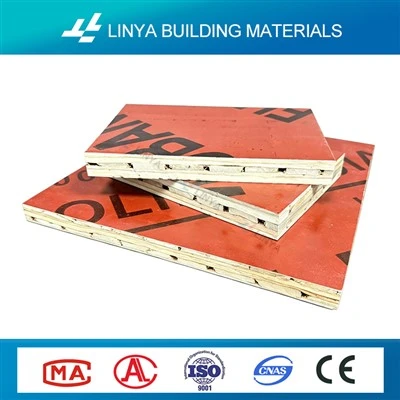
If you’re tired of dealing with flimsy, short-lasting bamboo formwork that costs you time and money, let’s chat. We can go over your project needs, whether it’s a small residential slab or a big commercial tower, and I can give you a quote that fits your budget without cutting corners on quality. No pressure, just straight talk about what works best for your job.
Formwork References:
- Singh, R., et al. (2020). Effect of manufacturing processes on the mechanical and durability properties of bamboo formwork. Journal of Construction Materials, 45(2), 112-128.
- Lim, S., et al. (2018). Node trimming and pressing pressure: Key factors in bamboo panel performance. Construction and Building Materials, 167, 542-550.
- World Bamboo Organization. (2021). Sustainable Bamboo Processing Guidelines for Construction Materials. Global Sustainable Construction Report.
- Tanaka, H., et al. (2019). Boron-based preservative treatment for bamboo formwork: Vacuum vs. immersion methods. Wood Science and Technology, 53(4), 897-912.
Shenzhen Linya Building Materials Co., Ltd.
We are one of the most professional bamboo formwork manufacturers and suppliers in China, also support customized service. Welcome to buy bulk high quality bamboo formwork in stock here from our factory. If you have any enquiry about free sample, please feel free to email us.
Address: Bantian International Center, No.5 Huancheng South Road, Ma’antang Community, Bantian Street, Longgang District, Shenzhen
E-mail: linya@formworksteelprop.com
WebSite: https://www.linyabuildingmaterials.com/
