If you’ve ever stood in front of a showroom floor full of tractors and wondered why two models with the same engine size and wheelbase have such different price tags, you’re not alone. As a tractor supplier who’s walked hundreds of buyers through these exact conversations over the past 12 years, I can tell you the difference between a standard and deluxe tractor model isn’t just a cosmetic upgrade—it’s a tailored set of features built for how you work. Let’s break this down, not with jargon, but with real-world context that matters if you’re in the market for equipment that will hold up for decades. Tractor
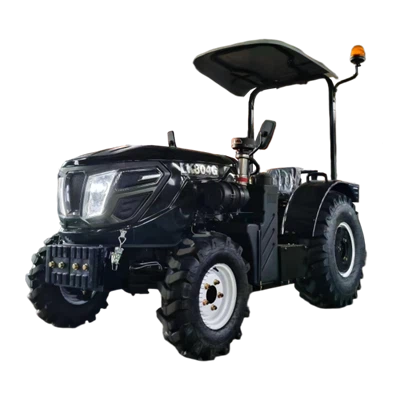
First, let’s start with the foundation: the core mechanical build. The base standard tractor is designed for the most common, high-volume tasks that most small to mid-sized farms or rural property owners tackle. That means it uses proven, durable components that prioritize reliability over extra frills. For example, the standard model will typically have a basic mechanical fuel injection system instead of an electronic one. Electronic systems offer better fuel efficiency and precision, but they’re also more complex to repair if something goes wrong out in a field with no cell service—something a lot of buyers who run on remote acreage prioritize. The transmission is another key spot: standard models often have a synchromesh transmission with, say, 8 forward and 4 reverse gears, which covers everything from tilling at low speeds to hauling hay at moderate paces. This is more than enough for tasks like mowing pastures, moving gravel, or pulling a small plow. Deluxes, by contrast, upgrade this to a powershift transmission, which lets you shift gears without depressing the clutch—a huge time saver if you’re bouncing between fields all day, or if you’re operating the tractor for long stretches without a helper. The engine itself might be identical in power output, but the deluxe version will often have a higher-grade alternator, a larger cooling system, and heavy-duty axles rated for 10-15% more weight capacity. That extra capacity isn’t just for show; it means a deluxe tractor can handle larger implements, like a 6-foot tiller instead of a 4-foot one, or a 10,000-pound hay trailer, without straining.
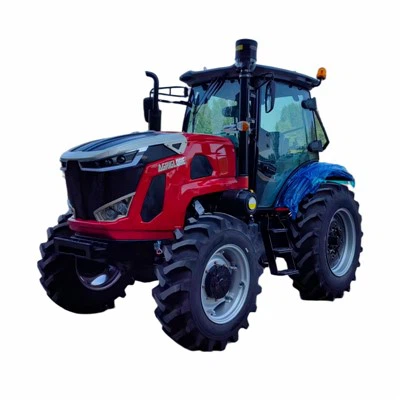
Next, the cab and operator comfort. This is the area most people notice first, but it’s not just about luxury—it’s about reducing fatigue and improving safety during long workdays. A standard tractor usually has an open station: a basic roll bar, a seat with minimal cushioning, and no enclosure. For buyers who only use the tractor a few hours a week, like a homeowner with 10 acres, this is perfectly fine. It’s cheaper to maintain, and you don’t have to worry about windows, filters, or sealing rubber that can get damaged by tree branches or dust. But for someone who runs the tractor 40+ hours a week—like a part-time farmer or a contractor using it for land clearing—an open station can be brutal. Dust, wind, extreme heat in summer, or cold in winter slows you down and increases the risk of accidents from tiredness. That’s where the deluxe cab comes in. It’s a fully enclosed space with a climate control system (heat and air conditioning), a adjustable high-back seat with lumbar support and armrests, tinted windows that block UV rays, and sound insulation that cuts cab noise by half or more. A lot of deluxe cabs also have optional features like a roof hatch for loading hay bales, a built-in radio for long work days, and USB charging ports—small touches that add up to big comfort gains. Beyond comfort, safety features in the deluxe model are more advanced. Standard tractors usually have a basic rollover protection structure (ROPS) that works, but deluxes often have a cab that’s built to meet stricter rollover and crash safety standards, plus backup lights, better mirrors, and in some models, a rearview camera to make hitching implements easier. For anyone who’s ever fumbled to line up a trailer in a dark barn, that camera is not a gimmick—it’s a time-saver that prevents wear and tear on both the tractor and your equipment.
Then there’s implement compatibility and connectivity. This is a big one that’s often overlooked when buyers are comparing standard vs. deluxe. Standard tractors use a hydraulic system with a fixed flow rate—usually around 10 gallons per minute (GPM). That works for basic implements: a front-end loader for moving dirt, a rear tiller, or a box blade. But if you want to run more demanding tools, like a post-hole digger, a hay baler, or a sprayer, you need more hydraulic power. Deluxe tractors typically have a two-stage hydraulic system that outputs 15-20 GPM, plus multiple auxiliary hydraulic ports instead of just one or two. That means you can run two implements at the same time—like operating a front-end loader bucket and a rear snow blade, or a sprayer and a tiller—without slowing down. Connectivity is another difference. Standard tractors rarely have any smart tech beyond a basic hour meter and fuel gauge. Deluxe models, especially the ones built for commercial use, come with ISOBUS compatibility, which lets you link your tractor to modern implements that can communicate with the tractor’s display. For example, a precision planter can send data to the tractor’s screen about seed spacing and depth, so you don’t have to check manually every few rows. Deluxe models also have GPS pre-wiring, so you can add auto-steer systems down the line— a game-changer for large farms that want to reduce operator error and save fuel by keeping rows straight. While these smart features aren’t essential for small-scale use, they add a lot of value if you plan to grow your operation or keep the tractor for 15+ years.
Maintenance and long-term value are also key differences. A standard tractor is built for minimal upkeep. Its parts are widely available, and repairs are often straightforward even for someone with basic mechanical skills. If you’re a buyer who prefers to handle small repairs yourself, or you work in an area where finding a specialized tractor mechanic is hard, the standard model’s simplicity is a huge plus. That said, deluxes aren’t just high-maintenance—they’re built to last under heavier use. The heavy-duty components (axles, transmission, hydraulic system) are designed to handle more hours and more extreme conditions, so if you run the tractor 1,000+ hours a year, the deluxe model will hold up better over time. For example, a standard open station tractor might last 5,000 hours before needing a major engine overhaul, while a deluxe cab tractor can easily hit 8,000 hours with the same level of care. That means even though the initial cost is higher, the total cost of ownership over 10 years can be lower for someone who uses the tractor regularly. It’s also worth noting that resale value is often stronger for deluxe models. Buyers looking for used tractors, especially those in the 50-100 horsepower range, are often willing to pay a premium for a model with a cab and more hydraulic power, because it’s more versatile for a wider range of uses.
I’ve seen this play out with customers over and over. Last year, a customer who owned 15 acres and only used his tractor for mowing and moving firewood came in looking for a standard model. He told me he couldn’t justify paying extra for a cab he’d never use, and he planned to sell the tractor in 5 years, so resale value wasn’t a big concern. That was the right choice for him. On the other end, a 30-acre hobby farmer who works the tractor 30-40 hours a week decided to go with the deluxe model after demoing both. He told me the hour he spent inside the cab during a 20-degree winter day convinced him that the extra comfort and safety were worth the cost, and he planned to keep the tractor for 15 years, so the long-term durability made sense.
So which one is right for you? If you’re a casual user with small acreage, limited work hours a week, and a tight budget, a standard tractor will meet your needs perfectly. It’s reliable, easy to maintain, and less expensive upfront. But if you’re a part-time or commercial user who puts 500+ hours a year on the tractor, needs to run multiple implements, or values operator comfort and safety, the deluxe model is a better investment. It’s not just a step up—it’s built to handle the demands of more consistent, more heavy-duty work.
At the end of the day, the difference between standard and deluxe tractors isn’t about being “better” or “worse”—it’s about being built for different uses. If you’re ready to match the right model to your specific needs, feel free to reach out to us to discuss your operation, test drive both options, and find a tractor that works for you.
Walking Tractor References
- National Agricultural Statistics Service. (2022). Tractor Ownership and Usage Trends for U.S. Farm Operations. U.S. Department of Agriculture.
- International Society of Automotive Engineers. (2021). Safety Standards for Agricultural Tractors. SAE International.
- Tractor Equipment Manufacturers Association. (2023). Hydraulic System Specifications for Agricultural Tractors. TEMA.
- American Society of Agricultural and Biological Engineers. (2022). Operator Comfort and Fatigue in Agricultural Tractors. ASABE.
- U.S. Department of Energy. (2021). Fuel Efficiency Comparisons of Mechanical vs. Electronic Fuel Injection in Small Agricultural Engines. Office of Energy Efficiency and Renewable Energy.
Shandong Ling Ke Industry Group Co., Ltd.
As one of the most professional tractor manufacturers and suppliers in China, we’re featured by quality products and good price. Please rest assured to buy cheap tractor for sale here from our factory. We also accept customized orders.
Address: 50 Meters West of the Connecting Road Between Jiuma Road and Shima Road, Fangzi District, Weifang City, Shandong Province, P.R.China
E-mail: aileenlin@sdlingkegroup.com
WebSite: https://www.lingketractor.com/
