If you’ve ever driven past a remote highway stretch, a construction site in the middle of nowhere, or a wildlife reserve with a tiny, boxy structure tucked into the treeline, you’ve probably wondered what those monitoring towers are for. I’m a supplier of these towers, and one question I get asked more than any other is: “Do they have a battery backup?” It’s such a simple question, but the answer ties into everything from how we design the towers to how they perform when the power grid fails—and let me tell you, that’s not a detail we cut corners on. Monitoring Tower
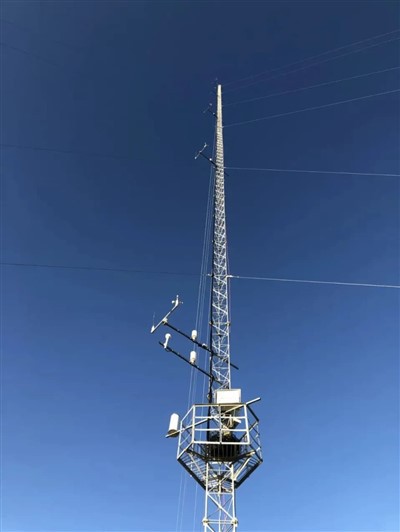
Let’s start with why battery backups even matter. Most monitoring towers run on a combination of grid power, solar panels, or small wind turbines. Grid power works great when the lines are up, but if a storm knocks out power for a day, a week, or even longer, the tower can’t stop working. If it’s monitoring construction site perimeter security, a broken pipeline, or a remote wildlife crossing, downtime means gaps in data, missed alerts, and even security breaches. Solar power is popular in sunny areas, but what happens when a week of clouds rolls through? Or when snow covers the panels? That’s where the battery backup comes in. It’s not an afterthought—it’s a core part of the system for 99% of the towers we sell.
Now, not all batteries are created equal, and we don’t just slap a random battery in there. We design our battery backups based on the tower’s power draw. A tower with a couple of security cameras, a motion sensor, and a cellular modem uses way less power than a tower with 8K cameras, a radar system, and two-way communication gear. For smaller towers, we use lithium-ion phosphate batteries—they’re lighter, last longer (up to 10 years with regular use), and handle temperature swings way better than old lead-acid batteries. Lead-acid is cheaper upfront, but they’re heavier, only last 3-5 years, and die fast in extreme heat or cold—total headache for someone maintaining a tower in, say, northern Canada or the Arizona desert. For larger towers that run heavier equipment, we might use a bank of those lithium-ion batteries, or even pair them with a small generator backup if the customer wants it. But generators are overkill for most cases, and they need fuel, which is a hassle for remote sites. Batteries are self-contained, no maintenance (mostly), and silent—perfect for residential areas or quiet wildlife zones.
How long do the backups last? That’s another common question. Again, it depends on the tower’s power usage. For a standard small tower, we size the battery to run the full system for 3-7 days without any external power. That’s enough to get through most storms or grid outages. If a customer is in an area with frequent, long outages, we can bump that up to 10 or 14 days—no extra work, just a bigger battery bank. We also add a low-battery alert, so if the backup is getting low, the modem sends a notification to whoever’s monitoring the tower. That way, someone can come top up the solar panels or check the system before it dies.
Wait, but what about off-grid towers that don’t have solar or wind? Do they still have batteries? Absolutely. Those towers rely solely on batteries, and we size them to last between 1 and 3 months, depending on how much power they use. Even a tower with just a couple of cameras can run for a month on a single lithium-ion battery, and we add a solar trickle charger to keep it topped up so it doesn’t die. There’s no such thing as a “set it and forget it” power system, but batteries make it as close as possible for remote sites.
I get pushback sometimes from customers who say, “Batteries are expensive, can’t we skip them?” The short answer is: no, not if you want the tower to work when you need it. I had a customer last year who installed a tower at a construction site in West Texas, skipped the battery backup to save a few bucks, and then a snowstorm rolled in that covered his solar panels for 10 days. When the power went out, the tower died. By the time the snow melted, he’d lost 10 days of perimeter security footage, and a piece of construction equipment got stolen. He called me a week later and ordered a full backup system—said the cost of the equipment he lost was way more than the battery would’ve cost. That’s the kind of story that sticks with me, and it’s why we make batteries non-negotiable for most clients.
But let’s be real, batteries aren’t perfect. They have limits. If a tower is running super heavy equipment 24/7, a single battery might only last a day or two. That’s why we work with customers to size the right system from the start. We also test every battery before it leaves our warehouse. In fact, we do temperature cycling tests—we leave batteries in a freezer for a week, then bake them in an oven for a week, to make sure they still work when the tower is outside in the elements. A lot of cheaper suppliers skip that, but if a battery dies mid-storm, your tower is useless.
Another thing we add to all our monitoring towers is a power management system. That’s the brain that switches between grid power, solar, and the battery. If grid power cuts out, it automatically switches to the battery in less than a second—no downtime, no missed footage, no lost alerts. That’s a big deal. Some older systems take a minute to switch over, and in that time, the modem disconnects or the camera restarts. Our power management system eliminates that, which is why our clients love it.
What about future-proofing? Batteries are always getting better, right? We’re already testing newer solid-state batteries that last twice as long, charge faster, and don’t have the same fire risks as regular lithium-ion. Once those are affordable, we’ll be switching over. But for now, our current batteries are solid—they’re compliant with all the safety standards, and we offer a 5-year warranty on all battery systems. If something goes wrong within 5 years, we replace it no questions asked.
I know when people ask about battery backups, they’re mostly worried about one thing: reliability. Can I count on my tower to work when I need it? The answer is yes, as long as it’s designed right. And that’s what we do here—we don’t just sell a tower with a battery thrown in; we build the whole system around the backup power. We talk to every customer about their site: where is it? How often does the power go out? What equipment are they running? Then we size the battery accordingly, no one-size-fits-all nonsense.
If you’re looking for a monitoring tower, don’t cut corners on the battery backup. I’ve seen too many people do it and end up paying way more later. We make it easy—we can send you a custom quote, answer any questions you have about battery life, power management, whatever. We’ve worked with construction companies, wildlife reserves, logistics firms, even small municipalities, and every single one of them values a tower that keeps working even when the power is out.
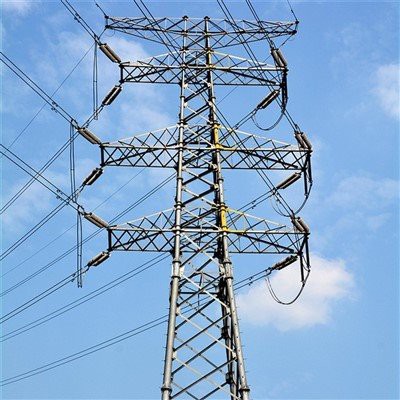
So if you’re in the market for a monitoring tower, reach out to us. We’ll walk you through all the details—battery options, power systems, anything you need. We don’t do jargon, we don’t do hidden fees, and we’re here to make sure your tower works as hard as you need it to. No more guessing if your backup will hold, no more downtime, just a system you can trust.
Electrical Tower Stand References:
- National Fire Protection Association. (2022). Standard for Stationary Battery Systems, NFPA 110.
- International Electrotechnical Commission. (2021). Lithium-Ion Batteries for Renewable Energy Storage, IEC 62619.
- U.S. Department of Energy. (2023). Remote Site Power Systems: Best Practices for Backup Power.
- Construction Industry Institute. (2022). Perimeter Security Technologies for Remote Construction Sites.
- World Wildlife Fund. (2021). Monitoring Technologies for Protected Area Wildlife Management.
Hebei Yifeng Steel Structure Co., Ltd.
As one of the most professional monitoring tower manufacturers and suppliers in China, we offer a wide range of products with superior quality. Please feel free to buy cost-efficient monitoring tower for sale here from our factory. Contact us for more details.
Address: Guangchuan Town Industrial Zone, Jing County, Hengshui City, Hebei Province
E-mail: hbyfgjg@163.com
WebSite: https://www.yf-powertowers.com/
