If you’ve ever worked in construction, industrial manufacturing, or even large-scale renewable energy setups, you’ve probably heard “BOP” thrown around like it’s just another industry shorthand. But here’s the thing: I’m a BOP supplier, and for most people outside our circle, that three-letter abbreviation doesn’t stand for some vague, random term. It’s the backbone of every project that relies on structural, mechanical, or electrical components that aren’t the “main event.” Let’s break this down, no stuffy textbook jargon, just the real deal from someone who lives and breathes BOP parts every single day. BOP
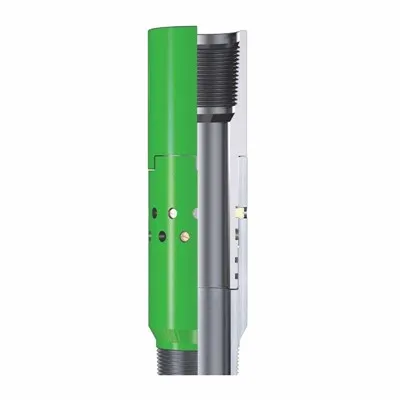
First off, the full form of BOP is Balance of Plant. That’s right—if your project is a power plant, a solar farm, a wind turbine array, or even a big manufacturing facility, the plant’s “main plant” is the core equipment that does the actual work: turbines, generators, solar panels, whatever is the star of the show. The Balance of Plant is all the stuff that holds that core together, connects it, keeps it running, and makes it safe. If you try to build a wind farm with only turbines and no BOP? Your turbines are just tall, pretty metal sticks in the ground that don’t generate a single watt. Same goes for a natural gas power plant—without BOP parts, the core boiler and generator can’t connect to the grid, or don’t have the piping to move fuel, or no structural supports to keep everything from collapsing.
I get it, a lot of folks new to the industry mix BOP up with other three-letter abbreviations. There’s blowout preventers (also BOP) from oil and gas drilling, but that’s a totally different animal—those are for stopping oil leaks deep in a well, and we don’t touch those at my shop. No, our BOP is the plant’s supporting cast, and it’s way more varied than you might think. Let’s run through the actual stuff we supply, so you can picture why BOP matters. For a solar farm, that means the steel mounting racks that hold panels at the perfect tilt angle, the cable trays that route power from the panels to inverters, the concrete footings that anchor everything to the ground (no wobbly panels here), and the transformers that step up power to send it to the grid. For a natural gas power plant, BOP includes the piping systems that carry fuel from storage tanks to the boiler, the control panels that monitor equipment 24/7, the cooling systems that keep the core from overheating, and the structural steel that holds all those parts in place. For a wind farm, it’s the tower foundations, the inter-tower power cables, the switchgear that routes electricity, and the access ladders and platforms for maintenance teams.
Here’s the secret no one tells you: BOP isn’t an afterthought. When a project team plans a big facility, they often spend 60 to 70% of their budget on the core equipment—turbines, panels, whatever the star is—and then only 30% or less on BOP. But that BOP is what determines if the project comes in on time, under budget, and actually works. I’ve seen way too many projects hit delays because they cut corners on BOP. A construction crew tried to skimp on cheap steel racks for a solar farm, and within a year, half the panels were tilted wrong, cracked, and weren’t generating power. Another time, a power plant ordered BOP piping from a random overseas supplier to save a few bucks, and the piping corroded in two years, shutting down the entire plant for six weeks of repairs. That’s why we don’t sell just parts—we’ve been supplying BOP for over a decade, so we know exactly what specs hold up in different environments. We source materials that can handle harsh coastal salt air, desert heat that hits 110 degrees, and frozen northern winters, because one size never fits all.
Let me tell you what it’s like being a BOP supplier, because it’s not just sitting in a warehouse waiting for orders. Most of our clients are EPC firms (Engineering, Procurement, Construction) that build big projects, and when they call us, it’s usually last minute. Why? Because when they’re deep in the design phase, they’re focused on the cool core equipment, and BOP gets pushed to the back. Then, a week before they need materials delivered to the job site, their BOP subcontractor bails, or they realize their original BOP order was wrong for their terrain. That’s when our phone rings. We don’t just send boxes of steel and cables—we help them troubleshoot. Last year, a solar farm in Arizona needed mounting racks that could handle not just the heat, but also monsoon winds that hit 70 mph. We didn’t just send standard racks; we worked with their engineering team to adjust the steel gauge and add extra cross-braces, so the racks didn’t blow over when the storms hit. That’s the BOP work that makes us different from other suppliers—we’re not just a vendor, we’re a partner.
A lot of people ask me, “Why is it called Balance of Plant?” The name makes sense once you think about it. The plant’s core is the generating heart, the part that does the work, and the BOP balances it out. It’s the mix of parts that turns a collection of random equipment into a functional, whole plant. Without that balance, the core doesn’t operate as intended. It’s like a bike: the wheels and the frame are the core, but the handlebars, brakes, chain, and seat are the BOP. You can’t ride a bike with just wheels and a frame—you need all the supporting parts to make it work. That’s exactly what BOP is for any industrial or energy project.
I’ve also seen BOP evolve a lot in the last five years. As more projects go renewable—solar, wind, even battery storage—BOP has had to adapt. Ten years ago, BOP for a coal power plant was mostly thick steel piping and heavy structural steel. Now, for battery energy storage projects, BOP includes modular enclosures for the battery banks, fire suppression systems that are designed for large battery arrays, and cable management that can handle thousands of volts of DC power. Even offshore wind farms have new BOP needs: heavy-duty floating platforms, subsea cables that can handle saltwater corrosion, and crew transfer vessel docks. We’ve had to invest in new equipment and train our team on these new BOP components, because the industry isn’t standing still, and neither are we.
Let me address a common misconception: BOP is only for huge power plants or big wind farms. Nope. Even small-scale projects, like a 1-megawatt solar farm for a school district, uses BOP. It’s the same parts, just on a smaller scale—mounting racks, cable trays, transformers. We supply BOP for small jobs too, because even a school’s solar array needs all the same support parts as a 100-megawatt farm, just scaled down.
Now, if you’re reading this and you’re working on a construction, energy, or industrial project, you might be thinking, “Okay, so BOP is Balance of Plant. But where do I get reliable BOP parts that don’t cut corners?” That’s where I come in. For years, I’ve built our business on being the go-to BOP supplier for projects that need parts delivered on time, specs that match their environment, and support when they hit snags. We don’t sell generic parts; every order is tailored to your project’s needs. Whether you need steel mounting racks for a solar farm, piping for a power plant, or switchgear for a battery storage site, we’ve got you covered. I’ve helped clients finish projects weeks early by having parts ready when they needed them, and I’ve saved others thousands of dollars by recommending the right BOP for their specific terrain, so they don’t have to replace parts a year later.
If you’re working on a project right now, and you’re in the procurement phase, or you’ve hit a snag with your BOP supply, reach out. I’m happy to walk through your needs, answer any questions you have, and help you get the right BOP parts delivered on time. No sales pitch, no hidden fees, just straight talk about BOP and what your project needs to succeed.

Wait, just to make sure we’re on the same page, let’s recap: BOP = Balance of Plant. It’s all the supporting parts that make a project’s core equipment work, it’s not an afterthought, and picking the right supplier makes all the difference between a project that runs smoothly and one that’s plagued by delays and repairs. That’s the real story of BOP, straight from someone who’s been in the BOP game for years.
Well Completion Tools References
- International Energy Agency (IEA) – 2023 Global Renewable Energy Update
- Solar Energy Industries Association (SEIA) – Balance of Plant Cost Trends for Utility-Scale Solar
- North American Electric Reliability Corporation (NERC) – Power Plant Balance of Plant Standards for Industrial Applications
- WindEurope – Offshore Wind Balance of Plant Component Specifications
Beijing LKM Energy Technology Co., Ltd.
We are one of the most professional bop manufacturers and suppliers in China, specialized in providing high quality OEM&ODM service. We warmly welcome you to buy durable bop in stock here from our factory. Also, quotation is available.
Address: Room 205, No. 40 Fuqian Street, Pinggu Town, Pinggu District, Beijing
E-mail: sales@lkmpetro.com
WebSite: https://www.lkmpetro.com/
