Hey there, let’s talk about something I get asked all the time as a brake disc supplier: the thickness limit for brake discs. If you’re a car guy, a shop owner, or someone just trying to keep their ride safe, you’ve probably wondered this too. I’ve been selling brake discs by size for years, and honestly, it’s not as complicated as it sounds— but it’s super important to get right. Brake Discs By Sizes
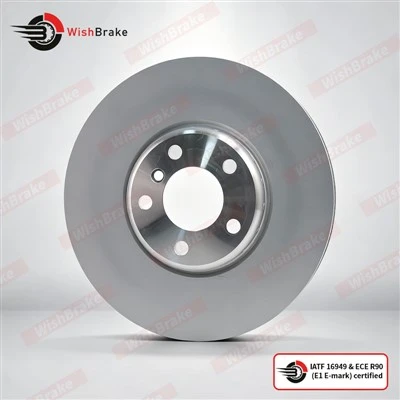
First off, let’s cut through the jargon. Every brake disc has a minimum thickness stamped right on it, usually on the outer edge where you can’t really see it unless you look close. That number isn’t just a random rule some mechanic made up. It’s there for a reason: brakes work by clamping those rotors between the pads, and if the disc is too thin, there’s not enough material to handle the heat. Heat is the #1 enemy of brake discs, right? When you’re coming down a steep hill or slamming on brakes to avoid an accident, all that kinetic energy turns into heat— like, hundreds of degrees hot. If the disc is too thin, it can warp, crack, or even split apart. That’s not a scare tactic; it’s something I’ve heard a few horror stories about from shops that skipped checking thickness.
Wait, but do all discs have the same thickness limit? Hell no. That’s why I specialize in brake discs by size— because a Honda Civic’s rotors aren’t the same as a Ford F-150’s, and a sports car’s aren’t the same as a minivan’s. Let’s break it down by vehicle type, since that’s what matters most for folks buying from me. For most passenger cars— your daily drivers, Corollas, Civics, Camrys— the minimum thickness is usually between 22mm and 28mm. But here’s the catch: that’s for new discs. As you wear them down, you can go until you hit that stamped minimum. Most shops will tell you to replace ‘em when they get within 1mm to 2mm of that number, just to be safe. No one wants to risk a brake failure because they waited too long.
For trucks and SUVs— the heavy duty stuff— those discs are thicker, obviously. Their minimums are usually 30mm to 40mm. Why? Because they’re pulling more weight, hauling trailers, so more heat and stress. If you’re running a half-ton or three-quarter ton, you can’t skimp on thickness. I’ve got tons of customers who come to me for truck-specific discs, and they always ask about the limit first. It’s not just for safety; it’s also about how the brakes feel. A thin disc will feel spongy, like you’re pressing the brake pedal all the way to the floor and still not stopping. That’s a dead giveaway you need to replace.
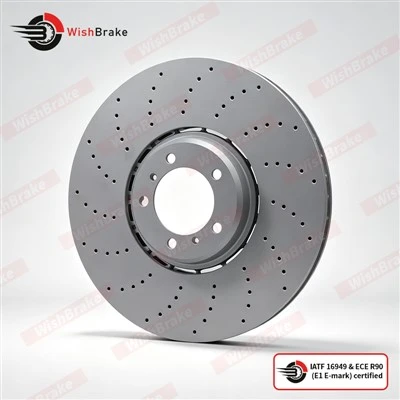
Then there’s the high performance crowd— sports cars, track cars, muscle cars. Their discs are way different. Some of ‘em are even slotted or drilled for better heat dissipation, but their thickness limits are often similar to passenger cars, or sometimes a bit higher. Wait, why? Because track cars get way hotter, so they need thicker material to handle that constant heavy braking. I sell a lot of performance discs for track days, and I always remind those guys to check thickness after every session. Even if it’s above the minimum, if it’s worn too much from repeated heat cycles, it’s gonna fail.
Now, how do you measure thickness correctly? A lot of people grab a tape measure, but that’s not accurate. You need a brake disc micrometer— yeah, the fancy tool, but it’s worth the $20 to pick one up. Measure at least two points: one on the outer edge and one in the middle. Sometimes discs wear unevenly, especially if you have a caliper that’s sticking. If there’s more than 0.1mm difference between the two, that’s a problem— you might need to resurface or replace, even if you’re above the minimum. Resurfacing is a thing, right? But here’s my rule: if the disc is already close to the minimum thickness, don’t resurface it. Grinding it down will just make it too thin. I’ve had a few customers try that and end up calling me later to buy a replacement because their disc warped after a week.
Let’s talk about common myths, because I hear these all the time. First myth: “The minimum thickness is the same for all brands.” No way. Some manufacturers stamp their discs with a higher minimum than others, even for the same car. That’s because of the material— some discs are made of higher-grade cast iron that can handle more heat, so their minimum might be a tiny bit lower, but don’t go by that. Always go by the stamped number on your specific disc, not a generic one. Another myth: “If it stops fine, the thickness is okay.” Nah. You might not feel a difference until it’s almost too late. Thin discs can warp without you noticing, especially after a hard stop, and next time you brake, it’ll vibrate like crazy. That vibration is your car telling you something’s wrong— don’t ignore it, and check the thickness right away.
What about aftermarket discs? That’s where my brake discs by sizes come in. A lot of people swap out stock discs for aftermarket ones, either for better performance or just because the stock ones are worn out. When you buy aftermarket, they should have their own stamped minimum thickness. Don’t assume it’s the same as stock. I make sure every disc I sell has a clear minimum stamp, and I include a guide for measuring, because I know a lot of buyers don’t have a mechanic’s expertise. If you’re swapping discs yourself— and more people are doing DIY these days— just double-check the thickness before you put the wheel back on. I’ve seen someone almost drive home with a disc that was 0.5mm below the limit, and that’s a close call.
Wait, what happens if you drive on a disc that’s below the thickness limit? Let’s get real. First, warping: that’s the most common. A thin disc can’t expand when it heats up, so it twists, leading to that vibration in the steering wheel. Then cracking: the heat and stress on a thin disc will cause tiny cracks to form, usually on the outer edge. If you keep driving, those cracks can spread all the way through, and the disc can break while you’re driving. And the worst case: brake failure. If the disc splits, you lose braking power entirely. Imagine going 60 mph and not being able to stop— that’s why this isn’t just a “car maintenance” thing, it’s a safety thing.
I also want to mention how wear happens. Brake disc thickness decreases over time, usually at a rate of about 1mm every 10,000 miles, depending on how you drive. If you do a lot of city driving— stop and go traffic— you’ll wear ‘em faster than someone who mostly drives highways. Aggressive braking, like slamming on the brakes all the time, wears ‘em down way quicker too. That’s why I tell customers to check their thickness every time they replace the brake pads. Pads are easier to see, but discs are the unsung hero here. If you’re changing pads and the disc is already within 2mm of the minimum, go ahead and replace the disc at the same time. It’s cheaper than doing it twice, and way safer.
As a brake discs by size supplier, I always prioritize matching the right thickness to the right vehicle. It’s not just about selling a disc; it’s about making sure your customer’s car is safe. I get calls every day from people panicking because their mechanic said their disc is too thin, and they need a replacement fast. I keep a huge inventory of sizes, so I can usually get ‘em a disc same-day, no waiting around. And I always tell ‘em the same thing: never guess the thickness, never ignore the stamped number, and never risk driving on a disc that’s below the limit.
If you’re not sure what your vehicle’s minimum thickness is, or you need help picking the right brake disc by size, hit me up. Whether you’re a DIY mechanic, a shop owner, or just someone who wants to keep their family safe, I’m here to hook you up with the right product, and I’ll even walk you through how to measure it if you’re new to this. Don’t wait until it’s too late— brake discs are one of the most important safety parts on your car, so don’t cut corners on thickness.
IATF 16949 Brake Rotors References:
- National Highway Traffic Safety Administration (NHTSA), "Brake System Maintenance and Safety"
- Automotive Brake Industry Association (ABIA), "Brake Disc Thickness Standards for Passenger and Commercial Vehicles"
- SAE International, "Performance Criteria for Friction Brake Rotors"
Qingdao Wish Auto Parts Co., Ltd.
Qingdao Wish Auto Parts Co., Ltd. is one of the most professional brake discs manufacturers and suppliers in China. We are committed to providing high quality customized automotive brake discs with competitive price. Welcome to wholesale CE approved brake discs in stock here and get quotation from our factory. 1 year warranty is available.
Address: No.45 Pengwan Road, Qingdao, Shandong Province, China
E-mail: SALES@wishbrake.com
WebSite: https://www.wishbrakeparts.com/
