Hey everyone, and welcome to the blog! If you’ve ever spent time browsing pump solutions for industrial, commercial, or even heavy-duty DIY jobs, you’ve probably stumbled across two big terms: “diaphragm pumps” and “positive displacement pumps (PDPs).” And if you’re like a lot of folks I talk to, you might’ve wondered—are diaphragm pumps actually a type of positive displacement pump? Positive Displacement Pump
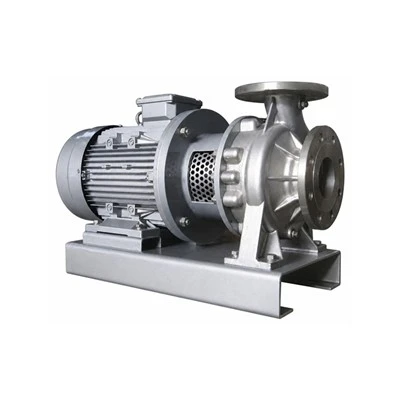
As someone who’s been working as a positive displacement pump supplier for over a decade, I get that confusion. When I first started in this industry, I mixed these two up too. I thought all diaphragm pumps were just a subset of PDPs, but it’s not that simple. Let’s break this down, because getting the line right here matters a lot—whether you’re picking a pump for food and beverage processing, chemical transfer, or even agriculture irrigation.
First, let’s hit the basics. What exactly is a positive displacement pump, anyway? PDPs work on a pretty straightforward rule: they trap a fixed amount of fluid, then move that fluid from the inlet to the outlet without letting it slip back. Unlike centrifugal pumps, which use impellers to spin fluid and build pressure, PDPs don’t rely on velocity—they rely on volume. That means if you run a PDP at a constant speed, it’ll push the same amount of fluid every single cycle, no matter what’s happening with the system’s pressure (within reason, of course). It’s like a water balloon: when you squeeze it, a set amount of water comes out, no more, no less, regardless of how hard you squeeze (that’s pressure) as long as the balloon doesn’t break.
Now, diaphragm pumps. These use a flexible membrane (the diaphragm) that moves back and forth—usually powered by air, electricity, or even a mechanical lever—to suck fluid in and push it out. On the suction stroke, the diaphragm pulls away from the pump casing, creating a vacuum that draws fluid through the inlet check valve. On the discharge stroke, the diaphragm pushes forward, builds pressure, and pushes fluid out through the outlet check valve. That’s the core of how a diaphragm pump works.
So here’s the big question: are those diaphragm pumps positive displacement? The short answer is: yes, most of them are. But wait—why would I, as a PDP supplier, clarify that? Because there’s a difference between “being a type of positive displacement pump” and “being the same as other PDPs.” Let’s unpack that.
Positive displacement pumps have two main categories, right? There’s rotary PDPs (like gear pumps, screw pumps, vane pumps) and reciprocating PDPs (which include piston pumps, plunger pumps, and yes, diaphragm pumps). That’s the official industry classification—most reputable fluid power textbooks and pump standards (like the ones from the Hydraulic Institute, which I reference all the time) group diaphragm pumps under reciprocating positive displacement pumps. But why do so many people get this wrong? Because unlike piston or plunger pumps, diaphragm pumps don’t have a direct mechanical connection between the drive mechanism and the fluid. The diaphragm is a barrier—so if you’re moving a corrosive fluid, or something that needs to stay sterile (like in food processing), the fluid never touches the drive parts. That makes diaphragm pumps super popular, but it also makes them easy to separate in people’s minds from “other” PDPs.
Wait, but let’s address the edge cases, because no rule is 100% perfect. Are there any diaphragm pumps that aren’t positive displacement? Hmm. I’ve only ever seen one niche example, and it’s not something you’d use for most industrial jobs. A few tiny, low-pressure diaphragm pumps (like the ones in a fish tank air pump? No, wait, that’s aeration, not fluid transfer. Wait, no—some super small diaphragm pumps used for things like spray bottles might not fit the strict definition, because they don’t trap a fixed volume per cycle. But for any diaphragm pump we sell (and most commercial, industrial ones), they’re 100% positive displacement. Let me confirm that with the Hydraulic Institute’s Pump Standards—yeah, their 9.6 standard for positive displacement pumps explicitly lists diaphragm pumps as a reciprocating variant. So that’s solid.
Now, let’s talk about why that classification matters for you as a buyer. If you need a pump that’s consistent for metering, or can handle viscous fluids, or self-prime without a lot of extra parts, a positive displacement diaphragm pump is perfect. Let’s say you’re in the chemical industry, transferring a highly corrosive acid. A centrifugal pump would eat away at the impeller, right? A piston pump might have metal parts that corrode, so the fluid would mix with metal shavings. But a diaphragm pump—since the diaphragm is usually made of chemically resistant material like PTFE, and the wetted parts are only the diaphragm and the check valves—avoids that. And since it’s a PDP, it’ll meter the acid at a fixed rate, which is non-negotiable for jobs where you can’t have too much or too little chemical.
Wait, but let’s compare diaphragm pumps to other PDPs to show why they’re a distinct subset. Let’s take gear pumps, which are rotary PDPs. Gear pumps have two interlocking gears that trap fluid between the gears and the casing, then push it to the outlet. They’re great for high-volume, low-pressure jobs, but they’re not good for fluids with solids—since the solids can get stuck between the gears and damage them. Diaphragm pumps, on the other hand, can handle small solids (like debris in wastewater) because the check valves can pass smaller particles, and the diaphragm doesn’t have tight gaps like gear teeth. That’s a huge plus for agriculture, municipal wastewater, or construction sites where you’re pumping dirty water.
Another difference: self-priming. Most PDPs, including diaphragm pumps, can self-prime—meaning they can pull fluid from a supply that’s below the pump’s inlet, without needing to fill the pump casing first. Centrifugal pumps can’t do that unless you add a priming pump. So if you’re setting up a pump in a remote location where you can’t easily fill it, a diaphragm PDP is way easier.
But here’s a common misconception I hear a lot: people think “positive displacement” means a pump is unbreakable, or that its flow rate never changes. That’s not true. For any PDP, including diaphragm pumps, flow rate depends on two things: the speed of the drive, and the displacement per cycle. If you run a diaphragm pump faster, it’ll move more fluid. If you change the size of the diaphragm, or the stroke length, you can adjust the displacement. But unlike centrifugal pumps, where flow rate drops as pressure increases, a PDP’s flow rate stays almost the same, even when pressure goes up—until the pressure gets so high that it causes leaks or breaks the diaphragm. That’s the key benefit for jobs like dosing, where you need exact amounts every time.
Let me give a real example. Last year, we worked with a craft brewery that needed to pump food-grade yeast from a storage tank to their fermentation vats. They tried a centrifugal pump first, but the yeast’s viscosity was too high, so the centrifugal pump only moved half the amount they needed. Then they tried a gear pump, but the yeast had small hop particles that got stuck between the gears, causing the pump to seize up. We recommended a diaphragm positive displacement pump, and it’s been running for two years without any issues. Because it’s a PDP, it moves the same amount of yeast every minute, regardless of the pressure from the tank, and the diaphragm (made of food-grade EPDM) keeps the yeast from touching the drive parts, so it stays pure. That’s exactly why the classification matters here.
Now, let’s clear up another confusion: sometimes people call diaphragm pumps “air-operated double diaphragm (AODD) pumps,” which is a specific type of diaphragm pump. AODDs are super common in industrial settings, and they’re definitely positive displacement. They use compressed air to power two diaphragms moving in opposite directions, so one is doing the discharge stroke while the other is doing the suction stroke—so they have a near-continuous flow, which is better than a single-diaphragm pump that has a bit of a pause between strokes. If you see an AODD pump, that’s a reciprocating positive displacement diaphragm pump, no question.
Wait, but what about electric diaphragm pumps? They’re also positive displacement, right? Yep. Some are driven by a motor that turns a crankshaft, which moves the diaphragm back and forth. Same core principle: trap fluid, move it, fixed volume per cycle. So regardless of the power source (air, electric, hydraulic), diaphragm pumps are almost always positive displacement.
Now, as someone who sells positive displacement pumps, why does this classification come up so much? Because a lot of pump buyers are used to centrifugal pumps, which are the “default” for many jobs, but PDPs—including diaphragm pumps—fill a niche that centrifugals can’t. If you’re moving viscous fluids, corrosive fluids, fluids with solids, or need precise metering, a centrifugal won’t cut it. That’s where PDPs, especially diaphragm models, shine.
But let’s be honest: diaphragm pumps aren’t perfect. They have a lower flow rate than rotary PDPs like gear pumps, for one. And the diaphragm itself is a wear part—you’ll have to replace it every 1-5 years, depending on how hard you run it and what fluid you’re pumping. But compared to other PDPs, the diaphragm is cheap and easy to replace, which is a big plus for maintenance.
So to circle back to the original question: Are diaphragm pumps positive displacement pumps? The answer, per industry standards, is a resounding yes. They’re a subset of reciprocating positive displacement pumps, distinct from rotary PDPs like gear or screw pumps, but still firmly in the PDP family.
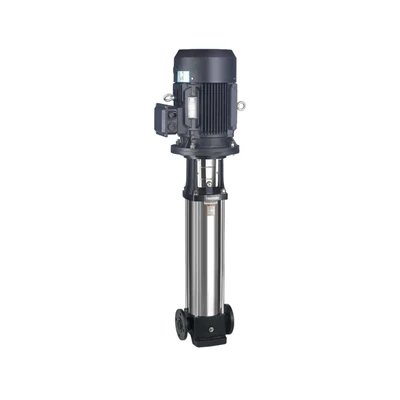
Now, if you’re in the market for a pump and you’re not sure if a diaphragm positive displacement pump is right for your job—whether you’re handling chemicals, food, wastewater, agriculture, or anything in between—let’s talk. I’ve worked with thousands of customers over the years, and I can help you pick the right pump, whether it’s a diaphragm PDP or another type. Don’t waste time with pumps that won’t hold up to your needs—reach out, and we can walk through your project, your fluid type, your flow rate, and your pressure requirements to find the perfect fit.
Self-priming Pump References
Hydraulic Institute. (2019). Pump Classification Standards: Positive Displacement Pumps (ANSI/HI 9.6). Hydraulic Institute, Cleveland, OH.
Garrett, T. K. (2021). Fluid Power Basics: Positive Displacement vs. Centrifugal Pumps. Industrial Press, New York, NY.
Pump Industry Association. (2022). Diaphragm Pump Applications for Industrial and Commercial Use. Pump Industry Association, London, UK.
Zhejiang Kaicheng Pump Valve Co., Ltd.
Zhejiang Kaicheng Pump Valve Co., Ltd. is one of the most professional positive displacement pump manufacturers and suppliers in China, also supports customized service. We warmly welcome you to buy advanced positive displacement pump made in China here and get quotation from our factory. For price consultation, contact us.
Address: No.501 Zhangbao North Road, Dong ou Industrial Park, Oubei town, Yongjia, Zhejiang Province, China
E-mail: sales@cnkcmp.com
WebSite: https://www.kcmpumps.com/
