Hey there, if you’ve ever shopped for aluminum extrusions, the first question on your mind’s probably “What’s the cost per pound?” — and let’s be real, that’s not a straightforward number. As a local aluminum extrusions supplier, I deal with this question every single day, so I’m gonna break down exactly what goes into that price, no corporate jargon, just real talk. Aluminum Extrusions
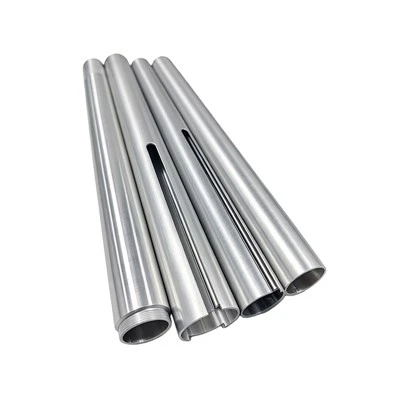
First, let’s get one thing straight: aluminum isn’t like a commodity that has a fixed price per pound, same as milk or gas. It’s got a bunch of moving parts, and if you’re a buyer, ignoring those parts can leave you either overpaying or under-spec’ing a project. I’ve seen small fabrication shops come to me thinking “aluminum is $1.50 a pound, that’s my budget,” only to get sticker shock when their order is twice that — and vice versa, big aerospace guys who think “extrusions are $5 a pound” and walk away because they don’t realize their custom profile was the culprit.
Let’s start with the biggest chunk: raw material costs. Most extrusions start with 6061 or 6063 aluminum billets, right? Those are solid logs of aluminum that get heated up and pushed through a die to make the shape you need. Raw billet prices track the London Metal Exchange (LME) aluminum price, which bounces around a lot — last year it was around $2.20 a pound, this year it’s closer to $1.90, but it spiked to $2.80 in 2022 because of energy costs for smelting. Wait, smelting is a huge hidden part here. Aluminum is a energy-heavy metal to make, so if electricity prices go up, billet prices jump. That’s why you’ll see raw material swing 10-15% in a year — I had a client last quarter who locked in a price for 10k lbs of extrusions two months early, saved them $3k because prices dropped that fast.
But raw material’s only like 40-50% of the final extrusion cost. The rest is where it gets tricky, and where a lot of suppliers lowball buyers to get the job, then nickel-and-dime them later. Let’s break that down step by step:
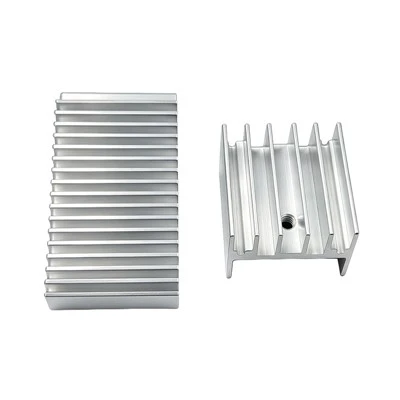
First, die cost. A die is a custom steel tool that’s made to push the aluminum into your exact profile — if you’re making a standard angle or square tube, that’s a cheap die, like $200-$500. But if you’ve got a weird, intricate shape, like a hollow profile for a window frame or a heat sink with 12 fins? That die can run $2,000-$10,000. And here’s the thing: that die cost gets spread over your order. So if you order 1,000 lbs of that intricate profile, you’re adding $2 per pound just to cover the die. If you order 10,000 lbs, that die cost drops to 20 cents a pound. I’ve had clients come to me with a 500-lb order for a custom medical part, and they were confused why the cost was $4 a pound — that’s the die. They thought it was all aluminum, but no, the tooling kills small orders.
Then there’s extrusion run costs. Not all extrusions are the same size. You’ve got small, thin profiles that run fast, or big, thick ones that take longer to push. For example, a 1-inch solid round bar runs maybe 5 lbs per hour per extrusion press, while a complex aerospace stringer might only run 0.5 lbs per hour. Labor and press time are a big deal here — presses cost a lot to run, so slower runs equal higher cost per pound. Also, if you need a special finish — anodizing, powder coating, polishing, even a simple mill finish — that adds another cost. Anodizing a part can be 20-50 cents a pound, powder coating is 15-30 cents, and if you need a custom color or a hard coat, that’s even more. I had a solar panel manufacturer last year who needed extrusions with a specific matte black powder coat — they paid an extra 25 cents a pound, but it was worth it to match their panels.
Wait, also, alloy matters. 6061 is the workhorse, right? It’s strong, weldable, cheap. 6063 is softer, better for finishes, a tiny bit more expensive — like 5-10 cents a pound. But if you need something stronger, like 7075 aluminum for aerospace or automotive parts, that’s 20-30 cents a pound more than 6061. A lot of new buyers don’t realize that choosing the wrong alloy can cost them big — don’t spec 7075 if 6061 works, but also don’t spec 6061 if you need high strength, because it’ll fail.
Now, let’s talk about real numbers — the stuff you actually see. For standard, off-the-shelf extrusions: 6061 or 6063, simple shapes, no custom dies, mill finish, order 10,000 lbs or more. That’s usually $2.00-$2.50 per pound as of 2024. If it’s a medium order, 1,000-5,000 lbs, same standard stuff, that’s $2.50-$3.25 per pound. Now, custom stuff: 500-1,000 lbs, intricate shape, maybe a finish, that’s $3.50-$5.00 per pound. I’ve had a job for a robotics startup where they needed a super custom, lightweight profile for a robot arm — that cost me $6.25 a pound for their 300-lb order, because the die was $4,500, and the run was slow.
But wait, there are caveats. If someone tells you “aluminum extrusions are $1.25 a pound” — run. That’s a red flag. Usually that price is for raw billet, not finished extrusions, or it’s for a huge, super basic order, maybe with a low-quality alloy, and they’re hiding the die or shipping costs. I’ve seen suppliers lowball new buyers with that number, then hit them with $1 in shipping per pound and $500 in die fees, so the real cost ends up being $3 a pound anyway. Conversely, if someone quotes you $7 a pound for a standard angle, that’s probably unnecessary — they’re either overcharging, or they’re doing a special finish you don’t need, or cutting corners on quality.
Another big factor: volume discounts. I’ve had a construction company order 50,000 lbs of 6063 square tube for a building project, and their cost was $1.95 a pound — because we spread the die cost over that big order, and they’re a repeat client, so we gave them a break. If you’re a small business with a 200-lb order, you won’t get that discount, obviously. Also, shipping: aluminum is heavy, so if you’re ordering from a supplier across the country, shipping can add 50 cents to $1.50 per pound, depending on how far. I work with local fabrication shops, so I can usually get their shipping cost down to 25-50 cents a pound, which makes a huge difference.
What about specialty stuff? Like heat sinks for electronics, or extrusions for window frames, or automotive parts. Heat sinks often have intricate fins, so die costs are higher, but if you order a lot, you can get it down to $3-$4 a pound. Window frames are usually 6063, medium complexity, so around $2.75-$3.50 a pound for standard finishes. Automotive extrusions might be 6061 or even a custom alloy, so $3.25-$4.75 a pound.
Wait, let’s also talk about what affects long-term costs, not just upfront price. A lot of buyers fixate on per-pound cost, but you might pay a little more per pound for a higher quality extrusion that doesn’t warp, or has a better finish that lasts longer. For example, a lower-quality anodized extrusion might peel in 2 years, while a hard coat anodized might last 10 — so even if it’s 50 cents more per pound, it saves you money on rework. I tell every client: don’t just pick the cheapest quote. Ask what’s included — die fees, shipping, alloy grade, finish. One client of mine went with a $2.25 a pound quote for a custom part, instead of my $2.75 a pound, because it was $1,500 cheaper upfront. A month later, the supplier’s die was off, so the parts didn’t fit their machines, and they had to re-make the whole order, costing them $12,000 in downtime. That’s way worse than paying the extra 50 cents a pound.
Now, if you’re looking to get a accurate quote, here’s what you should have ready: the alloy you need, the shape (draw a sketch if you can), the total order weight, any finish requirements, and your timeline. As a supplier, I can’t give you a exact number over the phone, but I can give you a range, and break down exactly why. A lot of new buyers think suppliers are hiding something, but no — the variables just change too much. I had a guy call me last week, just say “I need aluminum extrusions, how much per pound?” I told him I need to know those five things, and he came back 2 days later with all the info, and I quoted him $2.80 a pound, which was right for his 1,200-lb order of 6063 mill finish rectangular tube.
Also, common myths: aluminum extrusions always get cheaper the more you order — yes, that’s true, but only up to a point. If you go from 10k lbs to 100k lbs, the cost won’t drop more than 10-15%, because raw material and die costs are already spread. It’s not linear forever. Another myth: all 6061 is the same. No — some suppliers use scrap aluminum, which is cheaper, but it has more impurities, so it’s harder to extrude, and the parts might not be as strong. I only use prime billet, so my 6061 is a tiny bit more expensive, but the parts are consistent, no defects. That’s why I don’t compete on the lowest per-pound cost — I compete on reliable quality, and transparent pricing.
If you’re planning a project, don’t make the mistake of guessing the cost. A lot of people budget based on random Google searches that are 6 months old, or raw billet prices, not finished extrusions. Reach out to a supplier early — even before you finalize your design — because changing a shape slightly can cut die costs a ton, which cuts your per-pound cost. For example, a friend of mine was designing a bike frame, and he had a weird multi-bend shape that needed a $6,000 die. We suggested a simpler profile that still worked for his design, and the die dropped to $1,500, so his per-pound cost went from $4.50 to $2.90. That’s a huge difference, just from tweaking the design.
Wait, also, scrap value? If you’re a buyer, you might think “I’ll just buy scrap aluminum and extrude it myself” — that’s a disaster for most people. Extruding aluminum requires specialized presses, heating equipment, and quality control, which costs tens of thousands of dollars in equipment. For small to medium projects, it’s way cheaper to buy finished extrusions than to set up your own line. I’ve had a few clients try that, and they end up spending way more than they budgeted, because scrap aluminum is inconsistent, and they get a lot of defective parts.
So putting it all together, the cost of aluminum extrusions per pound in 2024 usually ranges from $1.80 for a large, standard, off-the-shelf shape, up to $6 or more for small, custom, intricate parts with special finishes. The biggest drivers are: raw aluminum billet price, die cost and order volume, extrusion run complexity, alloy grade, and finish.
If you’re ready to get a real quote for your project — whether it’s a small shop order, a big construction job, a custom part for aerospace or robotics — hit me up, and I’ll walk you through every line item, no hidden fees. No corporate fine print, no vague numbers, just straight pricing tailored to your order.
Industrial Aluminum Profiles References
- Aluminum Association. (2024). Extrusion Cost Drivers: Raw Materials, Tooling, and Production.
- London Metal Exchange. (2024). Aluminum Price Benchmarks and Market Trends.
- The Fabricator. (2023). Cost Analysis for Aluminum Extrusions: A Guide for Buyers.
- ASM International. (2022). Aluminum Alloy Selection for Extrusion Applications.
Xiamen Xihong Aluminum Industry Co., Ltd.
As one of the most professional aluminum extrusions manufacturers and suppliers in China, we’re featured by quality products and good service. Please rest assured to wholesale bulk durable aluminum extrusions made in China here from our factory. Customized orders are welcome.
Address: Unit East-1, 1st Floor, Phase II Factory Building, No.43 Xingbei Road, Jimei District, Xiamen City, China
E-mail: zhenghaiying@xmxhly.com.cn
WebSite: https://www.xihongaluminum.com/
