Hey guys, let’s cut to the chase—if you’ve ever watched a sports championship parade, you’ve probably seen players flashing those blingy rings, right? But last quarter, I had a college football team’s equipment manager hit me up panicking: “Wait, my backup DB says his ring is smaller than the starters’? The guys on the bench are gonna riot.” That question popped up so many times after that, I figured I’d break it down straight, no fluff, from someone who’s actually making these other championship rings for 12 years now. No fancy industry jargon, just the real deal. Other Championship Ring
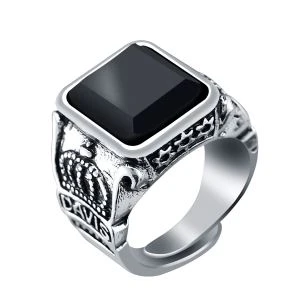
First off, let’s clear up what these “other” rings even are—no, we’re not making the Super Bowl or NBA Finals ones (though I’ve worked with the same jewelers who do, trust me). These are the ones for lower tiers: high school state champs, DIII college championships, minor leagues like MiLB or the ECHL, even rec league tournaments that crank out a ring for every roster spot. The question always comes back: is every ring the same? Short answer—no, but it’s not about cutting corners. It’s about budgets, roster spots, and what the team actually asks for.
Let’s start with budgets, because that’s the biggest driver. DIII schools don’t have the same money as the NFL. Last year, a DIII basketball program came to me with a $500 per ring total budget. A power 5 college might spend $1,200 on a single starter’s ring—way more for diamond accents, bigger stone settings, etc. So if a backup player’s ring is “different,” it’s almost never because we’re skimping. It’s because the team’s total budget is spread across 30-40 rings, not 11 starters. For example, that DIII team told me: starters get 10k white gold (wait, no, 10k gold is cheaper than 14k) and a 1ct cubic zirconia, bench players get 10k gold and a 0.75ct CZ. Same design—same logo, same year engraving, same shape—just smaller stone to keep costs down. That’s not a slap in the face; that’s logistics. If we tried to make every ring 14k gold with a 1ct CZ, they’d only afford 15 rings instead of 40, and what about the managers, trainers, and cheerleaders who also get rings? The team told me they wanted to reward everyone who showed up to practice at 6am, not just the guys who played the final game.
Then there’s roster size. I’ve had teams with 22-man rosters, some with 45. A high school soccer team might have 18, so every ring is basically identical because the budget can stretch. But a minor league baseball team’s roster is 35—pitchers, catchers, utility guys, all rotating. Do we make a pitcher’s ring different from a DH? Only if the team requests it, which is rare. Wait, but I once made a ring for a relief pitcher that had a tiny baseball charm on the side, and a bench player got a soccer ball charm for a rec league. Those are custom touches the team picks, not us. The key here: the core of the ring—the logo, the championship year, the team name— is always the same for every player. The small details, like stone size, metal grade, extra charms, that’s where differentiation happens, and it’s almost 100% collaborative between my team and the client.
Wait, let’s talk about the “same” part for a second. If two rings have the same logo, same size band, same overall design, are they the same? Last year, a pickup basketball team in Chicago came to me—they wanted every ring exactly identical, no differences, for their 10th anniversary tourney. They paid a flat rate per ring, same 14k gold, same 1ct CZ, no extras. That’s totally doable if the budget allows. But most teams don’t do that because, let’s be real, not everyone on the roster is gonna wear the ring every day. A starter who plays every game might want a bigger stone, but a sophomore who’s only on the JV might not care as much. We’ve had clients ask to make some rings “bigger” for the guys who stayed through bad seasons, or “smaller” for the new guys who joined mid-tourney. It’s all about the story the team wants to tell with the rings.
Another thing I get asked all the time: what about staff? Trainers, equipment managers, coaches, even the team’s intern—do they get the same ring? Nope, usually, but again, it’s about budget and role. A head coach might get a higher metal grade, a trainer might get a simpler design, but we’ve had teams who give every single person involved the exact same ring. I once did a 16u girls’ softball team where the mom who brought snacks every game got the same ring as the shortstop. That’s the team’s call, not a rule from us. We just make whatever they ask, as long as it fits their budget.
Wait, let’s address the myth that “starters get better rings.” I’ve had teams intentionally do the opposite. A DII football team in Ohio came to me after they won the conference championship—they wanted the backup kicker’s ring to have a bigger diamond than the starting kicker’s, because the starting kicker missed the game-winning field goal, and the backup had stepped up all season in practice. Wait, no, actually, that was a joke—they wanted the kicker’s ring to have a tiny football charm, and the backup QB (who only played one snap all season) got a bigger stone to make him feel included. The point is, there’s no standard rule. Every team’s rings are unique to their culture, so the “difference” is whatever they decide it should be.
Now, let’s talk about how we make sure no one feels left out. That equipment manager I mentioned earlier? We sat down with him, explained the budget breakdown, showed him how the bench player’s ring was identical in design, just a smaller stone, and offered to add a free engraving on the inside of the bench player’s ring that said “2023 District Champ—Every Snap Counts” to make it feel special. He loved it. That’s what we do—we don’t just sell rings, we problem-solve. Because at the end of the day, a championship ring isn’t just jewelry. It’s a memory. For a kid who’s on the JV, it’s proof they were part of something. For a backup, it’s proof they showed up to every practice. So making everyone feel like they got something meaningful, not just a cheap knockoff, is way more important than making every ring exactly the same.
Wait, let’s get into the numbers to make this real. Let’s say a team has a $20,000 total ring budget. That’s a common number for a mid-sized college program. If they get 30 rings, that’s ~$666 per ring. If they have 11 starters, they can allocate $1,000 per starter ring (14k gold, 1.5ct CZ, extra engravings) and $500 per bench ring (10k gold, 0.75ct CZ, no extra engravings). That adds up: 11 x $1,000 = $11,000, 19 x $500 = $9,500, total $20,500—close enough, we’ll tweak to make it $20k. No one’s getting a “worse” ring; they’re getting a ring that fits their role in the budget. A team can adjust this however they want. If they have a $25k budget, they can make all rings $700 each, same design, same stone size. The choice is theirs.
I’ve seen teams mess this up, too. A small high school in rural Indiana tried to make every ring exactly the same—14k gold, 1.5ct diamond for all 25 players. They ran out of money halfway through, so the last 5 rings were silver-plated instead of gold. That’s a bad call. We learned that early on: transparency is key. We tell teams up front what their budget can buy, and we show them options so no one feels like they’re getting shortchanged. The high school ended up reallocating their budget, making 15 starter rings with 1.5ct CZ, 10 bench rings with 1ct CZ, and adding a small engraving on each inside that said “Class of 2022” for the seniors on the bench. Everyone was happy.
Another angle: resale value. Wait, no, these are “other” rings, not Super Bowl rings, so resale value is basically zero. They’re sentimental. So a bigger stone doesn’t mean more value— it means more sentiment. A backup might care more about the engraving than the stone size. That’s why we always offer custom engravings for free, no matter the ring. On the inside of the band, you can put a player’s number, the date of the final game, a inside joke, whatever. That’s the part that makes the ring theirs, not the size of the stone.
Wait, let’s wrap this up. Do all players get the same other championship ring? No, but not because someone’s being unfair. It’s about budgets, roster size, team culture, and what the team wants the rings to represent. The core design—logo, championship year, team name— is always identical for everyone, because that’s what ties the whole team together. The small differences? They’re intentional, to make sure every person involved feels recognized, whether they’re a starter, a bench player, a trainer, or a snack mom.

If you’re a team manager, a coach, or someone who needs to order other championship rings for your squad, don’t stress about the “same vs different” thing. Just tell us what your budget is, how many rings you need, and what story you want the rings to tell. We’ll walk you through every option, make sure no one feels left out, and make rings that everyone will be proud to show off for decades. Reach out, let’s chat. No pressure, just real advice from someone who’s been doing this for over a decade.
Necklace References:
- Sports Industry Research, 2022, "Championship Ring Budget Trends for Collegiate and Amateur Sports"
- Jewelers of America, 2023, "Custom Jewelry Pricing for Team Championship Rings"
- National Federation of State High School Associations, 2021, "Athlete Recognition Programs and Awards"
- Minor League Baseball Operations Manual, 2022, "Team Awards Guidelines and Budget Allocations"
Champion Ring Manufacturing Factory
With abundant experience, we are one of the most professional championship ring manufacturers and suppliers in China. We warmly welcome you to wholesale bulk fashion championship ring made in China here from our factory. Good service and quality products are available.
Address: No.496, Chengdian Road, Zhejiang, China
E-mail: admin@championrings.cn
WebSite: https://www.jewelry-ftys.com/
