Hey everyone, thanks for stopping by! I’m Jake, and for the last 8 years, I’ve been running the side that supplies genuine Nissan engine parts to shops and DIY folks across the Southeast. The question I get more than any other these days is: “Do Nissan engine parts need some kind of special lubricant that’s not just the off-the-shelf stuff I grab at the auto parts store?” Nissan Engine Parts
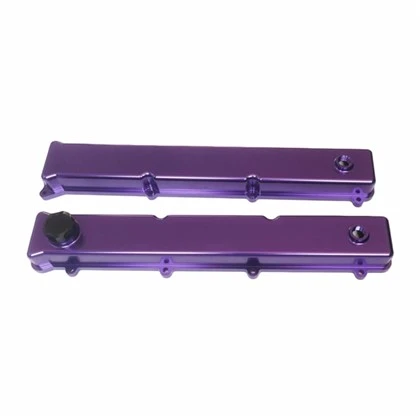
Look, I get it—there’s a ton of noise online about “performance blends” or “OEM-only lubes” that make it sound like if you skip the right stuff, your engine’s gonna seize up faster than a forgotten lawnmower in winter. But let’s cut through the hype, talk facts, and make sure you’re not wasting money on stuff you don’t need, or worse, screwing up your Nissan by using the wrong lube.
First off, let’s back up a sec. Why would Nissan make any engine part different from, say, a Honda or Toyota? Their engines are built to tight specs—like, the clearance between piston rings and cylinder walls is measured in thousandths of an inch, right? For their newer models—think the VR30DDTT in the 400Z, or the QR25DE that’s been in Altimas and Sentras for 20 years—they engineer every single part to work with the fluids that hit the factory line. That includes engine oil, obviously, but also the stuff for camshafts, valve lifters, even the timing chain tensioners that are super easy to mess up if you use the wrong lube.
Let’s start with the basics: engine oil. This is the big one, and it’s where most people get tripped up. A lot of folks think “any 5W-30 will work” for their Nissan, but here’s the thing—Nissan has their own standard, right? It’s called Nissan Genuine Oil, and it’s not just a rebranded Penzoil or Castrol. It’s formulated to handle the specific friction points in their engines, especially the ones with direct injection (DI) systems. DI engines run hotter than older port-injected ones, and they have a tendency for carbon buildup on intake valves. The special lubes Nissan makes for these engines have additives that fight that carbon way better than your average store-brand oil.
Wait, but what if I use a different oil that meets the same API or ILSAC specs? Let’s test that—last year, a guy brought in a 2019 Rogue with a QR25DE that had ticking noises in the valvetrain. He’d been using a discount 5W-30 from the local big-box store, and after pulling the valve cover, we saw the hydraulic lifters were gunked up with sludge. We checked the oil spec— it met ILSAC GF-5, but it didn’t have the friction modifiers Nissan builds into their oil. Those modifiers are designed to keep lifters sliding smoothly without sticking. So yeah, even if it’s a “top-tier” oil, if it’s not meeting Nissan’s specific requirements, it could cause issues. That’s not to say you can’t use a different brand that does meet Nissan’s specs—just make sure it’s not a random off-brand that cuts corners on additives.
Now, let’s talk about the parts I supply—Nissan-specific engine parts, like timing chains, camshafts, rod bearings, and the little bushings that hold the valvetrain together. A lot of people ask if these parts need a special break-in lube. Break-in is huge, right? When you install a new set of pistons or a timing chain, the surfaces aren’t perfectly polished—they have tiny micro-scratches that need to wear down smoothly instead of grinding against each other and causing metal shavings.
Here’s the trick: Nissan doesn’t recommend using a random “assembly lube” off the shelf. They actually tell you to use their genuine Nissan assembly lube, or a high-zinc engine oil for break-in. Wait, zinc? I know a lot of hot rod guys swear by zinc for flat-tappet camshafts, but why does Nissan care? A lot of older Nissans (like the S14 240SX with the KA24DE) have flat-tappet camshafts, not the roller cams you see in newer models. Flat-tappet cams rely on that zinc (or anti-wear, AW, additives) to prevent the cam and lifter from seizing during the first 10-20 minutes of operation. If you use an oil that’s low in zinc (which a lot of modern “low-viscosity” oils are, for fuel economy), you’ll end up with cam wear that’ll cost you a camshaft replacement—something I’ve seen way too many times.
One of my regular customers is a shop owner who specializes in older Nissan Z cars. He used to use whatever break-in lube he could find until he started using Nissan’s assembly lube a couple years back. He told me that since making the switch, he’s had zero cam failures during break-in, whereas before, he’d have one every couple months. That’s not a fluke—those parts are machined to fit with that specific lube, so using a generic one can throw off the break-in process.
What about other fluids that are close to engine parts? Like coolant, wait no— that’s for the block, but what about the power steering fluid? Wait no, let’s stay on engine parts. Oh, right—variable valve timing (VVT) actuators. Those are the little units that change cam timing for better power and fuel economy, and they’re in almost every Nissan made since the early 2000s. A lot of people don’t realize that the VVT actuator uses the engine oil as its working fluid, so if your engine oil is low-quality, that’s directly affecting the VVT unit. The VVT has tiny gears and solenoids that need the right friction and protection, so Nissan’s oil specs aren’t just for the engine—they’re for those parts too. I’ve had people send back VVT actuators saying they’re defective, and when we check their oil, it’s been changed every 5,000 miles with a cheap oil—turns out the oil’s additives wore out, and the actuator seized up. That’s not a part defect, that’s a lube issue.
Now, let’s address the myths I see floating around. First myth: “You need to use expensive synthetic oil exclusively.” No, synthetic works great, but if your Nissan is an older model (pre-2000, say a D21 pickup), you can use conventional oil as long as it meets Nissan’s specs. A lot of old Nissans don’t have the clearances for synthetic, and switching to synthetic later in life can cause leaks (since the oil is thinner, it can seep through old gaskets). But wait—if you’re installing new engine parts, like a new timing chain, the manual might recommend synthetic for break-in to keep parts cool. That’s a case where a specific type of lube is needed, not just any lube.
Second myth: “Special lubricants mean they’re overpriced.” Yeah, Nissan’s genuine lube is more expensive than the store brand, but let’s do the math. A bottle of Nissan genuine oil is $12, a big box store oil is $8— but if the Nissan oil keeps your engine parts from wearing out, that’s a $1,000 cam replacement vs. $4 extra per oil change. The assembly lube is another $10, but skipping that could mean a $500 timing chain job. It’s not about being expensive—it’s about protecting the parts you’re already buying from a supplier like me.
Wait, let’s talk about supply side here— I know a lot of people worry that using the wrong lube will void their Nissan warranty. But even if your warranty is up, using the right lube is just good maintenance. The parts I supply are genuine Nissan, so they’re built to OEM specs, which means they work best with OEM-recommended lubricants. If you use a lube that doesn’t meet those specs, and your part fails, it’s not a part defect—it’s a maintenance issue, and that’s on you. That’s why I always tell my customers: before you install a new Nissan engine part, check the Nissan service manual for the lube specs, or hit me up, and I’ll tell you exactly what you need.
Let me give you a real example from last month. A guy from Atlanta bought a new connecting rod from me for his 2020 Altima, and he was using a generic 5W-30 from a discount store. I stopped him mid-install and told him he needed to check the oil spec for his QR25DE. Turns out, the Altima needs oil that meets Nissan’s ILSAC GF-5 with an extra friction modifier for the VVT system. The generic oil he was using didn’t have that, so if he’d installed the rod and run the engine, he’d have had VVT issues in a few thousand miles. He went to the auto parts store, got the right oil, and a week later, texted me saying his Altima runs smoother than ever. That’s the kind of small, easy mistake that costs people money—you just don’t know what you don’t know until someone who works with Nissan parts every day points it out.
Now, what about performance builds? A lot of my customers are doing swaps—like putting a SR20DET into a 240SX, or a VR38DETT into an old 350Z. Do those need special lubricants? Yeah, especially if you’re building the engine for more power. For turbo engines, you need a oil with better heat resistance, so the turbo bearings don’t wear out. Nissan’s genuine synthetic performance oil is formulated for that, and it’s way better than a regular synthetic for keeping turbo parts cool and lubricated. If you’re building a performance engine, don’t skimp on the lube—those parts (like the turbocharger, the forged pistons, the upgraded camshafts) are expensive, and the right lube will make them last twice as long.
Wait, let’s wrap this up so it’s not just a jumble of facts. Let’s get to the key takeaways:
- Nissan engine parts, especially the ones I supply (timing chains, camshafts, VVT actuators, connecting rods), are built to work with specific lubricants. You don’t need “super secret” fancy fluids, but you do need to meet Nissan’s OEM specs.
- For everyday engines: use oil that meets Nissan’s recommended viscosity and spec (usually something like 5W-30 for most models, but always check your manual). Don’t random off-brands that skip additives.
- For break-in of new parts: use Nissan’s genuine assembly lube or high-zinc oil, especially for flat-tappet cam engines (older Nissans) to prevent cam and lifter wear.
- For performance builds/turbo engines: go for a synthetic oil rated for high heat, preferably one that’s Nissan-approved to protect turbo bearings and high-stress parts.
And here’s the thing— I’m not trying to sell you overpriced stuff. I’m a supplier who’s been in the game long enough to know that the #1 reason people come back with broken parts is because they used the wrong lube. If you’re installing a Nissan engine part, and you’re not sure what lube to use, hit me up. I can walk you through exactly what you need, no hype, no nonsense. I’d rather you get the right stuff than have a part fail and leave a bad review.
Look, I know auto parts can be confusing, especially with all the jargon online. But Nissan’s been making engines for over 60 years, and they know their stuff. The special lubricants aren’t a scam—they’re designed to protect the parts that make your Nissan run. Don’t cut corners here, because that’s where you end up paying way more later.

If you’re working on a Nissan, and you need genuine engine parts, or you have questions about what lubricants to use, reach out. I’m happy to help, no pressure, just real advice from someone who’s in the trenches every day with Nissan parts. Let’s make sure your build or repair goes smooth, no avoidable issues, just a running Nissan that lasts for years.
TOYOTA Engine Parts References:
- Nissan Motor Corporation. (2021). Nissan Service Manual: Engine Lubrication and Assembly Procedures. Nissan Global Technical Resources.
- Society of Automotive Engineers (SAE). (2019). Standard J300: Engine Oil Viscosity Classification and Performance Requirements.
- Automotive Lubricants Standards Advisory Council (ILSAC). (2020). GF-6 Oil Standard Specifications for Passenger Vehicle Engines.
- Nissan Motor Corporation. (2018). Genuine Engine Parts Compatibility Guide for Light-Duty Vehicles. North American Nissan Technical Service Bulletin.
RCH Precision Machinery Co., Ltd.
With abundant experience, we are one of the most professional nissan engine parts manufacturers and suppliers in China. We warmly welcome you to buy high quality nissan engine parts at competitive price from our factory. If you have any enquiry about cooperation, please feel free to email us.
Address: No.71 Zhennan 3 road Tong’an Area Xiamen, Fujian, China
E-mail: mike@rchxm.com
WebSite: https://www.rchxm.com/
