Hey there, if you’ve ever stood in a server room, a small office, or even a residential basement staring at a big stack of cables and thought “wait, which one’s the indoor fiber optic stuff?” — trust me, you’re not alone. I’ve been an indoor fiber optic cable supplier for almost a decade now, and this is one of the first questions every new installer, IT manager, even handyman who dabbles in low-voltage work hits. Outdoor and indoor fiber might look similar at first glance, but mix them up and you’re gonna have a bad time: indoor’s made for tight, dust-free spaces, outdoor’s built to stand rain, sun, rodents, and all that nonsense. Mess that up, and you’re looking at signal loss, cable failure, or even having to rip out and redo a whole run way sooner than you should. Indoor Fiber Optic
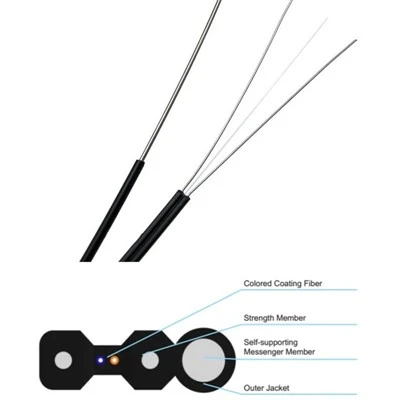
Let’s cut to the chase — I’ve seen way too many people guess wrong over the years, so today I’m breaking down exactly how to spot indoor fiber from its jacket, no fancy lab gear needed. Most of the clues are right on the cable’s outer layer, you just have to know what to look for. First off, let’s talk jacket materials — this is the big one, and where 90% of ID mistakes happen.
Outdoor fiber usually uses heavy, tough jackets: HDPE (high-density polyethylene) that’s thick, rugged, and smells like plastic when you rub it, or LSZH (low-smoke zero-halogen) sometimes, but outdoor LSZH is a heavier, more rigid version made for extreme temps. Indoor fiber’s jackets? Way different. The most common one you’ll see is PVC, but wait — not all PVC is the same. Indoor PVC is softer, more flexible, and it doesn’t have that thick, dense feel outdoor PVC has. I’ve had customers tell me “all fiber jackets are plastic” — yeah, but run a finger along it. If it bends easily without cracking, that’s a dead giveaway it’s indoor. Also, give it a quick sniff (don’t chomp it, just a light whiff). Outdoor HDPE has that sharp, strong plastic odor, indoor PVC is milder, almost like a soft vinyl, nothing overpowering. There’s also indoor Riser (CMR) and Plenum (CMP) rated jackets — those are super common for offices and multi-story buildings, and their jackets are even lighter, more pliable, and often have a matte finish instead of the shiny, glossy look outdoor jackets sometimes have.
Next up, jacket marking and printing. Every fiber cable has tiny text printed along the outer layer every foot or so — this is non-negotiable, and this is where you’ll get your concrete answer. Outdoor cable markings will say things like “Outdoor”, “Direct Burial”, “Aerial”, or have codes like “SMF-28e” with no indoor rating. Indoor cable? It’ll almost always have “Indoor” right there, or the rating codes: CM (general purpose indoor), CMR (riser, for vertical runs between floors), CMP (plenum, for ceiling air spaces). I’ve had a client last year grab a cable they thought was indoor because it looked thin, but the marking said “Aerial Drop” — turns out it was outdoor drop, designed to hang from utility poles, and when they pulled it through their ceiling, the jacket started cracking within a month. The marking’s not hard to spot, it’s just tiny, so if you can’t read it with your eyes, grab a magnifying glass or your phone’s camera zoom — that’s all you need. Another thing: outdoor cables often have colored rip cords that are thick, maybe even coated in Kevlar-like material, while indoor cables have thinner, more flexible rip cords that are usually just nylon.
Then there’s the size and flexibility. Indoor fiber is made for tight spaces: under raised floors, through wall conduits, wrapped around cable trays in server rooms. So it’s way smaller in diameter than outdoor cable. Outdoor fiber can be 8mm, 10mm, even 12mm thick for long runs, while indoor cable is usually 2mm to 6mm max. I’ve had installers show up with a 10mm cable for a office ceiling drop, and they couldn’t fit it through the 8mm grommet — that’s because they grabbed outdoor by mistake. Flex test is huge too: indoor cable can be bent into a tight loop (like 2 inches across) without kinking or damaging the fiber inside. Outdoor cable is stiffer, you can only bend it into a 6+ inch loop without risk of breaking the glass fibers inside. Last month, a small business owner brought me a cable they’d bought online, thinking it was indoor, and when I bent it into a 4 inch loop, the jacket split and I could see the tiny fiber strands inside snapping. Turns out it was an outdoor loose-tube cable, not the tight-buffered indoor stuff we supply.
Wait, let’s talk about loose-tube vs tight-buffered cables, because that’s tied to the jacket too. Indoor cables are almost always tight-buffered — meaning each individual fiber is coated with a thin, tight plastic buffer right around the glass, no big gap between the fiber and the outer jacket. The jacket for tight-buffered is that soft, thin stuff I mentioned earlier. Outdoor cables are usually loose-tube: they have a big outer jacket, and inside that, there’s a tube filled with gel or dry compound that holds multiple fibers. The gap between the fiber and the jacket makes outdoor cable bulkier, stiffer, and way harder to bend tight. That’s another easy way to tell: if you cut a tiny slit in the jacket (just the outer layer, don’t snip anything important), if you see a bunch of loose fibers sitting in a gap inside, that’s outdoor. If you see individual fibers wrapped right against the inner side of the jacket, that’s indoor. I always tell installers to test that in a hidden spot if they’re unsure — no harm done, as long as you don’t ruin the whole cable.
Another common trick people miss: color coding. Wait, no, not the fiber core color (that’s for counting fibers), the outer jacket color. Outdoor fiber often uses black jackets because black plastic is more UV-resistant for sunlight exposure. Indoor cable? You’ll see all kinds of colors: white, gray, blue, orange, even red, green, yellow — but rarely black. That’s not a hard rule, of course (some indoor plenum cable is black if it’s used for outdoor riser runs between building and pole, but that’s rare), but 9 times out of 10, if the jacket is black, it’s outdoor. I once had a customer order 500ft of blue indoor cable, and they accidentally ordered 500ft of black cable by mistake — came to me panicking because it was too stiff. We sorted it out, and that color code would’ve saved them time if they’d noticed it first.
Wait, let’s address a common myth: “I bought fiber labeled for indoor use online, so it must be right”. Nope. I’ve seen a lot of cheap, no-name suppliers cut corners, labeling outdoor cable as indoor to unload stock. That’s why the two real checks are the jacket marking and the flexibility, not just the label on the box. If a cable says “indoor” on the box, but when you pull it out it’s thick, black, and stiffer than a garden hose, that’s a red flag. We always put our actual rating on the jacket itself, not just a box, because we know how easy it is for people to mix up boxes at a warehouse.
Now, why does this matter so much, especially if you’re installing in a building? Indoor cables are flame-rated for indoor spaces — CMR and CMP ratings mean they won’t give off toxic fumes if they catch fire, which is a huge safety code requirement. Using outdoor cable indoors not only violates most building codes, but if there’s a fire, those thick outdoor jackets release way more toxic smoke that’s dangerous for anyone in the building. Signal loss is another big one: outdoor cable’s gel or loose tube design is great for blocking water and temperature swings, but indoors, that extra gap and stiffness causes more micro-bends in the fiber, leading to slow, annoying signal drop that you can’t fix without replacing the whole cable. I’ve had a café owner call me last year, saying their internet kept cutting out, and we traced it back to the installer using outdoor cable for the run behind their counter — the tight bends they had to make to fit it under the floor were causing all the signal loss. They had to replace 150ft of cable, which cost them way more than if they’d gotten the right stuff in the first place.
So let’s recap the quick checks you can do right now, no tools needed: 1. Sniff and touch: is the jacket soft, flexible, mild-smelling? That’s indoor. Thick, stiff, strong plastic odor? Outdoor. 2. Zoom in on the marking: does it say “Indoor”, CM, CMR, CMP? If it says “Outdoor”, “Direct Burial”, “Aerial”? That’s outdoor. 3. Size and bend: is it under 6mm thick, can you bend it into a 2-3 inch loop without kinking? Indoor. Over 8mm, only bends into a 6+ inch loop? Outdoor. 4. Color: black jacket is almost always outdoor. Any other color is likely indoor, but double check the marking anyway.
If you’re still unsure, just reach out to someone who knows indoor fiber — like me. We’ve been supplying indoor fiber cable for years, and we can help you confirm, no strings attached. Don’t waste time guessing and ruining a run, or violating codes, or dealing with signal issues down the line. Getting the right cable the first time saves you money, time, and a whole lot of headaches.

If you’re gearing up for an indoor project, whether it’s a small office, a multi-story building, or a home network, we’ve got all the indoor fiber cable you need — from general purpose CM to high-fire-rated CMP, all marked clearly on the jacket, sized right for tight indoor spaces, and tested to work perfectly for indoor runs. Just get in touch with our team to talk through your needs, and we’ll hook you up with the right cable for your job, no guesswork required.
GJFJV References:
- National Electrical Code (NEC) Article 770, Optical Fiber Cables
- Fiber Optic Association (FOA) Basic Fiber Optic Course Materials
- TIA-598-C, Optical Fiber Cable Color Coding Standard
Guangdong Shengtang Optical Cable Communication Equipment Co., Ltd.
As one of the most professional indoor fiber optic manufacturers and suppliers in China, we’re featured by quality products and good price. Please rest assured to buy bulk durable indoor fiber optic in stock here from our factory. Customized orders are welcome.
Address: The 6th floor of Building B3, located on the south side of Jingyi Road, Shiwan Town, Boluo County, Huizhou City, Guangdong Province.
E-mail: gdshengtang@gmail.com
WebSite: https://www.gdstcable.com/
