If you’ve ever shopped for structural steel for a fence, a small building frame, a piece of machinery, or even a custom art installation, you’ve probably heard the terms “rectangular steel pipe” and “rectangular tube” tossed around. To many folks, they sound like the exact same thing—just two names for a common product. But after years as a rectangular steel pipe supplier, I can tell you there’s more to it than just a label. Mixing these terms up when you’re ordering could lead to delays, extra costs, or even a product that doesn’t hold up to whatever project you’re tackling. Let me break down what actually separates these two, in plain speak, no overly confusing jargon. Rectangular Steel Pipe
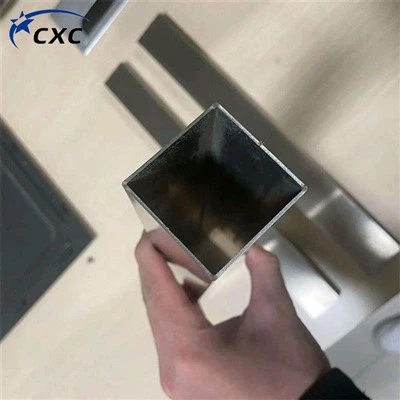
First, let’s start with the basics of how each is made, because that’s where the biggest differences start. Most rectangular steel pipe you’ll see out there is welded. Here’s how that works: you take a flat strip of steel coil, roll it into a long hollow rectangle, then run a weld along the seam to seal the edges. For small-to-medium sized pipes, that weld is usually a solid-state weld, like ERW (Electric Resistance Weld), where you heat the edges just enough to fuse them without adding extra filler metal. For bigger pipes, you might see a submerged arc weld, which uses a granular flux to protect the weld from contamination while it’s being made. Either way, the end result has a distinct, visible seam running along one long side of the rectangle. The wall thickness for standard rectangular steel pipe is also measured a little differently—we quote it as nominal thickness, which is a rounded number that’s easy to work with for general structural projects, fencing, and most everyday uses. It’s consistent across the length of the pipe, but when you get very thin gauges, that nominal thickness can have a tiny variance that’s not a big deal for casual use, but matters for heavy-duty work.
Now rectangular tube? That’s almost always seamless, or at least, it’s made with a different process that doesn’t have a weld seam at all. Here’s how seamless rectangular tube gets made: you start with a solid round steel billet, heat it up until it’s malleable, then punch a hole through the center, then stretch and shape it into a rectangular form. No welding, no seam—so the whole thing is one continuous piece of steel. That makes rectangular tube stronger in a lot of ways, but it also makes it a bit more expensive and harder to produce, especially for smaller orders. The wall thickness for rectangular tube is also measured more precisely, usually as actual, not nominal, thickness. That means if you order a ¼-inch wall rectangular tube, it’s consistently ¼ of an inch all the way around, no rounding. That consistency is a huge deal for projects where precision matters, like manufacturing parts that have to fit together perfectly, or structural frames that will be load-bearing with no room for error.
Wait, but hold on—don’t get me wrong, there’s overlap, too. A lot of people use the terms interchangeably for small, light-gauge products, like for a backyard fence or a garden trellis. If you’re building something that’s not holding up a roof or supporting heavy machinery, the difference between a welded pipe and a seamless tube might not even be noticeable, and either will work just fine. The confusion comes in when people start ordering the wrong one for a high-stakes project. I’ve seen it happen more times than I can count: a contractor calls up asking for “rectangular tube” for a small structural beam, expecting the seamless, precise stuff, and we send them standard welded pipe, which is cheaper and works for that load. But other times, a fabricator will order “rectangular steel pipe” thinking it’s strong enough for a trailer frame, and end up with a product that has a thin, inconsistent wall that bends under a heavy load.
Let’s talk about load capacity, because that’s the part that matters most to most people. Welded rectangular steel pipe is designed for general structural uses where you don’t need maximum strength, like fence posts, guardrails, temporary supports, or light outdoor structures. The weld seam on a standard pipe is strong enough for those applications, as long as the wall thickness is rated for the load. Seamless rectangular tube, though, has a uniform grain structure all the way through—no weak weld seam that could crack under pressure. That makes it the go-to for heavy-duty stuff: trailer frames, bridge components, machinery parts, large commercial building frames, or anything that will be exposed to extreme stress, vibration, or heavy loads. If you’re building a utility trailer that will carry 5,000 pounds of equipment, you don’t want to risk a weld seam failing on the road. That’s when seamless rectangular tube is worth the extra cost.
Then there’s the sizing part. This is where a lot of new customers get tripped up. Rectangular steel pipe sizes are usually standardized by industry groups, like the AISC (American Institute of Steel Construction) or ASTM, and they’re listed by outer dimension and nominal wall thickness. So you might hear someone ask for a 2×4 rectangular steel pipe with a ¼-inch wall. That outer dimension (2 inches by 4 inches) is exact, but the wall thickness is a nominal number, which means it can be a little over or under that ¼-inch mark, within an industry-accepted tolerance. For many projects, that’s not a problem—for example, if you’re cutting pipe for a fence, a 1/16-inch variance in wall thickness won’t change how well it stands up. But for rectangular tube, sizing is a bit different. Seamless rectangular tube is also listed by outer dimension, but the wall thickness is actual, so if you order 2x4x¼-inch rectangular tube, it’s exactly ¼ of an inch thick, no variance. That precision is key for machining, welding, or fitting multiple pieces together with a tight, consistent joint.
Another big difference is cost. Welded rectangular steel pipe is far more common, and cheaper to produce, so it’s usually 10-20% less expensive than comparable rectangular tube. That makes it the obvious choice for budget projects, or when you have a large order for something that doesn’t need maximum strength. Seamless tube’s production process is more labor-intensive and requires more specialized equipment, so it’s pricier, but that cost translates to better strength, durability, and consistency. If you’re only buying 10 feet of pipe for a small trellis, the extra cost for seamless tube is probably not worth it. But if you’re buying 500 feet of material for a commercial building, the extra strength might save you from having to reinforce structures later.
Wait, let’s also clear up a common myth: some people think rectangular tube is always square, and pipe is always rectangular. No, that’s not true. You can get both square and rectangular versions of both products. You might hear people say “square tubing” and “square pipe,” same exact logic applies there—seamless tube vs welded pipe. It’s not about the shape, it’s about the manufacturing process and the end use.
I should also mention what we offer here as a rectangular steel pipe supplier. We carry a full line of welded rectangular steel pipe in a range of sizes and wall gauges, from thin 16-gauge for light fencing up to ½-inch wall for medium-duty structural work. We source our pipe from reputable mills that meet ASTM standards, so you can trust the quality for your everyday projects. But we also work with fabricators and contractors who need seamless rectangular tube for specialized projects. If you’re not sure which one you need, that’s what we’re here for. We don’t push the more expensive option just to make a sale—we’ll ask you about your project, what load it needs to hold, where it’s going to be used (outdoor, indoor, heavy use, light use), and help you pick the right product so you don’t waste money on something too fancy, or end up with something that can’t handle the job.
Let me share a quick example from a recent order to make this real. A few months back, a small construction company called us, asking for “rectangular tube” for a set of small storefront awnings. They thought they needed the seamless, precise stuff, so they were preparing to pay a premium. But when I asked them about the awnings, they said they were just for shade over a residential storefront, not heavy snow or wind, and the awnings were only 8 feet wide. I recommended our standard welded rectangular steel pipe, which was 15% cheaper, and it worked perfectly. The lightweight, consistent weld was strong enough for that use, and they saved a few hundred dollars on the order. On the flip side, another customer came to us last year, needing material for a custom utility trailer that would tow lawn care equipment. They had ordered pipe from a big box store before, which was thin, and their first trailer bent at the frame after a few trips. This time, we worked with them to get seamless rectangular tube, and the trailer held up great through a whole season of heavy use. That’s exactly why knowing the difference matters.
So when should you pick rectangular steel pipe, and when should you go for rectangular tube? Let’s break it down simple: pick welded rectangular steel pipe if you’re doing light-duty projects (fencing, trellises, small shade structures, temporary supports), on a budget, or don’t need perfect precision. Pick seamless rectangular tube if you’re doing heavy-duty load-bearing projects (trailers, commercial buildings, bridge parts, machinery, large structures), need consistent sizing for machining or tight fits, or will be exposing the product to extreme stress or weather.
A lot of people still mix these terms up, and that’s totally normal when you’re not a steel expert. That’s why we take the time to chat with every customer, no matter how big or small their order is. We don’t just drop a pipe on a truck and send it your way—we want to make sure you get the right product for your project, so you don’t have to deal with delays, returns, or a project that doesn’t work like it should.

If you’re in the market for rectangular steel pipe or rectangular tube, and you’re not sure which one is right for your job, don’t hesitate to reach out. We can answer your questions, help you compare sizes and wall gauges, and give you a fair quote on whatever you need. Whether you’re a homeowner working on a weekend project, a small contractor, or a big fabricator, we have the product, expertise, and customer service to get you exactly what you need.
Galvanized Steel Pipe References
- American Society for Testing and Materials (ASTM) A500, Standard Specification for Cold-Formed Welded and Seamless Carbon Steel Structural Tubing in Rounds and Shapes
- AISC Steel Construction Manual, 15th Edition, Rectangular Steel Section Properties and Application Guidelines
- National Association of Steel Pipe Distributors (NASPD), Glossary of Structural Steel Terms and Product Differentiation
Wuxi Chengxingchuang Metal Products Co., Ltd.
As one of the most professional rectangular steel pipe manufacturers and suppliers in China, we’re featured by quality products and good price. Please rest assured to buy cheap rectangular steel pipe for sale here from our factory. Welcome to contact us for customized service.
Address: No.8-2, Zhoujia Lane, Liangxi District, Wuxi City, Jiangsu Province, China
E-mail: 13961862735@163.com
WebSite: https://www.cxcsteeltubes.com/
