If you’ve ever worked with electronics manufacturing, prototyping, or even small-scale circuit builds, chances are you’ve come across coding foil— the thin, conductive sheet that forms the base for printed circuit boards (PCBs) and flexible circuits. As a coding foil supplier, I’ve spent years walking engineers, hobbyists, and production teams through the nuances of choosing the right foil for their needs, and one of the most common questions I get is: what’s the real difference between单面 coding foil and 双面 coding foil? For a long time, people assume it’s just about how many sides have conductive material, but the gap goes far beyond that— affecting cost, design flexibility, production time, and even the reliability of the final product. Let’s break this down honestly, from what each type is, how they’re made, when to use one over the other, and why picking the wrong one can derail your project. Coding Foil
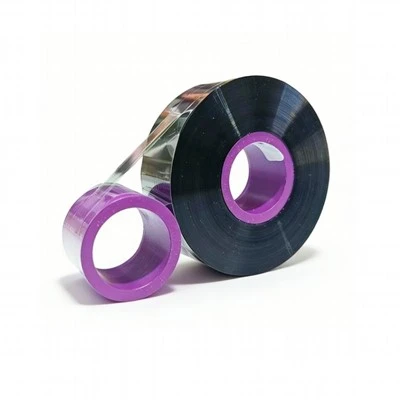
First, let’s start with the basics to level set. All coding foil is a laminated material: it’s a thin layer of conductive metal (almost always copper, because it’s cheap, highly conductive, and easy to etch) bonded to a non-conductive substrate, usually a tough polymer like polyester (PET) or polyimide (PI), depending on the application. That substrate is what gives the foil its flexibility, heat resistance, and structural integrity. The difference between single-sided and double-sided comes down to whether that copper layer is only on one side of the substrate, or on both. But it’s not just a simple “count the copper sides” distinction— each type is engineered for very specific use cases, and misaligning that can lead to headaches you’d rather avoid.
Let’s dive into single-sided coding foil first. Single-sided foil, as the name suggests, has a single thin copper layer bonded to one side of the substrate, with the other side being completely non-conductive. For decades, this was the workhorse of hobbyist PCB design and low-volume prototyping, because it’s simple and low-cost. How is it made? The substrate is first cleaned to remove contaminants, then a thin layer of copper (usually 1/3 oz or 1/2 oz, meaning 1/3 or 1/2 ounce of copper per square foot of foil) is applied via a process called roll lamination, where the copper is heated and pressed onto the substrate. No extra steps here, so the production process is fast and straightforward.
Now, the pros of single-sided coding foil are hard to miss. First, it’s cheaper— because less material goes into manufacturing, and the production line requires fewer steps. For small projects, like a simple LED circuit or a hobbyist’s first Arduino shield, you don’t need multiple conductive layers, so single-sided is more than enough. It’s also easier to work with for new designers: when you etch a circuit onto single-sided foil, all your traces and components sit on one plane, so soldering is simpler, and troubleshooting is less confusing. I’ve seen hundreds of student projects and small startup prototypes use single-sided foil successfully, because it removes the complexity of managing two separate electrical planes.
But here’s where single-sided foil has its limits. The big one is design flexibility. If your circuit requires more than a handful of traces, or if you need to route around a component that takes up a lot of space, you’ll quickly run out of room on a single plane. For example, a simple power management circuit with multiple voltage rails, or a sensor array that needs lots of signal lines, will quickly outgrow the space on one side. You could add jumper wires, but that introduces reliability issues— loose connections, stray capacitance, and the risk of shorts between uninsulated wires. Single-sided foil also can’t support through-hole components easily, because there’s no conductive layer on the other side to connect a component’s pins to the main circuit. You have to use surface-mount components with single-sided foil, which restricts the type of parts you can use. Plus, if you’re manufacturing at scale, single-sided circuits require more board space, which can increase the size of your final product— a big problem for things like wearables or compact electronics where size is non-negotiable.
Now, let’s talk about double-sided coding foil. Double-sided foil has a copper layer bonded to both sides of the substrate, with a thin layer of insulating material (usually a polymer adhesive or a coating) applied between the two copper layers to prevent short circuits. This is where things get interesting— because double-sided foil isn’t just two single-sided foils glued together. It’s a precision laminate, with the two copper layers aligned so that they can connect through small holes called vias. How is it made? The substrate is first pre-treated, then a copper layer is applied to one side, the substrate is flipped, and the same copper lamination process is repeated on the other side. After that, a thin insulating layer is applied to the inner surface of one copper layer, or a lamination adhesive is used to bond the two copper layers without creating a gap. The key here is precision: the two copper layers have to be perfectly aligned, because even a 0.001-inch misalignment can cause a short circuit between the sides. That precision is why double-sided foil is more expensive to produce, but it also unlocks a ton of design possibilities.
The biggest advantage of double-sided coding foil is the ability to route traces on two separate planes. If you’re designing a circuit that needs 20 or more traces, you can split them between the top and bottom copper layers, using vias to connect signals between the two sides. That cuts down the amount of space your circuit takes by as much as 50% compared to a single-sided design, which is a game-changer for compact products like smart watches, fitness trackers, or mobile sensors. Double-sided foil also supports through-hole components, which means you can use a wider range of parts, including larger, more powerful components that aren’t available as surface-mount. For example, a power converter that needs a big inductor or a high-current capacitor is much easier to mount on a double-sided board, because you can connect the component’s pins to both copper layers, creating a more stable electrical connection.
But double-sided foil isn’t perfect, and it comes with its own set of tradeoffs. First, it’s more expensive than single-sided foil. The production process is longer and requires more quality control steps: testing the alignment of the two copper layers, ensuring the insulating layer between them is uniform, and checking for shorts before the foil even leaves the factory. For low-volume projects or simple designs, that extra cost might not be worth it— why pay for features you’ll never use? Double-sided foil is also more complex to work with, especially for new designers. Etching a double-sided board requires precise alignment of the top and bottom designs, and drilling vias adds an extra step to the manufacturing process. I’ve seen hobbyists attempt to make a double-sided circuit with single-sided foil and jumper wires, only to end up with a flimsy, unreliable board that fails after a few uses. That’s why it’s important to match the foil type to your project’s needs, not just jump on “more sides equals better.”
Now, let’s get into the practical differences that actually matter for your next project, not just technical specs. Let’s say you’re a hobbyist making a simple LED flash circuit for a keychain. The circuit has two resistors, one LED, and a small battery. A single-sided coding foil will work perfectly here: it’s cheap, easy to etch, and small enough to fit on the keychain. You don’t need the extra layers of double-sided foil, so going with single-sided will save you money and time. But if you’re a startup making a compact Bluetooth sensor that needs to connect to a phone, with a microcontroller, a radio chip, a battery, and four separate sensor inputs? A double-sided coding foil is non-negotiable. The number of traces you need would take up too much space on a single-sided board, and you need the ability to route power, ground, and signals without adding bulky jumper wires.
Another key difference is reliability. Single-sided foil has fewer points of potential failure: there’s only one copper layer, so less risk of via misalignment, layer delamination, or shorts between two conductive planes. For high-vibration applications, like a drone or a industrial sensor that’s exposed to constant movement, single-sided foil might actually be more reliable, because there’s no inner layer to separate or come loose. Double-sided foil, on the other hand, is more prone to delamination if it’s not made with high-quality materials— cheap double-sided foil often has a thin insulating layer that breaks down over time, especially if exposed to heat or moisture. That’s why as a supplier, we test every batch of double-sided foil for peel strength and layer integrity, to make sure it can hold up to your product’s operating conditions.
Wait, let’s address a common myth I hear all the time: “Double-sided foil is always better for high-volume production.” Not necessarily. For very simple, low-complexity circuits, single-sided foil is actually faster to manufacture at scale. The etching process is simpler, no vias to drill, and the boards require less inspection time. For example, a batch of 10,000 simple power adapters made with single-sided foil will cost less to produce than the same batch with double-sided, because the production line doesn’t have to adjust for two copper layers. Double-sided foil only makes sense for high-volume production if the circuit is complex enough to justify the extra cost.
Now, let’s talk about how to choose the right one, because I get this question at least once a week. First, ask yourself: how complex is my circuit? If you have fewer than 10 traces, and all components fit on one side, single-sided is probably your best bet. If you need more than 10 traces, or you need to use through-hole components, go with double-sided. Second, consider your budget: single-sided is cheaper for small runs, double-sided will save you money on space and material for larger, complex projects. Third, think about your product’s environment: if your device is going to be exposed to high vibration, extreme temperatures, or moisture, single-sided foil might be more reliable, because there’s no inner insulating layer that can degrade.
I’ve seen a lot of people make the mistake of using double-sided foil for a simple project, just because they think it’s “more advanced.” The result is a product that’s unnecessarily expensive, harder to work with, and no more reliable than it would have been with single-sided. Conversely, I’ve seen people use single-sided foil for a circuit that should be double-sided, leading to a bulky, flimsy product that doesn’t work as intended. As someone who’s supplied coding foil to small startups, hobbyists, and industrial manufacturers for over a decade, I can tell you that the best choice is always the one that matches your project’s specific needs, not the latest trend.

If you’re still not sure which type of coding foil is right for your project, or you have questions about material thickness, substrate type, or custom cuts, feel free to reach out to discuss your requirements. We work with engineers, prototypers, and manufacturers of all sizes, and we can help you find the right foil to keep your project on track and on budget.
Textile Ribbon References
- Mallinson, J. S. (1993). Ferromagnetic Materials for Recording. Academic Press.
- PCB Design Guide for Flexible Circuits. IPC Association Connecting Electronics Industries.
- Conductive Adhesives for Electronic Applications. Wiley-Interscience.
- Coding Foil Manufacturing Processes and Quality Standards. European Electronic Components Industry Association.
- Single vs Double-Sided Flexible Circuit Design. Journal of Electronic Manufacturing.
China Lisontec New Material Co., Ltd.
We are one of the most professional coding foil manufacturers and suppliers in China, also support customized service. As we have world-leading production equipment and strong manufacturing capabilities, we warmly welcome you to wholesale bulk coding foil made in China here from our factory.
Address: 8-107, Xianlin Valley, Qimin West Road Qixia, Nanjing, China
E-mail: info@lisontec.com
WebSite: https://www.lisontec.com/
