Hey guys, let’s cut to the chase. If you’re a homeowner, a handyman, or even someone working on a small renovation project, you’ve probably wondered at some point: can I just use that roll of aluminum foil duct I have laying around for my bathroom exhaust fan? I get it—aluminum foil duct is super cheap, easy to cut and bend, and you might think it’s perfect for the job. But as a guy who’s been supplying aluminum foil ducts for years, I’ve seen way too many people get this wrong, and trust me, it’s not just a small mistake. Let’s break this down like we would over a cup of coffee, no boring engineering jargon, just real talk. Aluminum Foil Duct

First, let’s actually talk about what a bathroom exhaust system does. Your bathroom exhaust isn’t just a fan blowing air—its whole job is to pull out hot, humid air, right? That moisture? If it doesn’t get vented outside, it turns into mold, mildew, peeling paint, warped wood, and even bad odors that stick around forever. The duct connecting your fan to the outside vent has to handle that constant moisture, too, plus sometimes a little heat from the fan motor, and it has to move air efficiently without creating clogs or backpressure. That’s non-negotiable.
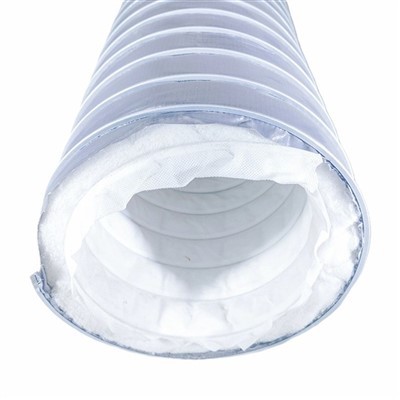
Now, what is aluminum foil duct, exactly? Most of the stuff I supply is flexible aluminum foil duct, sometimes called “foil flex duct” for short. It’s made of thin layers of aluminum foil laminated to a flexible fiberglass core, right? The kind that comes in a roll, can twist and turn around corners, fits through tight spaces between studs, that stuff. It’s lightweight, easy to work with, and way cheaper than rigid metal duct at first glance. But here’s the thing—its design makes it tricky for bathroom use.
Let’s start with moisture. Humid air from your bathroom doesn’t just pass through the duct like dry air from a dryer vent or a kitchen range hood. Bathroom air is full of water vapor, which condenses when it hits a cold surface. What’s the surface of aluminum foil duct? Thin aluminum, which gets cold super fast. So that warm, moist air hits the duct wall, cools down, and turns into liquid water. Where does that water go? It drips down into the lowest point of the duct, right? And since flexible foil duct has those corrugated ridges (those little waves that make it bend), that water gets trapped in the ridges. Over time, that standing water becomes a breeding ground for mold, mildew, and bacteria. Ew. That’s the last thing you want in a bathroom, where you’re trying to keep things clean. I’ve had customers tell me they thought their fan was broken, only to pull out the foil duct and find it covered in black mold. Gross, and totally avoidable.
Next up, air flow efficiency. Flexible aluminum foil duct is not smooth inside—those corrugations create friction as air moves through them. That means your exhaust fan has to work harder to push air through the duct, which can actually make it less effective at removing moisture. If your fan is underperforming, you’re going to get that moisture buildup anyway. And don’t even get me started on kinks. If you have to bend foil duct around a tight corner, or if it gets squeezed between a stud and a pipe, that kink can narrow the air path so much that the fan can barely move any air at all. I’ve seen some installs where someone used foil duct and it only moved half the air it was supposed to—all because of a bad bend. Rigid duct is smoother, so air flows better, and it doesn’t kink, right?
Wait, but what about heat? Some people say “aluminum is heat-resistant, so it’s fine.” That’s true for small amounts of heat, but bathroom fans don’t put out that much heat, anyway. The real issue here is not heat resistance—it’s something called “duct degradation.” The fiberglass core inside most foil ducts breaks down over time when it’s exposed to constant moisture. Fiberglass isn’t designed to be wet all the time. After a couple years, that core gets soft, starts to fall apart, and can even release tiny fiberglass particles into the air you’re pulling out of your bathroom. Yeah, you don’t want that in your ventilation system. Rigid metal duct doesn’t have that fiberglass core—its structure is solid metal, so it holds up way better.
But hold on, is aluminum foil duct ever okay for bathrooms? Let me be honest—sometimes, if you use it right. Wait, what’s the right way? First, it has to be the kind that’s rated for HVAC use, not the cheap stuff you pick up at the dollar store. The foil should be thicker, like at least 4 mil, and the core should be coated to resist moisture. Even then, I always tell customers to use the shortest length possible. The more duct you have, the more friction and the more places moisture can get trapped. Also, no kinks—you have to make really smooth bends, no sharp angles. And you have to slope the duct slightly downward toward the outside vent. That way, any condensation that does form can drip outside, not into the fan or the wall. Oh, and you have to insulate the duct if it runs through an unheated space, like an attic or a cold basement. If it’s not insulated, the air inside gets even colder, so more moisture condenses. But even with all that, I still don’t recommend it as a long-term solution. Most homeowners end up regretting it a couple years later when mold starts popping up.
Wait, let’s compare to the other options, because that’s what customers always ask me. What’s the alternative to foil duct for bathroom exhaust? Rigid metal duct, either galvanized steel or aluminum rigid duct. Rigid duct is smooth inside, so air flows way better, no friction from corrugations. It doesn’t have a fiberglass core, so it doesn’t break down from moisture. And if you install it properly, with no standing water, it’s way less likely to get moldy. The downside? It’s a little heavier, a bit more expensive, and harder to bend around corners—you have to use elbow pieces. But the payoff is way longer lifespan, better performance, way less chance of moisture and mold issues. I’ve installed rigid duct in my own bathroom (don’t judge, I know the code) and it’s been 8 years with zero problems. That’s way better than having to rip out foil duct every 3 years because it’s moldy.
Also, let’s talk about code, because that’s a big one. A lot of building codes specify what kind of duct you can use for bathroom exhaust. Wait, I’m not a code expert, but I’ve read up on it because I don’t want my customers to get in trouble. Most residential building codes recommend rigid metal duct or flexible duct that’s specifically rated for bathroom and HVAC use. Some areas actually ban unrated foil duct because of the mold and fire risks? Wait, no, fire risk is more for dryer vents, but still, codes want ducts that won’t hold moisture. So if you’re doing a major reno, check your local code—you might not be allowed to use cheap foil duct at all.
Let me address some common myths I hear all the time. Myth #1: Aluminum foil duct is cheaper, so it’s better. Yeah, upfront it’s a few bucks less, but if you have to replace it in 2 years, that’s way more money than buying better duct upfront. Myth #2: It’s easy to install, so it’s worth it. Installing it wrong is super easy, and that’s where all the problems come from. A kink, a slope going the wrong way, not insulating—all that leads to issues. Myth #3: Aluminum is waterproof, so it’s fine. The foil part is, but the core isn’t. That’s the mistake everyone misses. The foil is just a wrapper, the structure that makes the duct hold its shape is the fiberglass, and that gets ruined by water.
Now, as someone who supplies aluminum foil duct, I’m not here to badmouth my own product entirely—trust me, I sell a ton of flexible foil duct for dryer vents, range hoods, and even some HVAC jobs where it makes sense. But bathroom exhaust? It’s one of the worst places to use it, for all the reasons I mentioned. I always tell customers, “If this was a dryer vent, I’d hook you up with this foil duct no problem, but for your bathroom? Spend the extra few bucks on rigid duct, you’ll thank me later.” I’ve seen way too many people come back to me saying they used foil duct for their bathroom, and now they have mold in their walls, or their fan is broken, and they have to redo the whole thing. That’s a headache no one needs.
Wait, let’s make this personal. Last year, I had a guy come in panicking. He’d just finished his bathroom reno, used that cheap foil duct he got from the big box store, and 6 months later, his ceiling was starting to get stains, and there was a mold smell whenever he turned on the fan. I went over to take a look, and sure enough, the duct was full of black mold, water was dripping down into the fan, and the fiberglass core was falling apart. We had to pull out all the drywall around the fan to clean the mold, replace the duct, and insulate it. He ended up spending way more than he would have if he’d just used the right duct in the first place. That’s the kind of story that sticks with me, and that’s why I’m so honest about this—because I don’t want customers to make that same mistake.
So, what’s the takeaway here? Can you use aluminum foil duct for a bathroom exhaust system? Technically, maybe, if you use the right kind, install it perfectly short, smooth, sloped, insulated. But realistically, no—there are way too many downsides, higher long-term costs, more risk of mold and performance issues. The better, safer, smarter choice is to use rigid metal duct, or if you really need flexible, use an HVAC-rated flexible metal duct (not the foil kind) that’s made for moisture.
If you’re working on a bathroom exhaust project, and you need the right duct that won’t give you headaches down the line, feel free to reach out. We can hook you up with the right products, whether it’s rigid duct for a standard install or rated flexible if you have tight spaces. Don’t wait until you have mold stains and a stinky bathroom—get the right duct the first time.
Aluminum Foil Duct References:
- Residential Duct Design and Installation Standards, National Association of Home Builders
- HVAC Duct Material Selection Guide, Air Conditioning Contractors of America (ACCA)
- Mold Growth in HVAC Systems, Environmental Protection Agency (EPA)
Dongyang Hstube Co., Ltd.
As one of the leading aluminum foil duct manufacturers and suppliers in China, we warmly welcome you to wholesale cheap aluminum foil duct for sale here from our factory. If you have any enquiry about free sample, please feel free to email us. Quality products and reasonable price are available.
Address: NO.5 CHENGDONG ECOLOGICAL INDUSTRIAL ZONE, DONGYANG, ZHEJIANG, CHINA.
E-mail: sales@hstube.com
WebSite: https://www.ductword.com/
