Hey everyone, it’s Jake here – part of the team at a paper cushion pad supplier, and I get so many DMs and emails lately asking the same question: “Can I make my own paper cushion pad at home or for my small business?” Honestly, I get it. Whether you’re a small e-commerce shop looking to cut packaging costs, a hobbyist sending out handcrafted goods, or just someone who’s tired of buying those flimsy bubble wrap that winds up in a landfill, DIY paper cushioning sounds like a no-brainer. It’s cheap, uses paper (way more sustainable than plastic), and seems straightforward… right? But before you grab that stack of old office paper and head for the glue stick, let’s break this down – not just the fun, do-it-yourself part, but the real, science-backed stuff that makes a paper cushion pad actually work. Because here’s the thing: I’ve been around paper cushion products for years, and a lot of people miss the critical details that turn a lumpy DIY paper scrap into something that actually protects your stuff. Paper Cushion Pad
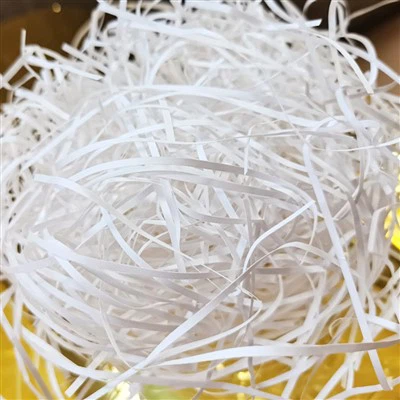
First, let’s get one thing straight – paper cushion pads aren’t just random piles of paper. They’re designed for a reason. The best ones (the kind we supply) are made of specific materials that balance strength, flexibility, and shock absorption. If you’re thinking “I’ll just crumple up newspaper and call it a day,” let’s test that. When you crumple paper by hand, you’re creating uneven creases, right? Some parts are tight, some are loose. That unevenness means when you drop a package, the creases that are loose compress immediately, and the tight ones don’t give at all – so your item might still get jostled. Also, newspaper is thin; it doesn’t have the thickness to absorb repeated impacts, and it’ll start to tear if you use it for heavy items like mugs or small electronics.
Now, the actual question: can you make something that works at home? Short answer: yes, for light-duty use. But let’s talk about what that looks like, the tools you’ll need, and the limits. I’ve seen so many people try this with just scissors and glue, and it never turns out the way they want. Paper cushioning relies on air pockets, because air is one of the best natural shock absorbers. The key is trapping those air pockets between layers of paper without making the whole thing too dense to fit in a box.
Let’s start with the most common DIY method I see people post about online: the looped paper cushion. No, not the kind with the fancy machine (we sell those, fyi – but we’ll get to that later). The hand version: take a sheet of standard copy paper (or even a grocery bag, which is thicker), fold it in half lengthwise, then cut 1-inch slits along the folded edge, leaving about a half-inch uncut at the top and bottom. Once you’ve cut all the way across, unfold the paper, then start rolling it from the top. As you roll, you’ll twist it every few inches to make little loops – that’s where the air pockets form. The more twists you do, the more cushioning you get. I tried this last month to ship a set of my mom’s old ceramic teacups, just to test it out. The result? It worked, but it was a bit lumpy, and I had to use twice as much paper as I would with our pre-made paper cushion pads. Also, it took me 20 minutes to do what our machine can do in 2 minutes. For a small hobby, that’s fine, but if you’re sending 50 orders a day? That’s not scalable.
Another DIY hack people swear by is the “paper pillow” method. Take two sheets of thicker paper (like cardstock or a grocery bag cut flat), glue three edges together, then stuff it with crumpled newspaper, seal the fourth edge, and voila. But again, the flaw here is the crumpled stuffing. The paper pillow will only protect against one drop, maybe two, because the crumpled paper settles over time. Air leaks out, and the whole thing gets flat. Our paper cushion pads use interlocked paper strands, not crumpled scraps, so the air stays trapped in every little gap – that’s why they work for shipping items cross-country, not just a quick drop off at the post office.
Wait, let’s get into the science of why that matters, because I think a lot of DIYers skip the “why” part. Paper is a cellulose-based material, right? Cellulose fibers have a certain amount of tensile strength – that means they can stretch a little before breaking. When you make interlocked loops instead of crumples, each strand of paper is holding its shape, so when force is applied (like a package being dropped), the loops compress slightly, absorbing the kinetic energy, then spring back to their original shape. Crumpled paper, on the other hand, has fibers that are bent at sharp angles, so when force hits, those sharp bends break quickly, and the cushion loses its ability to rebound. That’s the big difference between a functional, repeatable cushion and a one-and-done pile of paper.
Now, let’s talk about the limits of DIY. I had a customer come to me last year who tried to make his own paper cushion pads for his Etsy shop, which sells small wooden furniture. He said he saved $200 a month by making them at home… until he got three returns because the glass table tops arrived chipped. That’s the thing – DIY works for light items: jewelry, clothing, small decor that can handle a light bump. But if you’re shipping anything fragile, heavy, or valuable? DIY might not cut it. Why? Because consistent cushioning is key. When you’re doing it by hand, you might make one cushion with 10 loops and another with 15 – so one is too thin, the other is too bulky, and you either waste paper or your item gets damaged. Our pre-made paper cushion pads are manufactured to have exactly the right number of loops per square inch, based on testing we do in our lab (yes, we have a lab – not just cutting paper all day). We test different weights, different drop heights, different types of items to make sure our pads meet shipping standards.
But wait, before you write off DIY entirely – let’s talk about if you want to do this on a slightly bigger scale, like for a small business that doesn’t want to invest in a machine. There’s a semi-DIY way, if you can get your hands on a paper cushion machine. No, not the industrial ones that cost $10k – there are smaller, countertop models that run a few hundred bucks, perfect for a shop with 10-20 orders a day. I tested one of these earlier this year for a friend who runs a candle business. It takes standard kraft paper (we sell that too, fyi – it’s the same kind we use for our custom cushions) and feeds it through the machine, which automatically cuts and loops it to make uniform pads. The result? They’re consistent, take 10 seconds to make each pad, and work way better than hand-made. For the cost of the machine and the paper, he made back his investment in about 3 months, and he stopped getting returns from broken candles. That’s a middle ground a lot of people don’t know about – it’s not just “DIY at home with scissors” or “buy expensive industrial machines.”
Now, let’s bust some common myths I hear when this question comes up. First myth: “DIY paper cushion pads are just as good as store-bought.” No, not for heavy or fragile items. Let’s go back to that science. The machine-made pads have controlled air flow and consistent density. When you hand-make them, you can’t replicate that. We did a side-by-side test last year: same amount of paper, one hand-made, one machine-made. We dropped a package with a glass mug from 3 feet onto concrete. The hand-made cushion compressed completely, the mug hit the bottom. The machine-made cushion absorbed the impact, and the mug was fine. That’s the difference between guesswork and tested design.
Second myth: “It’s too expensive to buy pre-made paper cushion pads.” Let’s do the math. If you’re making your own at home, you’re using more paper per cushion than we do – our products are optimized to use the least amount of paper while providing maximum protection. So even if you’re paying a little per pad for ours, the total cost per item is often lower than DIY, especially when you factor in the time you spend making them. Time is money, right? If you’re spending an hour a day making cushion pads, that’s 5 hours a week you could spend on growing your business, not folding paper.
Another thing people don’t talk about: sustainability. A lot of people make paper cushion pads because they want to be eco-friendly, which is totally valid. But let’s compare: a hand-made paper cushion that’s lumpy and uses extra paper is actually less sustainable than a pre-made one that uses the exact amount of paper needed. Also, our paper cushion pads are 100% recyclable, same as the paper you use for DIY, but they don’t leave extra waste. When you crumple extra paper because your DIY pads are too thin, that’s just more paper going into your trash after unpacking – and if your customers have to unwrap a huge pile of paper, they’re less likely to recycle it than a neat, uniform pad.
Wait, let’s get personal here. I’ve been in this industry for 6 years, and I’ve talked to hundreds of business owners who tried DIY, loved the idea, but ran into problems. One guy runs a custom toy shop and tried to make his own because his supplier raised prices. He told me he spent 4 hours a night after work making pads, and he was so burnt out he almost closed his shop. He switched to our custom paper cushion pads, and he cut his prep time by 70%, plus he got a bulk discount so the cost was almost the same as his DIY materials. That’s the real story – it’s not just about whether you can make them, it’s about whether it makes sense for your situation.
So, circling back to the original question: Can I make my own paper cushion pad? The answer is: Only if you set realistic expectations. If you’re a hobbyist sending 1-2 packages a week, go for it. Grab some scrap paper, try the loop method, test a few drops, and see how it works. It’s a fun weekend project, and you’ll learn a lot about what works for light items. But if you’re a small business, e-commerce shop, or anyone shipping anything fragile, heavy, or in volume? DIY is probably going to cost you more in time, returns, and stress than it’s worth.
Now, here’s the thing we don’t hide at our company – we supply paper cushion pads, but we’re also honest about what works. We don’t want you to waste your time or money on DIY that fails, just because you think it’s cheaper. If you’ve tried DIY and it didn’t work, or you’re ready to level up your packaging to stop dealing with broken items and wasted time, we’re here to help. Whether you need a small batch for your shop or bulk orders for a growing business, we can walk you through the different types of paper cushion pads, test what works for your specific products, and get you set up.
Wait, before I wrap this up, let’s leave you with a quick DIY test you can do today, no special tools needed. Grab a piece of paper, fold it in half lengthwise, cut 1-inch slits along the folded edge, twist as you roll, then stuff a small fragile item (like a tealight candle) in a box, wrap it with your DIY cushion, and drop it from waist height. See what happens. If it’s fine, great – DIY works for you. If the candle breaks, that’s a sign you need something more consistent. That’s the best way to test it, no guesswork.

At the end of the day, paper cushion pads are a great alternative to plastic bubble wrap, but they’re not one-size-fits-all. DIY has its place, but it’s not for everyone. If you’re ready to stop guessing and have reliable, tested cushioning that takes the work off your plate, reach out to us. We can help you find the right solution for your needs, whether that’s bulk pre-made pads, custom sizes, or even advice if you want to try the semi-DIY machine route. No pressure, no sales pitch – just real talk from someone who’s been in the packaging game for years, and knows how frustrating it is when your cushioning lets you down.
Wrapping Paper References
- American Society for Testing and Materials. (2020). Standard Test Method for Shock Absorption of Packaging Materials. ASTM International.
- TAPPI. (2019). Properties of Paper for Packaging Applications. Technical Association of the Pulp and Paper Industry.
- Sustainable Packaging Coalition. (2021). Paper-based Cushioning: Performance and Environmental Impact. Sustainable Packaging Coalition.
- Packaging Digest. (2022). The Difference Between Hand-Made and Machine-Made Paper Cushioning for Shipping. Access Intelligence, LLC.
Dongguan Xianghe Paper Co., Ltd.
Dongguan Xianghe Paper Co., Ltd. is one of the most experienced paper cushion pad manufacturers and suppliers in China, also supports customized service with low price. We warmly welcome you to wholesale bulk cheap paper cushion pad from our factory.
Address: No. 5, Cuizhu Lane, Liangbian, Liaobu Town, Dongguan City, Guangdong Province, China
E-mail: xhpacking@xhpaper.cn
WebSite: https://www.xhpacking.com/
