If you’ve ever worked in industries like packaging, medical parts, or consumer electronics, you know how game-changing high speed injection moulding (HSIM) is. As a supplier of these machines, I get asked all the time: “What actually makes an HSIM different from a standard injection moulding machine?” It’s not just about running faster—there are specific, non-negotiable components that work together to crank out precision parts, fast, without sacrificing quality. Let’s break down the key stuff that makes these machines tick, no jargon overload, just the real deal from someone who’s built and supplied these for years. High Speed Injection Moulding Machine
First, let’s start with the core: the high-speed injection unit. This isn’t your average injection barrel and screw setup. A standard machine might take 2-3 seconds to inject molten plastic into the mould, but an HSIM needs to do it in under 1 second. That’s where the injection unit’s design comes in. We use high-acceleration servo-driven injection systems here—no hydraulic lag, just instant response. The screw itself is a special dual-flight design; it feeds plastic evenly, avoids shear hotspots (which can ruin parts, especially thin-walled ones like water bottle caps or smartphone cases), and can reach injection speeds up to 1000 mm per second. Wait, and we always make sure the injection unit’s clamping force is matched to the speed, too—too much force and you’ll warp parts, too little and you get flash. From our experience, the injection unit is the heart of the machine, and skimping on this is how you end up with missed production targets.
Next up, the high-response clamping system. Clamping has to keep the mould tightly closed while you inject that molten plastic super fast, otherwise flash happens, or even worse, mould damage. Standard clamping uses hydraulic systems that take time to build pressure, but HSIM needs something quicker. That’s why we favor direct-drive toggle clamping or all-electric clamping for our machines. All-electric clamping cuts down response time by 60% compared to hydraulic, which is a huge deal when you’re cycling every 5 seconds. Also, the clamping platens are made from high-grade steel that’s precision-machined flat and parallel—even a 0.01 mm warp here can throw off every part’s dimensions, which is a killer for medical or electronics parts where tolerances are tight. We tested this once with a customer who had a cheap clamping system on a competitor’s machine; they were getting 3% reject rates on thin-walled parts, and switching to our high-response clamping brought that down to 0.2%. That’s the kind of difference you can’t ignore.
Then there’s the mould temperature control system, and it’s way more critical for HSIM than for regular machines. When you inject plastic super fast, it hits the cool mould walls immediately, right? If the mould temp is inconsistent, the plastic cools unevenly—so you get parts that warp, have surface defects, or take longer to cycle. Our machines use dual-zone, high-flow mould temperature controllers, often with separate setpoints for the cavity and core. For example, for a 0.5 mm thick food container, we set the cavity to 20°C to get a smooth finish, and the core to 40°C to speed up internal cooling. This cuts cycle time by 15% without sacrificing part strength. We also use insulated mould bases—they prevent heat loss from the mould, so the controller doesn’t have to work as hard, saving energy too. Customers always notice that right away: lower reject rates, faster cycles, and lower utility bills.
Wait, let’s not skip the drive and control system. A lot of suppliers cut corners here, but it’s what makes the machine reliable and easy to run at high speeds. We use a proprietary servo control system that syncs every single axis—injection, clamping, ejection, mould opening—all in real time. No more lag between the screw moving and the clamping plate closing, which is how you get defects. The control panel is touchscreen, with pre-programmed settings for common parts, so operators don’t have to mess with 20 different parameters when switching jobs. And here’s a thing we push hard: the control system has built-in sensors that monitor injection pressure, screw position, and clamping force every 0.001 seconds. If something’s off—like a clogged nozzle, or a tiny mould shift—it alerts the machine to adjust automatically, or even stop before it ruins a whole batch. That’s huge for reducing downtime, which is the biggest cost for production lines. Our customers tell us this feature alone has cut their downtime by 20% on average.
Another key component: the high-speed ejection system. When your cycle time is 4-5 seconds, you can’t wait around for parts to cool enough for a slow ejection. The ejection system needs to be fast, but gentle, so you don’t damage delicate parts like micro gears or thin plastic clips. We use pneumatic-electric hybrid ejection here. Pneumatics give the speed (up to 500 mm per second) and electric control gives precision—so the ejection pins move exactly the right distance, no over-ejection that bends parts. We also add adjustable ejection force settings, because a toy part needs less force than a medical implant. I’ve seen too many machines with just a basic pneumatic ejection that’s too fast, and they’re bending 10% of parts. Hybrid ejection solves that problem, and it’s become a non-negotiable for all our high-speed models.
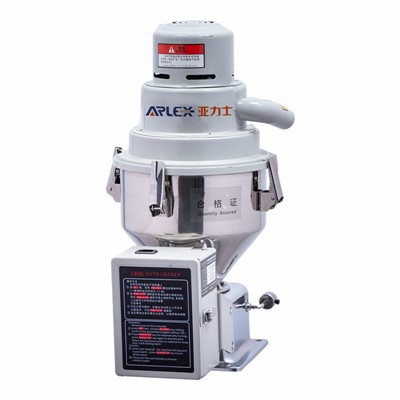
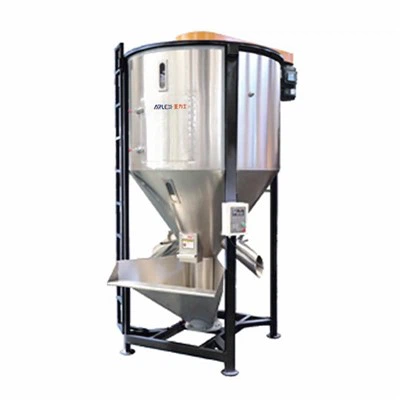
Then there’s the material handling system, specifically the plastic drying and feeding, which is easy to overlook but super important. If your plastic isn’t dried properly, especially for engineering resins like PLA or PET, it will break down when melted at high speeds, leading to weak parts or discoloration. Our machines are paired with closed-loop desiccant dryers that run 10°C lower than standard dryers, so you don’t degrade the plastic, but you get it dry enough (less than 0.02% moisture) for high-speed injection. We also use gravimetric feeders that add exact amounts of plastic, colorant, and additives every time—no more over-feeding or under-feeding, which causes inconsistent part weight. A customer who makes cosmetic packaging told us switching to our material handling setup cut their part weight variation from 5% to 0.5%, which meant they were wasting 10% less material every month. That’s pure savings right there.
Wait, let’s talk about something that’s less talked about but makes a huge difference: the noise and vibration dampening. When a machine is running at 5x the speed of a standard injection moulder, the vibration can throw off part accuracy over time, even damage the machine itself. Our machines have a heavy-duty, cast iron base that’s reinforced with vibration-dampening inserts between the base and the frame. Operators love this because it’s way quieter—we tested it at 75 dB, compared to competitors’ 85 dB—so no more ear fatigue for workers running it all shift. Also, less vibration means the mould stays aligned longer, so you don’t have to adjust it as often, which saves setup time. I can’t stress enough how much this component affects both operator comfort and long-term machine reliability.
Now, let’s circle back to why this matters for your business, not just the specs. HSIM isn’t just about making parts fast—it’s about making high-quality, thin-walled, complex parts at a volume standard machines can’t touch. A standard machine might make 50,000 thin-walled caps a day; our HSIM makes 200,000. But you can’t hit that number if any of these components are off. If your injection unit is too slow, you get flashing. If your clamping system lags, you get reject parts. If your ejection is too rough, you damage parts. That’s why we don’t just sell a machine—we build every component to work in sync.
At the end of the day, if you’re thinking about upgrading to high speed injection moulding, don’t just look at the top-line speed number. Dig into these components: the injection unit’s acceleration, the clamping system’s response time, the control system’s real-time monitoring. If any of these are missing or cheap, you’ll end up with a machine that’s fast but unreliable, or makes parts that don’t meet your specs.
We’ve helped hundreds of customers across packaging, medical, and consumer electronics fix those exact issues. If you’re looking to boost your production volume, cut reject rates, or upgrade your line with reliable HSIM, we’re here to walk you through it. Reach out to us to discuss your specific part needs, cycle time targets, and any challenges you’re facing with your current machines. We’ll help you pick the right setup that fits your budget and production goals, no pressure, just straight talk from someone who’s been in this space for years.
Injection Molding Auxiliary Equipment References
- Rosato, D. V., & Rosato, M. G. (2012). Injection Molding Handbook (5th ed.). McGraw-Hill.
- Kazmer, D. O. (2017). High-Speed Injection Molding: Process and Equipment Fundamentals. Society of Plastics Engineers.
- Crawford, R. J. (2015). Plastics Engineering (4th ed.). Butterworth-Heinemann.
- Society of Plastics Engineers. (2020). High-Speed Injection Molding Best Practices Guide. SPE Publications.
Ningbo Yalishi (Arlex) Plastic Machinery Co., Ltd.
Address: No.63, Huangsu East Road, Industrial Zone, Dongqian Lake Tourist Resort, Ningbo, Zhejiang Province
E-mail: leo@arlex.cn
WebSite: https://www.arleximm.com/
