Hey everyone, if you’ve ever worked on a telecom build, a home network upgrade, or even a small business setup, you’ve probably heard people throw around “indoor fiber cable” and “outdoor fiber cable” like they’re interchangeable. Spoiler: they’re not. As a fiber optic cable supplier, I see this mistake all the time—folks grabbing the first cable off the shelf because it looks like fiber, then it fails a month later. Let’s break this down straight, no jargon overload, because that’s what you actually need to know. Fiber Optic Cable
First, let’s get the basics right. Fiber optic cable is all about thin glass (or plastic) strands carrying light signals, way faster than copper, way less prone to interference. But where you run that cable changes everything. Indoor and outdoor cables are built for totally different environments, and skimping on the right one is a quick way to end up with downtime, extra costs, or even safety hazards. Let’s start with indoor fiber.
Indoor fiber is made to live inside walls, dropped ceilings, closets—places that are controlled, right? The biggest thing with indoor is space and flexibility. It’s way smaller, lighter, and way easier to snake through tight spots. But it doesn’t hold up to outside conditions at all. Think about it: outdoor stuff has to handle rain, extreme temps, UV rays, even being buried underground or strung between poles. Indoor fiber? It’s usually loose tube or tight buffered, but it doesn’t have the protective jacket that outdoor does. Wait, let’s get specific: most indoor cables use a PVC (polyvinyl chloride) jacket. PVC is fine inside—low cost, flexible, doesn’t give off too much toxic fumes when burned (that’s a big deal for buildings with lots of people, like offices or apartments). But PVC melts when exposed to direct sunlight, and gets brittle when it’s freezing out. No way you’re running that cable outside where it’ll bake in the summer sun or crack in winter.
Also, indoor fiber is often for shorter runs—like connecting a router to a wall outlet, or linking a server room to a closet on the same floor. The number of strands is usually lower, too: like 2, 4, 12 strands max, not the 24, 48, or even 144 you see on a long pole run. Wait, another key point: indoor cables are sometimes called “distribution fiber” because they’re for distributing signals inside a space. Some even have a pull string inside to make threading through walls easier, which you don’t need for outdoor runs because outdoor cables are built to be stronger.
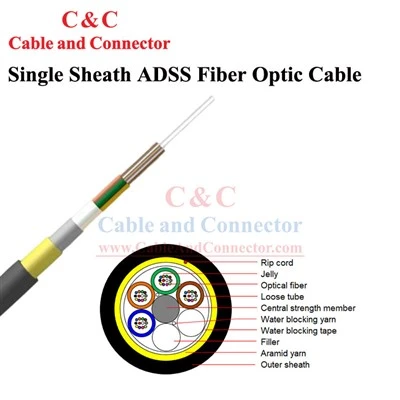
Now outdoor fiber—this thing is built like a tank. Literally. It has a super tough jacket, usually LSZH (low smoke zero halogen) or sometimes PE (polyethylene) for burial. Wait, LSZH is actually a good middle ground, but PE is better for direct burial because it resists moisture and chemicals in the ground. Outdoor cables also have extra strength elements—like steel wires or aramid yarn (that’s the same stuff in bulletproof vests) to pull the cable tight between poles, or hold it down if you’re burying it. Oh, and if you’re burying it directly, there’s usually a steel armor layer to stop rodents from chewing through, or rocks from crushing it. That’s a big one—indoor cable has no armor, so a ground squirrel will eat through it in a week if you run outdoor in the ground with indoor.
Outdoor fiber also has to handle temperature swings way better. I’ve seen outdoor cables go from 140°F (60°C) on a rooftop in Arizona to -20°F (-29°C) in the Dakotas, and they still work. Indoor? Throw that same indoor cable in that Arizona sun for a month, and the jacket’ll start to crack, exposing the fiber inside, which stops signals dead. Also, outdoor cables have to resist moisture—even if they’re aerial (strung between poles), rain can seep in if the jacket isn’t sealed right. That’s why outdoor cables have gel or water-blocking yarn inside, to keep water from getting to the fiber strands. Indoor cables don’t need that, since they’re inside, moisture is usually not a big issue (unless it’s a bathroom, but even then, you’d use a waterproof indoor one, not the standard).
Wait, let’s clear up a common myth: some people think “can’t I just use outdoor cable inside?” Sure, you can, but why pay more for extra protection you don’t need? Outdoor cable is heavier, bulkier, way harder to thread through a wall or a small ceiling space. It also might have a higher smoke output when burned, which is a safety no-no in commercial buildings. I’ve had a customer call me last year because they bought outdoor cable for their office, tried to run it through their drop ceiling, and it got stuck twice—they ended up having to cut it, which wasted time and money. Indoor cable is way more flexible for those tight indoor runs, no need for the extra heavy-duty stuff.
Another difference: fiber count and build type. Indoor is almost always tight-buffered. That means each fiber strand has its own thin plastic buffer around it, making it easy to handle for short runs, splice, or terminate with small connectors like LC or SC. Outdoor, especially for long runs, is usually loose-tube. The fibers sit inside a bigger tube, with gel around them, so if the cable expands or contracts with temperature changes, the fibers can move a little without breaking. If you used a tight-buffered outdoor cable in a place with big temp swings, the fiber would crack from being pulled too tight— loose-tube is made for that movement.
Wait, what about some special cases? Like indoor/outdoor fiber? Yeah, that’s a hybrid, but it’s not for replacing regular indoor or outdoor. It’s for when you have a run that goes from inside a building to outside, like a security camera on a pole next to an office. It has a jacket rated for both indoor and outdoor use, so you don’t have to splice two cables together at the wall. But even that’s a niche product—most projects just stick to their respective types.
Let me give you a real example I dealt with last quarter. A small town’s public works department wanted to run fiber between two of their buildings, 1,200 feet apart, one on the main street, one in a park. They initially asked for indoor cable, thinking it was cheaper. I told them no— that run goes through a ditch, gets direct sun part of the day, and is exposed to moisture from sprinklers. If they used indoor PVC cable, it’d crack within 6 months, they’d have to dig it up and replace it, which would cost way more than the outdoor cable upfront. We got them the direct-burial outdoor cable, and it’s still running perfectly a year later. They saved money in the long run by getting the right cable.
Another example: a home user who wanted to run fiber from their router in the basement to a smart TV on the second floor. They tried to use outdoor armor cable, and it was so thick they couldn’t fit it through the wall gap. We switched them to indoor distribution cable, and it slid through easy, no issues. That’s the key— matching the cable to the job.
Now, let’s talk about cost, since that’s a big factor for everyone. Outdoor cable is usually more expensive than indoor, right? Because it has better materials, extra strength elements, waterproofing, UV protection. But like the small town example, that upfront cost saves you from replacing it early. Indoor is cheaper, lighter, easier to install, so that’s what you use when you don’t need the heavy-duty stuff.
Wait, another thing: fire codes. Indoor cables have to meet certain fire ratings, like NFPA 70 (National Electrical Code) in the US. That’s because in a building fire, you don’t want the cable releasing toxic fumes that make it hard for people to escape. Outdoor cables are not held to those same fire codes, because they’re outside, so there’s no risk of fumes building up inside a structure. That’s another reason you can’t use outdoor cable inside commercial or multi-family buildings—it doesn’t pass fire safety rules.
Let me wrap this up so it’s not just a list. The core differences boil down to three main things: environment, build, and purpose. Indoor is for controlled, short, tight indoor spaces. It’s small, flexible, uses PVC or LSZH, low fiber count, tight-buffered, meets fire codes. Outdoor is for harsh, long, exposed environments. It’s tough, weather-resistant, uses PE or armored jackets, high fiber count, loose-tube, built to handle temp swings, moisture, and physical damage.
Mistakes here add up fast. Too many times I see people cut corners, grab the wrong cable, and end up with service interruptions, extra labor, or safety issues. As a fiber supplier, my job isn’t just to sell you cable—it’s to make sure you get the right one for your project. If you’re planning a run, whether it’s a home upgrade, a business network, a town-wide fiber build, hit me up to chat through what you need. No sales pitch, just straight advice on what’ll work for you, no guesswork.
F Connector References:
- Fiber Optic Association. (2022). "Indoor vs. Outdoor Fiber Cable: Key Differences and Use Cases". FOA Online Library.
- National Electrical Code (NFPA 70). (2023). Article 770: Optical Fiber Cables. National Fire Protection Association.
- Corning Cable Systems. (2021). "Outdoor Fiber Cable Design Considerations for Aerial and Burial Installations". Corning Technical Bulletin.
- Siemon. (2020). "Indoor Fiber Cable Specifications and Compliance Standards". Siemon Knowledge Base.
Zhejiang Cable and Connector Optic Co., Ltd.
As one of the most professional fiber optic cable manufacturers and suppliers in China, we have world-leading production equipment and strong manufacturing capabilities. Please rest assured to wholesale custom made fiber optic cable at competitive price from our factory.
Address: 1517 East Communications Building, No.398, Wensan Road, Xihu District, Hangzhou City, Zhejiang Province, China.
E-mail: Sales@CableAndConnector.com
WebSite: https://www.zjcableandconnector.com/
